InfoSAWIT, JAKARTA – Indonesia will officially implement its B50 biodiesel mandate on July 1, 2026, marking another milestone in the country's renewable energy roadmap. The government expects the policy to strengthen national energy security, generate significant added value for the palm oil industry, reduce fuel imports, and accelerate the transition toward cleaner energy.
Under the new mandate, diesel fuel will contain 50% palm oil-based biodiesel blended with 50% conventional fossil diesel, continuing the country's progressive biodiesel program that has evolved from B20 to B30, B40, and now B50.
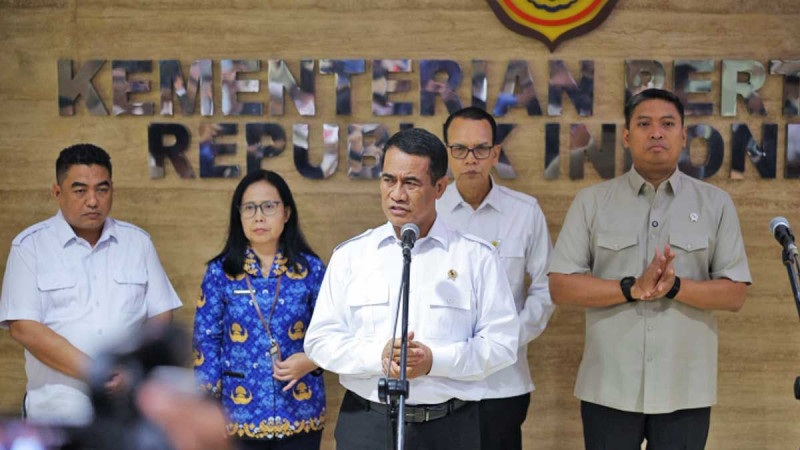
Speaking in Jakarta, Minister of Energy and Mineral Resources Bahlil Lahadalia said all technical evaluations and field trials had been successfully completed, paving the way for nationwide implementation.
"The technical trials carried out by our team at the Ministry of Energy and Mineral Resources, led by the Director General of New, Renewable Energy and Energy Conservation (EBTKE), Prof. Eniya, have produced very encouraging results," Bahlil said in an official statement received by InfoSAWIT on Saturday.
According to the minister, one of the most significant findings from the testing phase was that B50 demonstrated better fuel quality than B40, particularly in terms of its lower water content. The improved specification is expected to enhance fuel stability and overall engine performance during operation.
The government conducted extensive trials across a wide range of transportation and industrial equipment, including commercial vehicles, mining machinery, excavators, marine vessels, railway locomotives, agricultural equipment, and other heavy-duty engines.
"The fuel has been tested on heavy equipment, ships, trains, mining machinery, excavators, agricultural equipment, and various other vehicles," Bahlil said.
Following the successful testing program, the government is confident that the nationwide rollout will proceed as scheduled during the second half of 2026. Officials believe the higher biodiesel blend will significantly reduce Indonesia's dependence on imported diesel fuel and could eventually eliminate imports of certain diesel products if implementation proceeds as planned.
Beyond its contribution to energy security, the B50 program is projected to deliver substantial economic benefits to the country's palm oil sector. Government estimates suggest the policy could generate approximately Rp24.68 trillion in added value while supporting employment for more than 2.2 million workers across Indonesia's palm oil and biofuel supply chains.
From an environmental perspective, expanded use of palm-based biodiesel is also expected to contribute to Indonesia's climate commitments by reducing greenhouse gas emissions. The government estimates that B50 implementation could cut emissions by approximately 46.72 million tonnes of carbon dioxide equivalent (CO₂e), reinforcing the country's broader energy transition agenda.
The policy is also expected to improve Indonesia's macroeconomic position by lowering fossil fuel imports. Reduced reliance on imported diesel is projected to save the country around Rp157.28 trillion in foreign exchange, while strengthening the national energy trade balance.
Throughout the first half of 2026, Indonesia maintained the B40 mandate as a transition phase before moving to B50 in July. Total national biodiesel allocation for this year is estimated at 17.60 million kilolitres (kL).
Government data show that biodiesel distribution reached approximately 3.90 million kL as of April 13, 2026, representing 24.9% of the annual allocation. Distribution is supported by 26 biofuel producers (BU BBN), 32 fuel distributors (BU BBM), and a nationwide network of 85 delivery points, ensuring a stable supply across the archipelago.
Through the implementation of B50, the government aims to further strengthen Indonesia's downstream palm oil industry, create greater domestic value addition, enhance national energy resilience, and reinforce the country's position as the world's leading producer of palm oil-based biodiesel. (T2)