InfoSAWIT, YOGYAKARTA – Indonesia’s palm oil downstream industry is expanding beyond food, biofuel, and oleochemicals, finding new opportunities within the country’s creative economy as entrepreneurs develop innovative products derived from palm-based materials.
One of the latest examples comes from Smart Batik Indonesia, which has successfully developed palm-derived batik wax as an alternative to conventional materials used in the traditional textile industry.
The innovation emerged with support from Indonesia’s Palm Oil Plantation Fund Management Agency (BPDP), which has been actively promoting entrepreneurship and innovation among micro, small, and cooperative enterprises (MSMEs).
Smart Batik Indonesia CEO and Founder Miftahudin Nur Ihsan said his understanding of palm oil changed significantly after participating in a BPDP-supported MSME exhibition in 2023.
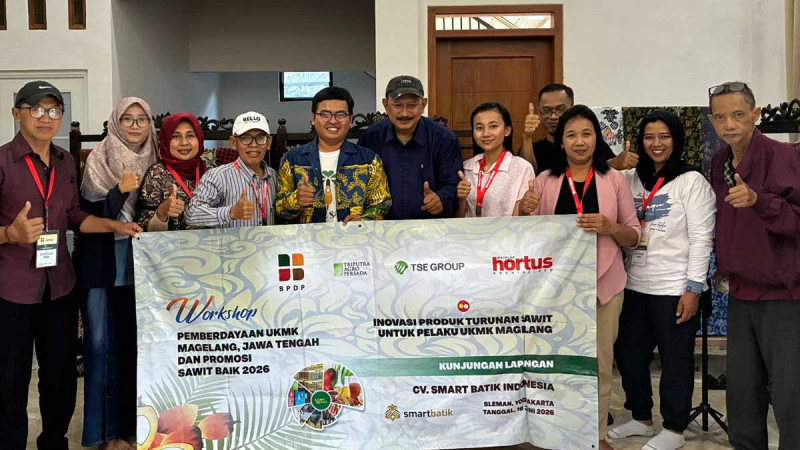
“I used to think palm oil was only associated with cooking oil. Through BPDP, I learned that palm oil has a wide range of derivative products that can be utilized across many industries,” Ihsan said during the UKMK Empowerment Workshop and Palm Oil Promotion Program 2026 in Yogyakarta.
Palm Wax Offers Better Performance
The company was introduced to palm-based batik wax developed through research collaboration involving Indonesia’s National Research and Innovation Agency (BRIN) and the Center for Crafts and Batik.
Following extensive testing, Smart Batik Indonesia continued refining the product independently until it achieved a formulation suitable for commercial production.
According to Ihsan, palm-based wax offers several advantages compared to conventional batik wax. The material produces a milder aroma, creating a more comfortable working environment for artisans, while its greater flexibility helps reduce cracking during the dyeing process.
“Artisans feel more comfortable because the wax does not produce a strong odor. Its flexibility also improves the quality of the final batik patterns,” he explained.
These characteristics have helped enhance both productivity and product quality, making the innovation attractive to batik producers seeking more sustainable and efficient materials.
Expanding Circular Economy Opportunities
Beyond the use of palm-derived wax, Smart B
atik Indonesia is also exploring ways to recycle batik wax waste by blending it with other palm-based derivatives such as stearin and stearic acid.
The initiative forms part of a broader effort to improve production efficiency while supporting environmentally friendly manufacturing practices.
Industry observers note that such innovations demonstrate how palm oil can contribute to circular economy initiatives and create value-added products outside traditional sectors.
BPDP’s Role in Market Development
Ihsan acknowledged that BPDP’s support has extended beyond product development, helping the company gain wider exposure through exhibitions, trade fairs, and promotional programs.
As a result, Smart Batik products have reached international audiences in countries including Japan, China, and Pakistan, showcasing Indonesia’s growing portfolio of innovative palm-based products.
“BPDP has supported us not only in product development but also in marketing and promotion. We continue to benefit from that support today,” he said.
According to workshop organizer Suharno, Editor-in-Chief of Hortus Archipelago Magazine, the visit to Smart Batik was intended to demonstrate how innovation and collaboration can unlock new opportunities for palm oil downstream industries.
The success of Smart Batik illustrates how Indonesia’s palm oil sector is evolving beyond its traditional markets, creating new avenues for creative industries while generating additional value from one of the country’s most important commodities.
As more entrepreneurs embrace palm-based innovations, the industry’s downstream potential is expected to broaden further, strengthening Indonesia’s position as a leader in sustainable and diversified palm oil development. (T2)