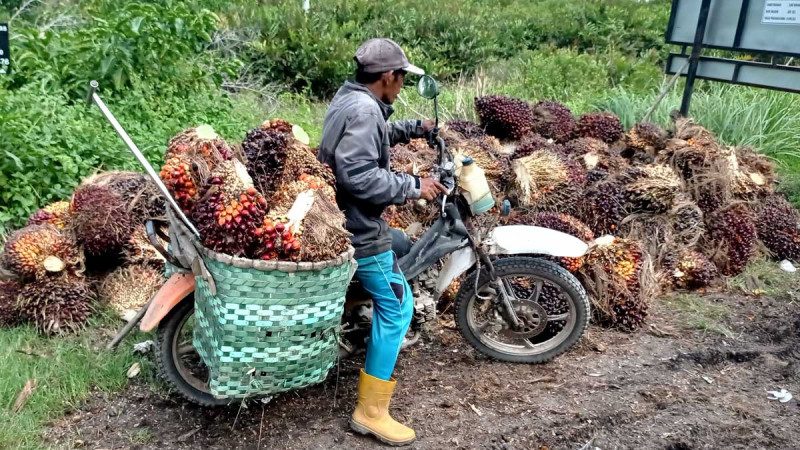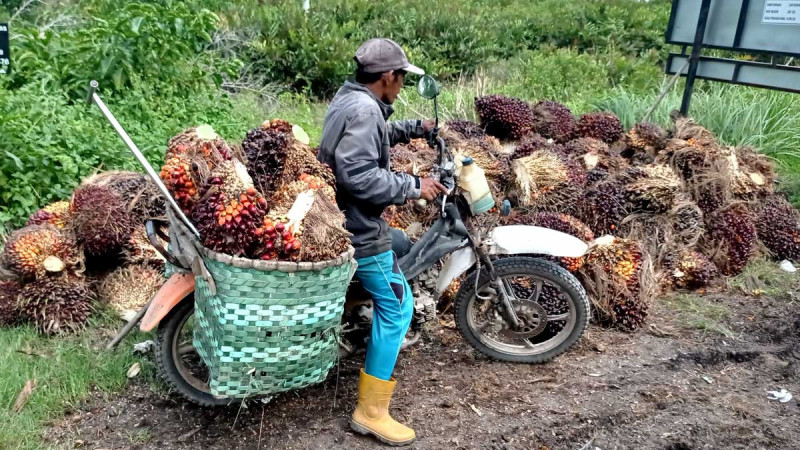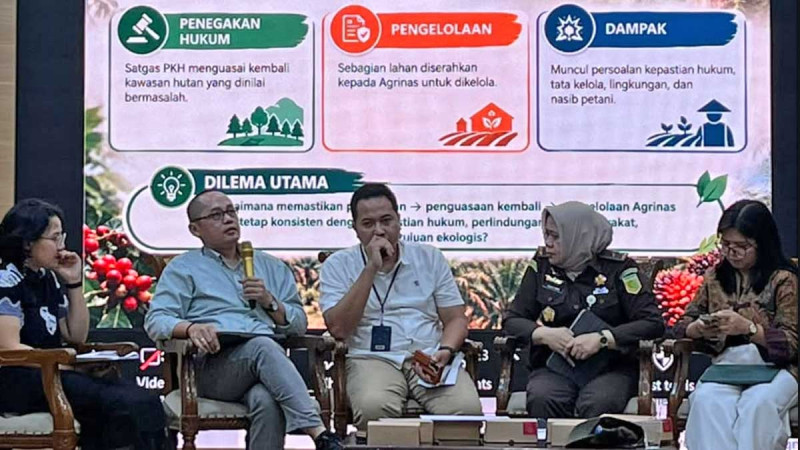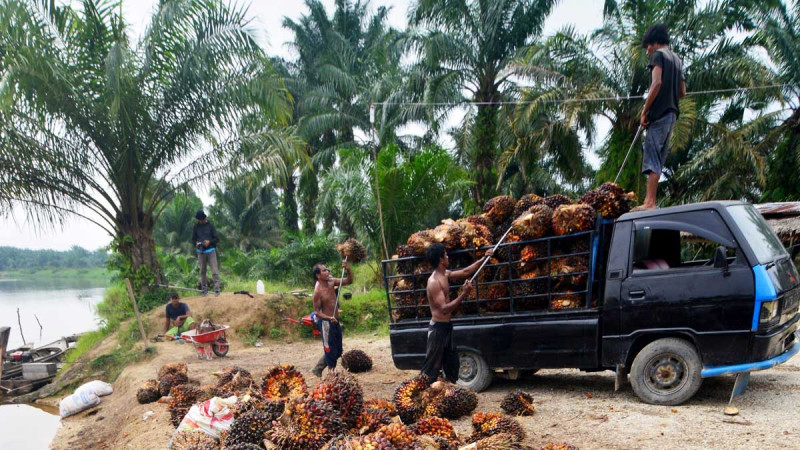
InfoSAWIT, ACEH BARAT DAYA – Palm oil smallholders in Aceh’s Nagan Raya and Aceh Barat Daya (Abdya) regencies are calling for greater government oversight after claiming that fresh fruit bunch (FFB) prices remain disproportionately low despite strong crude palm oil (CPO) market performance.
According to local smallholder T. Mukhtar Abdullah, growers in both regions have yet to benefit from the recent rally in palm oil prices. He noted that CPO prices have reached around Rp15,450 per kilogram, yet FFB prices offered by mills in Nagan Raya and Abdya remain below expectations.
Mukhtar pointed out that smallholders in neighboring palm-producing areas, including South Aceh, Subulussalam, and Aceh Singkil, are currently receiving between Rp2,900 and Rp3,200 per kilogram for their FFB, significantly higher than prices available in Nagan Raya and Abdya.
“When CPO prices are rising, smallholders should also enjoy the benefits through better FFB prices. Unfortunately, the situation on the ground tells a different story,” Mukhtar said, as quoted by AJNN.net and reported by InfoSAWIT on Sunday.
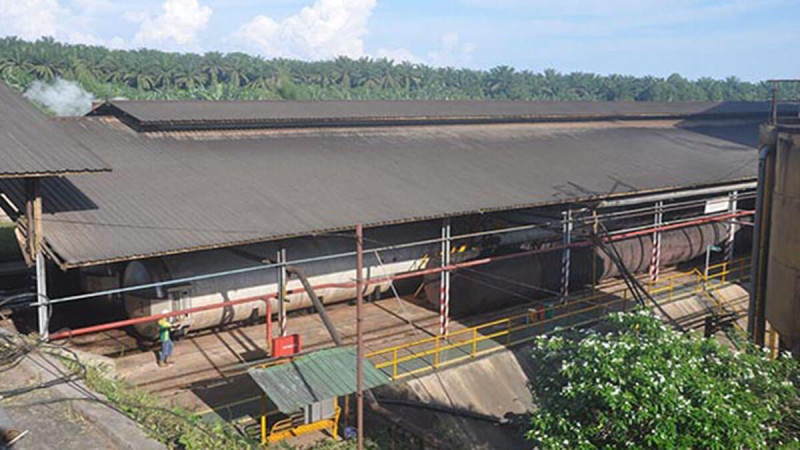
The concern is particularly notable given that Nagan Raya hosts one of the largest concentrations of palm oil mills in Aceh. Mukhtar noted that 11 mills operate in the regency, with nine actively purchasing FFB from smallholders.
With such a large number of processing facilities competing for raw materials, he argued that market competition should naturally lead to stronger prices for growers. However, current pricing trends appear disconnected from developments in the broader palm oil market.
Calls for Government Review
Mukhtar believes weaknesses within the palm oil trading system may be contributing to the price disparity. He urged local authorities and relevant agencies to conduct a comprehensive review of FFB pricing mechanisms and strengthen oversight of mill purchasing practices.
According to him, increased transparency and stricter monitoring are necessary to ensure smallholders receive fair compensation that reflects prevailing market conditions.
“Our concern is not only about seeing high CPO prices in the market. What matters is whether those gains are translated into fair FFB prices at the farm level,” he said.
Farmer Organizations Also Under Scrutiny
Mukhtar also questioned the effectiveness of farmer organizations in advocating for smallholder interests. He suggested that monitoring and advocacy efforts regarding FFB pricing have weakened compared to previous years.
Without stronger oversight, he warned, smallholders could lose bargaining power in negotiations with palm oil mills, increasing the risk that FFB prices fail to reflect actual market fundamentals.
He called on all stakeholders—including government agencies, farmer organizations, and industry players—to work together to improve transparency and strengthen supervision across the palm oil supply chain.
Smallholders hope that more effective governance will enable them to share fairly in the benefits generated by strong global palm oil prices and contribute to improving rural livelihoods across Aceh’s palm-growing communities. (T2)