InfoSAWIT, JAKARTA — The Indonesian government is shifting its strategy to strengthen national food security by converting state-confiscated former palm oil land into soybean cultivation areas. The move marks a new chapter in efforts to reduce Indonesia’s long-standing dependence on soybean imports.
Agriculture Minister and Head of the National Food Agency (Bapanas), Amran Sulaiman, said the government aims to gradually develop up to one million hectares of soybean plantations. Preparations, he noted, have already begun intensively.
“We started meeting at six in the morning; the team was already on the ground shortly after five. Our goal is to plant soybeans across one million hectares in stages,” Amran said in Jakarta on Friday (21/11/2025).
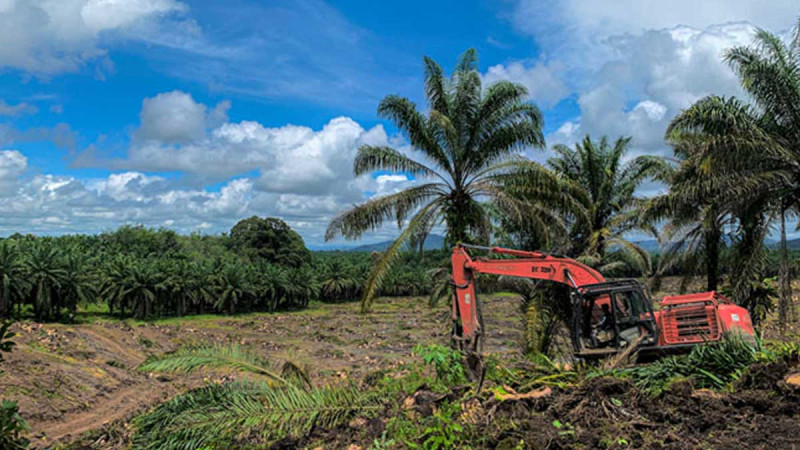
Unlike previous approaches that focused on optimizing existing farmland, the current policy prioritizes the use of confiscated former palm oil land managed by the Forest Area Control Task Force (Satgas PKH) of the Attorney General’s Office.
“These are new lands—seized areas without palm oil trees—that we plan to convert for soybean cultivation,” Amran emphasized.
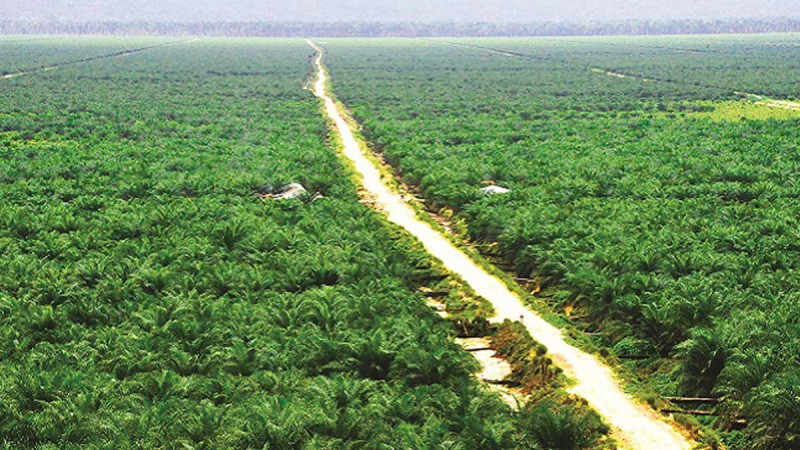
Earlier, the government transferred 833,413 hectares of the confiscated land to PT Agrinas Nusantara Palma (Persero) as the managing operator.
Challenging Field Conditions
Despite the vast land availability, actual conditions on the ground paint a different picture. Akbar Mulia, Manager of the Secretariat at PT Agrinas Nusantara Palma, noted that most of the land is in poor condition.
“Field verification shows that 50% is severely damaged, 30% moderately damaged, and only 20% slightly damaged,” Akbar said during a press briefing at the Attorney General’s Office on Wednesday (9/7/2025).
The damage ranges from soil degradation and abandoned clearing sites to areas requiring full ecosystem rehabilitation before they can be used as productive farmland.
The soybean expansion plan is a key component of the broader effort to reduce imports, especially since Indonesia’s domestic needs—dominated by the tofu and tempeh industries—are still heavily reliant on global supply.
Amran stressed that boosting domestic productivity is essential to protect Indonesia from global price volatility.
“This is how we reduce imports and strengthen our food sovereignty,” he stated.
With extensive land rehabilitation required, policymakers face a critical challenge: accelerating restoration while ensuring the soybean development program translates into tangible results rather than mere ambition. (T2)