InfoSAWIT, WEST KALIMANTAN — Efforts to conserve forests while improving community welfare are taking shape in two Bumitama-assisted villages in West Kalimantan. Through ecotourism development, Simpang Tiga Sembelangaan Village and Nibung Village demonstrate how conservation can evolve together with local economic growth.
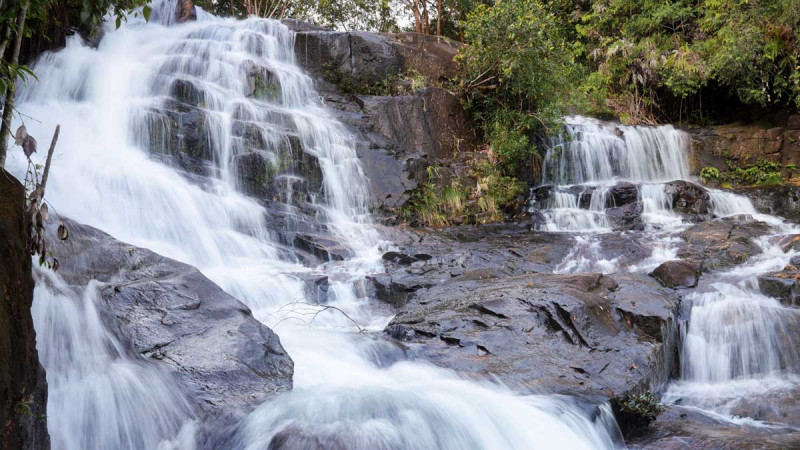
In Simpang Tiga Sembelangaan, the community manages the Batu Hitam Waterfall area through the Village Forest Management Institution (LPHD). Since 2021, Bumitama has supported these efforts by providing training, basic infrastructure development, and fruit-tree planting to enrich the tourism landscape.
Improved road access, better recreational areas, and new supporting facilities have significantly enhanced visitor experience — while opening opportunities for new economic activities in the village.
“Bumitama’s support has helped us improve the facilities and organize the area better,” said Sony Martinus, an LPHD member, in a statement to InfoSAWIT, Saturday (15/11/2025). “We want Batu Hitam to be our village’s pride while ensuring the forest remains protected.”
Beyond recreation, Batu Hitam is also used as an environmental education space. LPHD is exploring the potential of micro-hydro energy from the river flow to supply electricity for future community needs — strengthening the forest’s function as a long-term asset.
Nibung Lestari: From a Dark Memory to a Conservation Movement
Nearby in Nibung Village, residents are also building a conservation-driven future. Through the Nibung Lestari Social Forestry Business Group (KUPS), locals have developed a waterfall area in Sebuak Hamlet into an agritourism destination. The initiative, launched in 2022, stems from the community’s determination to prevent forest encroachment.
KUPS Chairwoman Marsila recalls the devastating 2005 fire that burned much of the surrounding forest. “Since then, I promised myself not to let the forest be destroyed again. But forbidding alone isn’t enough — we needed a way for residents to feel ownership,” she said.
With support from Bumitama and IDH, KUPS built trekking paths, gazebos, ticket counters, and visitor rest areas. As a result, tourism activity has grown rapidly, attracting visitors from various regions.
The benefits are significant. From April 2024 to June 2025, ticket sales generated around Rp95 million. The income has become a new economic source while funding social activities and site maintenance.
“Now we see the forest as an opportunity. This tourism has made us more caring and proud to protect the environment,” Marsila added.
Looking ahead, Nibung residents plan to enhance the attraction by developing a pick-your-own fruit garden — offering educational experiences and promoting local plant varieties. “We call it agritourism because we envision a garden people can visit and enjoy together,” she explained.
A Collaborative Model Strengthening Conservation
The initiatives in Batu Hitam and Nibung illustrate how companies and communities can collaborate to protect forests while growing rural economies. Bumitama positions communities as key conservation actors, while the company provides infrastructure, training, and ongoing technical assistance.
This approach aligns with Bumitama’s commitment to social and environmental responsibility — ensuring forests remain well-managed, communities are empowered, and local economies grow sustainably.
From forests cared for collectively, new hopes emerge: thriving villages, protected nature, and increasingly self-reliant communities. (T2)