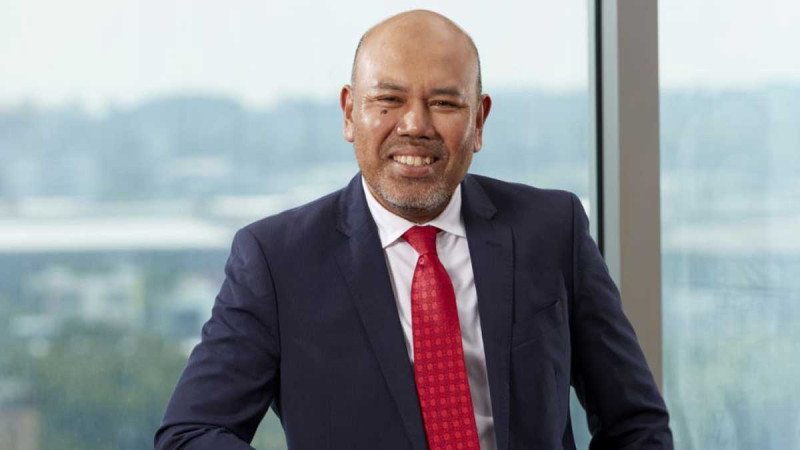
KUALA LUMPUR, InfoSAWIT — In front of global palm oil industry leaders at the Roundtable Meeting on Sustainable Palm Oil (RT2025) in Kuala Lumpur, Datuk Mohamad Helmy Othman Basha, Group Managing Director of SD Guthrie and Chairman of the Malaysian Palm Oil Board (MPOB), delivered a firm message: “Palm oil is not the villain.”
In his speech titled “Partners in Action,” Helmy urged all stakeholders in the palm oil industry to be honest, consistent, and trust each other in building a sustainable future for palm oil. He emphasized that sustainability is not just about the environment, but also about people—especially smallholder farmers who are the backbone of this industry.
“I have worked almost 30 years in the plantation industry, from Malaysia to Africa. I have witnessed firsthand how palm oil has transformed the lives of many people, created opportunities, and built communities,” said Helmy in his speech attended by InfoSAWIT on Monday (3/11/2025).
However, behind this progress, he highlighted the paradox occurring at sustainability negotiation tables. “There are global brands sitting with us at RSPO, yet on their store shelves they label ‘No Palm Oil’. What message do they want to convey to consumers? Is that a form of honest partnership?”
Helmy stressed that if they truly believe in sustainable palm oil, then its members must dare to defend this commodity consistently. “To believe in Certified Sustainable Palm Oil is to defend it — publicly and without apology,” he asserted.
Palm Oil Industry and Deforestation Accusations
Helmy did not ignore the long history of deforestation accusations attached to the palm oil industry. However, he emphasized the need for a new narrative based on data. Citing reports from the World Resources Institute and Global Forest Watch, he mentioned that primary forest loss in Indonesia and Malaysia has sharply declined in the last decade—more than 60% in Malaysia, and reaching a historical low in Indonesia.
“Both countries still have more than 50% forest cover—higher than many developed countries,” he stated.
Yet, despite data showing real progress, Helmy regretted the double standards from global regulations like the European Union Deforestation Regulation (EUDR). “When countries with good performance like Malaysia are labeled as standard risk, while other countries losing more forests are called low risk, that’s not just unfair—it’s a form of modern economic colonialism,” he said emphatically.
Energy Independence and New Industry Direction
Helmy also highlighted the major shift happening in major producing countries, especially Indonesia. With the implementation of the B40 biodiesel program towards B50 and even B60, more palm oil is being diverted for domestic energy needs. “While the Western world is busy discussing palm oil bans, Indonesia and Malaysia are utilizing it for national energy resilience,” he said.
According to Helmy, this step is a legitimate form of independence. “Every country has the right to protect its interests. If the world continues to reject palm oil with narrow views, they will lose access to the most efficient and sustainable vegetable oil in the world.”
Smallholders, True Partners in Sustainability
The most touching part of Helmy's speech was his defense of smallholder farmers in producing countries. “They are our true partners. If we close off planned and sustainable expansion opportunities, we are essentially telling them: stay poor, stay left behind,” he said.
Helmy emphasized that true sustainability is a balance between environmental integrity and social justice. “We must help farmers grow responsibly, not hinder their development.”
Call for Honesty and Real Action
Closing his speech, Helmy called on all members of the Roundtable on Sustainable Palm Oil (RSPO) to stop hiding behind slogans. “We cannot preach about sustainability in this room, but vilify palm oil in the market. If we are true partners, our words must align with our actions,” he asserted.
With an optimistic tone, he added, “Palm oil — done right — feeds billions, sustains millions, and protects more forest per tonne of oil than any other crop. Let’s not allow others to define us. Let’s define ourselves — truthfully, transparently, and together.”
A strong message from an industry leader calling for honesty, courage, and solidarity for a more equitable future for global palm oil. (T1)