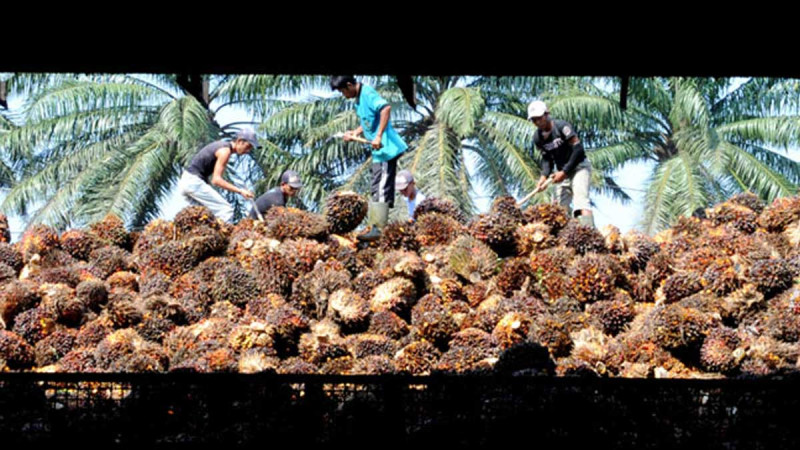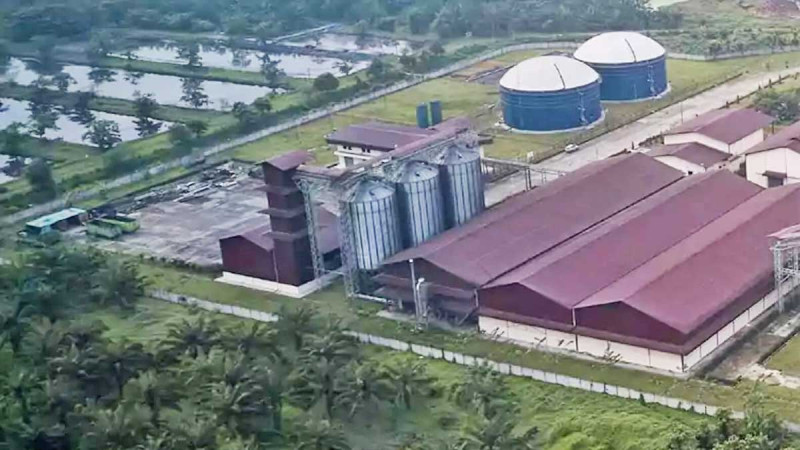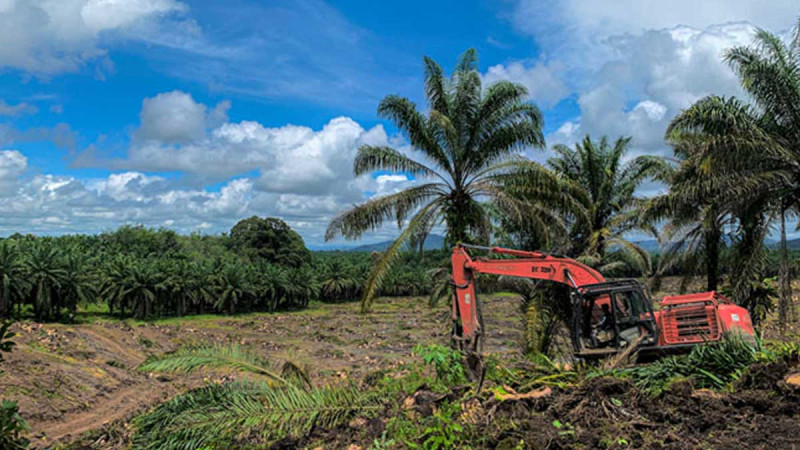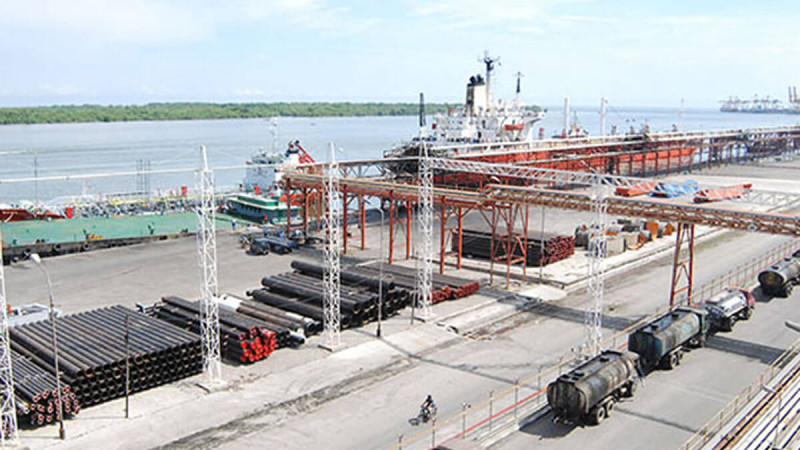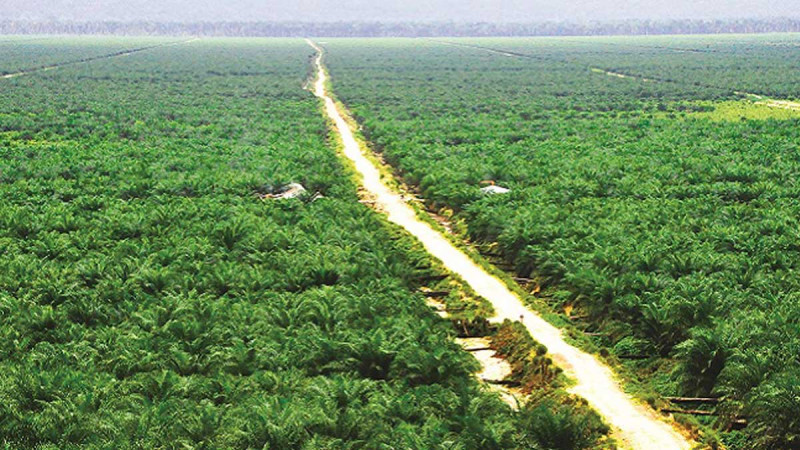
InfoSAWIT, JAKARTA — The long journey of Indonesia's palm oil industry has recorded extraordinary expansion in the last four decades. Data from the 2024 Palm Oil Outlook published by the Center for Agricultural Data and Information Systems, Ministry of Agriculture (MoA), shows that from 1980 to 2024, the area of national palm oil plantations continued to increase sharply before finally stagnating in recent years. In 1980, the area of Indonesia's palm oil plantations was recorded at only 294.56 thousand hectares. However, four decades later, this figure jumped more than 49 times to 14.59 million hectares in 2020, and based on joint thematic mapping results with the Geospatial Information Agency (BIG) in 2021, the area has reached 16.83 million hectares.
From Expansion to Evaluation This massive increase is inseparable from the vigorous expansion of plantations before the 1998 monetary crisis. In the 1980–1998 period, the growth rate of palm plantation area reached 15.07% per year, making it one of the fastest expanding commodities in Southeast Asia. The most rapid growth occurred in smallholder plantations (PR) and large private plantations (PBS), increasing by 44.78% and 20.51% per year respectively, while large state plantations (PBN) only grew by 6.18% per year. However, after the monetary crisis, the growth rate began to slow. The 1998–2017 period only recorded an increase of 6.34% per year, and in the last ten years (2015–2024), the expansion rate decreased further to 4.90% per year.
Control and Moratorium Policies This change in trend aligns with government policies that began to emphasize sustainability aspects and land permit regularization. Through Presidential Instruction (Inpres) No. 18 of 2018, the government ordered a moratorium on opening new palm plantations and evaluation of forest area release permits for three years, starting from September 2018. This policy was then extended, with supervision and evaluation carried out by various agencies, including the Ministry of Agriculture and BIG. Since 2019, BIG has updated the palm plantation cover map at a scale of 1:50,000, and in 2023, the results showed that the national palm land area was relatively stagnant at 16.83 million hectares. Along with efforts to organize and digitize palm land data, the government also introduced the category of Area to be Confirmed (LAD), which is palm area that has not been administratively verified at the provincial level. In 2021, LAD reached 2.21 million hectares, but this figure is estimated to drop drastically to 1.07 million hectares in 2024—indicating significant progress in land mapping and data validation.
Shifting Contributions: From State to Smallholders and Private Interestingly, the pattern of palm land ownership in Indonesia has also undergone a major transformation. In the 1980–1998 period, large state plantations (PBN) controlled about 28.86% of the total national palm plantation area. However, after the 1998 crisis, their contribution plummeted to only 6.44%. Conversely, the roles of smallholder plantations (PR) and large private plantations (PBS) have increased sharply. The growth of these two sectors is now the backbone of national palm production. “The average LAD contribution during 2021–2024 was recorded at 9.17%, indicating that there is still potential land that needs to be verified so that all national palm cover can be mapped accurately,” as noted in the 2024 Palm Oil Outlook, quoted by InfoSAWIT, Sunday (November 2, 2025).
Towards Sustainable Palm Governance The government's steps to strengthen the spatial data base for palm are crucial in the context of implementing Presidential Instruction No. 6 of 2019 on the National Action Plan for Sustainable Palm Oil Plantations 2019–2024. In this policy, the Geospatial Information Agency (BIG) has the mandate to carry out guidance and management of Thematic Geospatial Information (IGT), including palm plantation cover maps that serve as the basis for spatial planning and permit supervision. This data update is expected to strengthen transparency in the palm sector and help ensure a balance between production expansion, environmental conservation, and legal certainty over land.
The Future of Indonesia's Palm Oil Although the expansion rate is starting to slow, the palm oil industry remains the main pillar of the national economy. Future challenges are no longer just about adding area, but increasing productivity and sustainability. With increasingly strong geospatial data-based policies and moratoriums that tighten new permits, the future of Indonesia's palm oil is expected to shift from quantitative growth to high-quality, competitive, and environmentally friendly production. Four decades since its early development, Indonesia's palm oil has passed through a phase of massive expansion and is now entering a new era: an era of data-based management, efficiency, and sustainability. (T2)