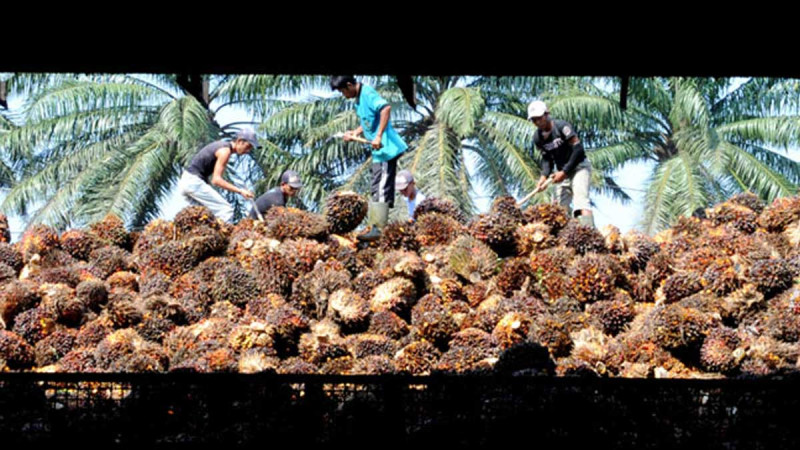
InfoSAWIT, JAKARTA – The plantation sub-sector has once again become the savior of Indonesia's trade balance. Based on the 2024 Palm Oil Outlook published by the Center for Agricultural Data and Information Systems, Ministry of Agriculture (MoA), it is recorded that during the 2021–2023 period, only the plantation sub-sector consistently recorded a surplus, while other agricultural sub-sectors still experienced deficits. In 2023, foreign exchange contributed from the export of various plantation commodities reached US$ 33.78 billion. This achievement proves that the plantation sector, especially palm oil, remains the backbone of the national economy amid uncertain global dynamics. “The largest contribution to this surplus comes from the export of crude palm oil (CPO) and its derivatives, reaching 75.80% of the total national plantation commodity exports,” notes the 2024 Palm Oil Outlook data, quoted by InfoSAWIT, Sunday (November 2, 2025).
With its dominant export value, palm oil continues to demonstrate its role as a highly competitive strategic commodity in the global market. Besides palm oil, other commodities such as rubber, coconut, cocoa, and coffee also support plantation export performance. Each contributes 7.55%, 3.89%, 3.55%, and 2.75% to the total exports of the sector.
Although their portions are not as large as palm oil, the contributions of these commodities remain important in maintaining the balance of export structure and diversifying the country's foreign exchange sources. The improvement in palm oil export performance is inseparable from government policy support in boosting productivity, sustainability, and expanding market access to various destination countries.
On the other hand, global challenges such as the European Union Deforestation Regulation (EUDR) and fluctuations in world vegetable oil prices are factors that need to be continuously anticipated. Going forward, the MoA assesses that strengthening downstream industries and implementing sustainable plantation practices will be the key to maintaining the positive performance of this sector. With its still vast potential, the palm oil industry is expected to continue contributing not only as a foreign exchange earner but also as a driver of rural economic growth. (T2)