InfoSAWIT, JAKARTA – Researcher at the Palm Oil Research Center (PPKS), Agus Eko Prasetyo, presented the latest study results regarding the behavior of pollinator insects on palm oil plants and other palm species. This study is an important part in efforts to understand biological factors influencing palm oil productivity in Indonesia.
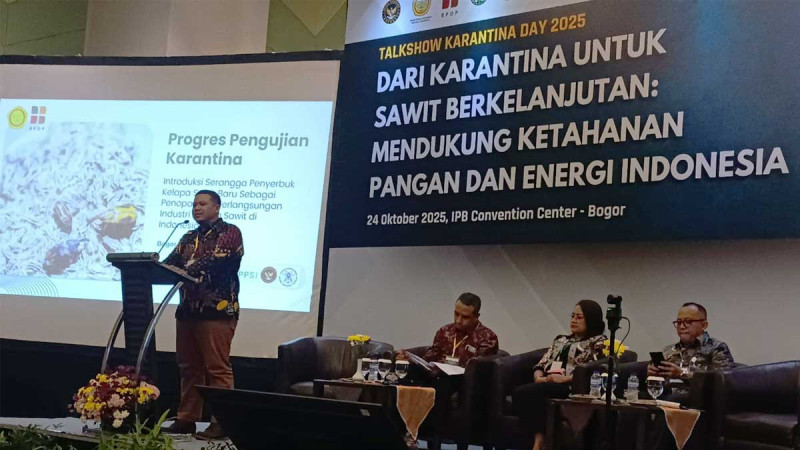
In his presentation at the 2025 Quarantine Day Talkshow titled “From Quarantine for Sustainable Palm Oil: Supporting Indonesia's Food and Energy Resilience”, Friday (24/10/2025), attended by InfoSAWIT, Agus explained that research on insect interactions with palm oil flowers continues to be developed through various compatibility tests in the laboratory.
“We continue to conduct compatibility testing between insects and palm oil flowers. This is not easy, because each species has different characteristics and responses to the chemical compounds released by the plants,” Agus explained.
According to him, most palm oil pollinator insects are known to be attracted to the aroma and chemical compounds produced by the flowers, not just their nectar. Some insects are known to visit male or female flowers due to volatile substances released at certain phases of the flowering process.
“Interestingly, we found that insects are more attracted to female flowers compared to male flowers. In observations, the ratio of insect presence in male flowers is about 1:2, while in female flowers it can reach 1:4,” he revealed.
Agus explained that this tendency opens opportunities for further research to understand how this attraction pattern can affect pollination effectiveness and palm oil fruit formation. In addition, this study also provides an overview of the potential for managing natural insect ecosystems in palm oil plantations.
“Most likely there is a relationship between the nutrients contained in female flowers and the life cycle of pollinator insects. This is interesting to research further because it could impact the speed of insect population regeneration,” he added.
The research conducted by PPKS also involved comparative tests on several other types of palm plants. Preliminary results show that the characteristics of palm oil flowers have their own appeal to natural pollinator insects, which is a key to plantation productivity.
Agus emphasized that ongoing research on palm oil pollination biology will help the national palm oil industry improve production efficiency, while supporting a science-based sustainable agriculture system. (T2)