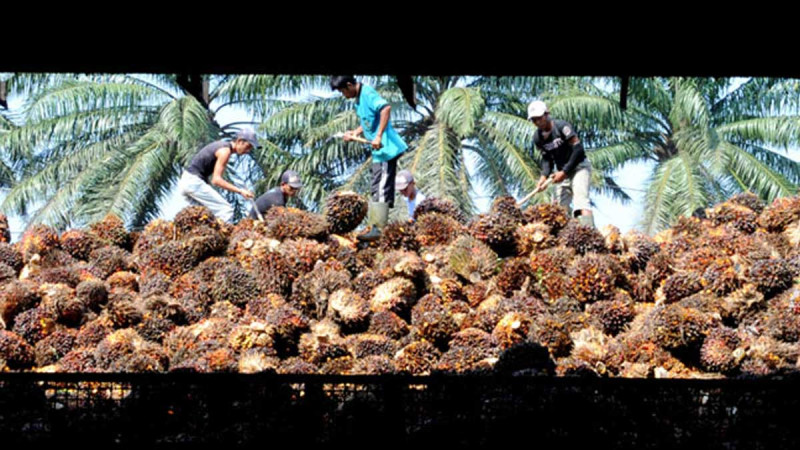
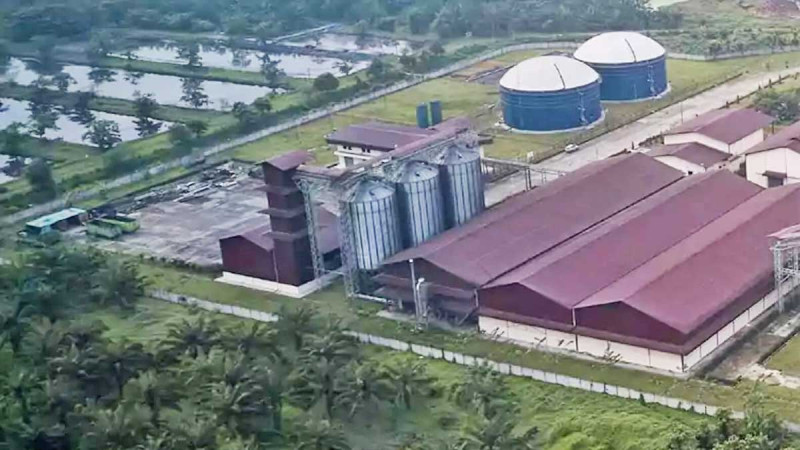
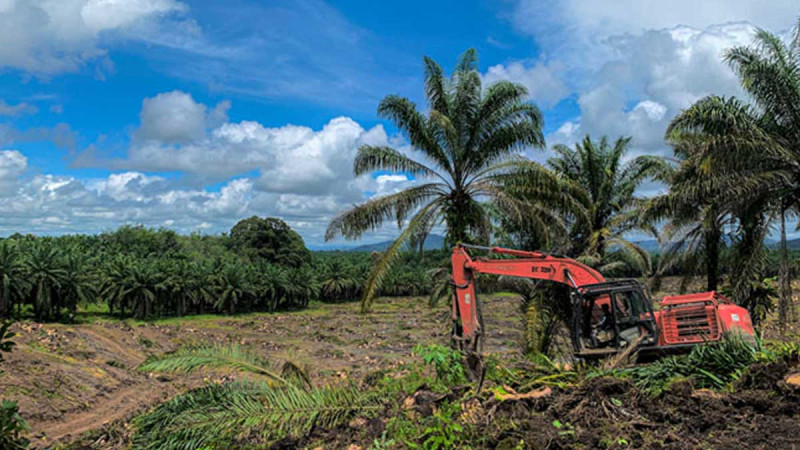
InfoSAWIT, JAKARTA – Amidst global debates on sustainability, palm oil remains a key commodity for Indonesia. Throughout 2023, the sector contributed 3.5% to the national Gross Domestic Product (GDP) and generated US$28.4 billion in export revenue—equivalent to 11.6% of total non-oil and gas exports. The palm oil industry is also the livelihood for millions: approximately 16.2 million people depend on this sector, either directly in plantations or in downstream industries.
However, behind these impressive figures, the position of small farmers faces severe challenges. They manage about 41% of the total national palm oil area but are often the most vulnerable end of the supply chain—especially ahead of the European Union Deforestation Regulation (EUDR) implementation in June 2026.
In a Focus Group Discussion (FGD) titled “Obstacles and Opportunities for Small Palm Oil Farmers’ Participation in the Global Market,” organized by INDEF, various stakeholders—including the government, farmer associations, business actors, and academics—agreed that an integrated national strategy is key to ensuring small farmers are not excluded from the global market.
Imaduddin Abdullah, Director of International Cooperation at INDEF, stressed the importance of protecting small farmers. “This discussion is aimed at shielding the interests of small farmers from the risk of global market exclusion due to international regulations,” he said in an official statement written by InfoSAWIT on Wednesday (8/10/2025).
Meanwhile, INDEF researcher Afaqa Hudaya highlighted fundamental issues still facing farmers, such as land legality and weak institutions. Around 62% of smallholder palm oil land is still indicated to be within forest areas, although some already hold Land Title Certificates (SHM). This condition makes it difficult for farmers to access financing and the Smallholder Replanting Program (PSR) from the Palm Oil Plantation Fund Management Agency (BPDP). Out of the total 6.2 million hectares of smallholder palm oil land, only about 1% is ISPO-certified—even though the system has been running for over a decade.
“Our farmers are still operating individually. Access to capital, assistance, and sustainability certification is very limited,” said Afaqa.
Challenges from the field were also presented by Djono Albar Burhan, Head of International Relation and People Development at APKASINDO. He spoke of FFB price disparities, traceability issues that lower selling prices, and limited access to modern technology. “Price deductions can reach hundreds of thousands of Rupiah per ton simply because the traceability system is imperfect,” he revealed.
INDEF’s 2024 study shows that non-compliance with the EUDR could lower palm oil prices by 1–9% and increase farmer poverty by up to 17%. Furthermore, the average productivity of farmer estates is far below potential, only 10–15 tons of FFB per hectare, while with Good Agricultural Practices (GAP), it should reach 30–40 tons with an oil extraction rate of 23–25%.
The long supply chain is another classic obstacle. According to Ministry of Agriculture data, the distribution of FFB from independent smallholders to mills often goes through many intermediaries, putting pressure on prices at the farmer level and making the traceability system—a main requirement for EUDR compliance—difficult to implement.
The government is now beginning to respond. Through Presidential Regulation No. 132 of 2024 and Ministerial Regulation No. 05 of 2025, the Ministry of Agriculture allocates BPDP funds for the development of human resources for smallholders, including technical training, vocational education, entrepreneurship, and the formation of independent extension workers from among the farmers. In addition, the Smallholder Replanting Program (PSR) targets the improvement of 120 thousand hectares of estates per year, accompanied by ISPO certification support and financing through the People’s Business Credit (KUR) and BPDP.
The government is also encouraging a cooperative and company partnership model based on the principle of “cooperation, not competition,” to shorten the supply chain and strengthen farmers' bargaining position in the market.
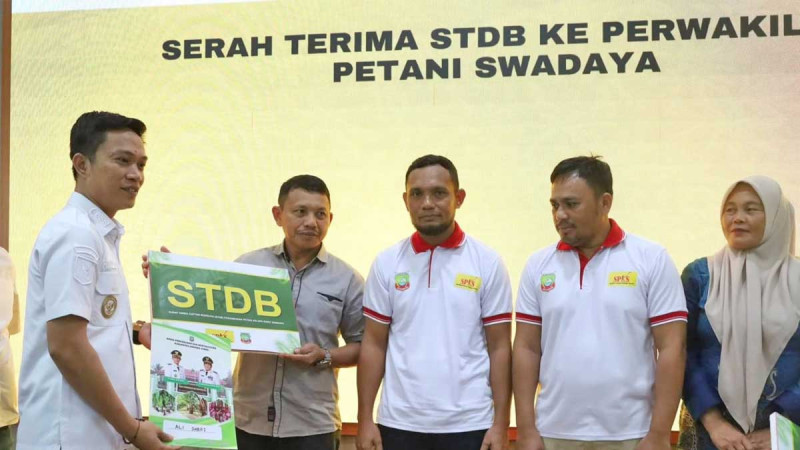
Concluding the discussion, the speakers agreed on three priority steps: land legality reform, by making STDB (Cultivation Registration Letter) or e-STDB the main instrument aligned with the One Map Policy; strengthening farmer institutions through cooperatives to facilitate collective certification and the development of an Internal Control System (ICS); and accelerating supply chain digitalization, through a national dashboard that integrates land, production, and transaction data based on affordable and easily accessible digital technology.
“The momentum of the EUDR postponement must be used to strengthen the capacity of small farmers, simplify regulations, and prepare budgetary support, including for the STDB and smallholder replanting programs,” asserted Imaduddin. (T1)