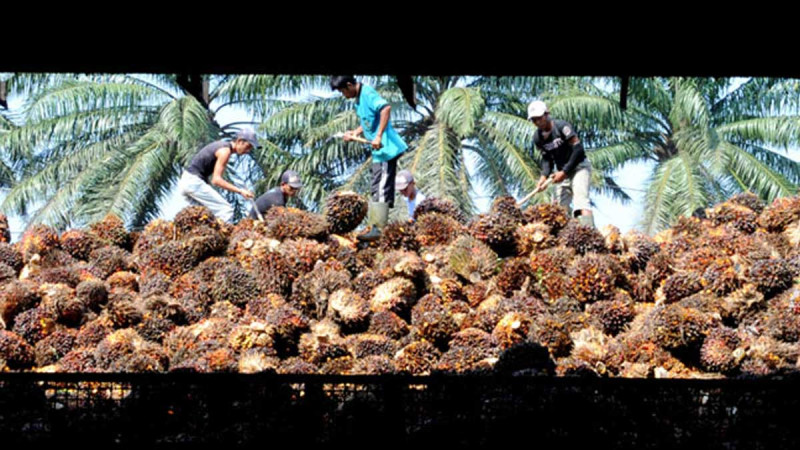
InfoSAWIT, JAKARTA – Women in the palm oil plantation sector continue to face injustice, ranging from low wages to gender-based violence. Findings from the IPB University Center for Agrarian Studies highlight the weak protection afforded to female workers, especially on independent smallholdings and in remote areas.
In the dark of the early morning, female workers on palm oil plantations begin their day. This is not just a challenging physical routine but also a complicated and often oppressive social environment. Bayu Eka Yulian from the IPB University Center for Agrarian Studies captured this harsh reality in his study on gender inequality in the palm oil sector, particularly among independent smallholders and informal workers.
"Women in this sector work from sunrise until their husbands return—and they still don't stop," Bayu said. He illustrated how women face a double burden, encompassing domestic responsibilities and heavy physical labor in the field. Ironically, many lack access to basic necessities like toilets, lactation rooms, or childcare facilities, despite working locations that can be 3–5 hours away from urban centers.
The research, involving 600 respondents across three locations—Siak in Riau, Asahan in North Sumatra, and Kutai Kartanegara in East Kalimantan—revealed that only 23% of female workers are under formal status. Yet, even within the formal system, discrimination is rampant. "Women's wages are lower compared to men's, even when performing the same tasks," Bayu revealed.
More disturbingly, sexual harassment and gender-based violence (GBV) continue to loom. Although the number of victims who admitted to direct experience was low, the types of violence identified varied, ranging from sexual comments and unwanted physical contact to cases of rape. In the context of a masculine work environment, many women choose to remain silent. "They say, 'Let God repay them'," Bayu recounted, quoting respondents who felt they had no reliable channel for complaints.
The research team's findings also disclosed that most of the violence occurs among daily casual laborers (BHL) and informal workers. On independent smallholdings, the power dynamics between the foreman (mandor) and the worker create a space for verbal and psychological violence that is often considered "normal." The "normalization" of unwanted physical touch or sexual jokes proves that non-physical forms of violence frequently escape attention. (T2)
(For more details, read InfoSAWIT Magazine, July 2025 Edition.)