InfoSAWIT, KUBU RAYA – The Indonesian palm oil industry is often described by its scale: large contributions, but equally large challenges. Amid intense scrutiny and frequent negative perceptions, collaborative steps are crucial to ensure the industry's image is more humane and sustainable.
Sumarjono Saragih, Chairman of GAPKI's HR Development Division and Founder of the Worker Initiatives for Sustainable Palm Oil (WISPO), asserted that both farmers and entrepreneurs share the responsibility of respecting and fulfilling the human rights of those who rely on palm oil for their livelihood. "Millions of people depend on this sector. Their fate and dignity must be protected," Sumarjono told InfoSAWIT on Saturday (9/27/2025).
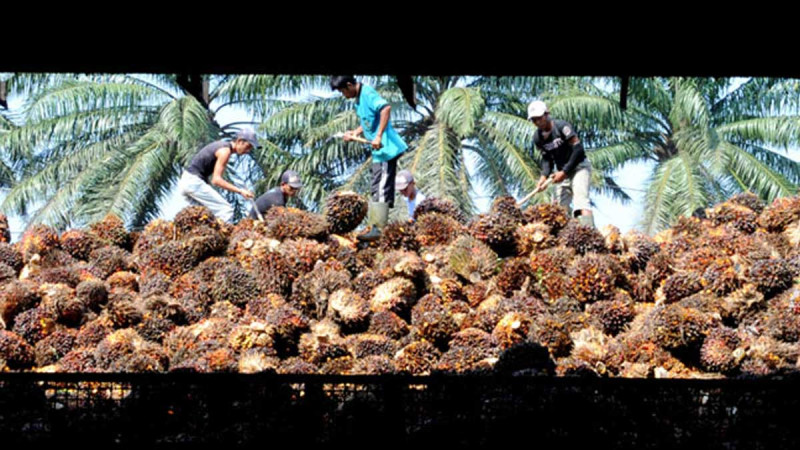
Palm oil smallholders currently manage around 42% of the national palm oil area, involving over 2 million families. Meanwhile, the total number of workers is even larger, estimated at 16 million people. These two groups—farmers and workers—are the main pillars of the palm oil industry.
However, the issues of child labor and protection for women workers remain serious concerns, both nationally and globally. The government, labor organizations, markets, and NGOs continue to highlight these matters. GAPKI has actively campaigned for the Child-Friendly Indonesian Palm Oil (SIRA) movement and the Women-Worker-Friendly Indonesian Palm Oil (SARAMPUAN) movement.
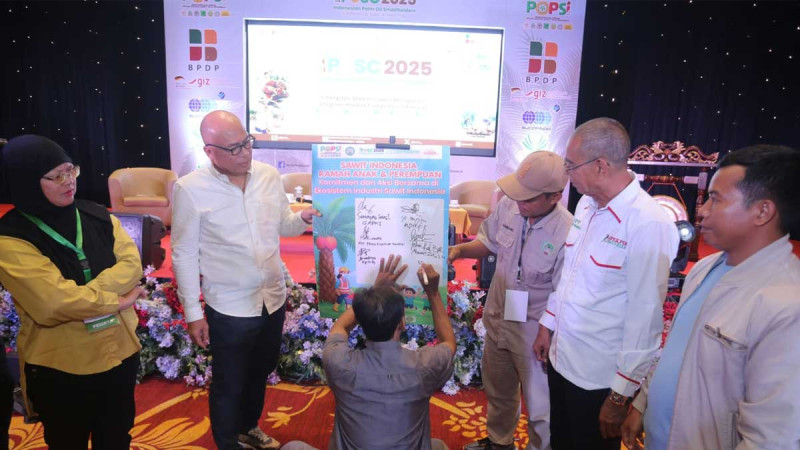
This commitment has now been extended to the smallholder ecosystem. At the Indonesia Palm Oil Smallholders Conference & Expo (IPOSC) in Pontianak on September 24, 2025, GAPKI joined hands with seven farmer organizations grouped under the Association of Indonesian Palm Oil Farmer Organizations (POPSI) to sign a joint commitment to implement the SIRA and SARAMPUAN principles.
This action is expected to unify the understanding that the presence of children on palm oil farms does not necessarily mean employing them; rather, it is often part of the process of education and farmer regeneration. Children's rights to play and attend school must remain guaranteed.
For women workers, the same commitment was emphasized: no violence, discrimination, or exploitation. Conversely, the role of women is encouraged to be more active, based on the principles of equality and gender justice.
With these efforts, the Indonesian palm oil industry is not only reinforcing itself as a sustainable sector but also as one that is child and woman-friendly. Palm oil is expected to be a locomotive for rural development and an engine for human development toward the Golden Indonesia 2045 vision. (T2)