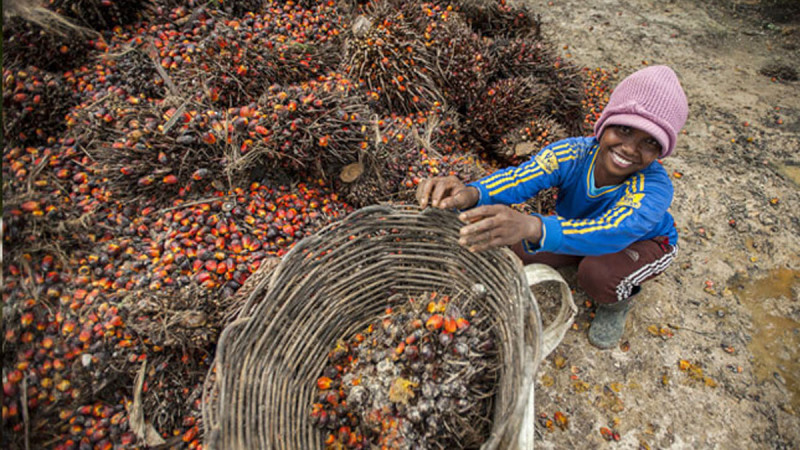
InfoSAWIT, JAKARTA – Even before seven in the morning, she has already begun her day with unpaid, often uncounted, labor—not even by the state. This is the reality for many women in Indonesia's palm oil plantation regions, invisible workers in two different worlds.
At a national seminar on women's participation in Indonesia's palm oil plantations, Dyah Ita Mardiyaning, a researcher from IPB University's Center for Agrarian Studies, lifted the veil on a rarely discussed reality: how women’s roles in the plantation sector, especially in palm oil, are often not fully recognized, even as they support their households with their sweat and effort.
In her presentation, Dyah meticulously described how women's contributions to household income are often viewed as subordinate to other groups. Interestingly, this is particularly true for those directly involved in the palm oil sector. "In Sumatra and Riau, the economic contributions of men and women are relatively balanced. But in Kutai Kartanegara, there is a perception that women are more valued if they do not work," she said during a discussion attended by InfoSAWIT in mid-May 2025.
According to Dyah, these cultural views play a significant role in shaping women's work patterns. There is a belief that the responsibility for earning a living belongs to men, while women who work are seen as simply filling a void or performing a form of "devotion" to the family. "Some even believe that if a woman doesn’t work but is valued by her family, that is enough," she explained.
However, behind this perception, Dyah and her team’s data tell a different story. Of the five categories of female workers they observed, those who work from home—without leaving for a farm or formal workplace—bear the heaviest domestic workload. From cooking and cleaning to childcare and caring for sick family members, all of these tasks fall on their shoulders.
“If you calculate it in a single day, a woman’s work can take up to 18–20 hours,” said Dyah. And although they only work about five hours in the public sector—a figure that is consistent across various regions—their contribution to family income cannot be underestimated.
In Asahan, North Sumatra, for example, many husbands work in other cities, leaving women with two roles at once: as breadwinners and household managers. This reality, according to Dyah, shows how women in palm oil plantations not only work hard but also face immense social and structural pressures.
Concluding her presentation, Dyah emphasized the need for a fairer approach to the division of domestic roles. “Education and awareness about the importance of sharing household responsibilities, especially for men and other family members, must be increased. Women already work hard, and they have the right not to work alone in two different worlds.” (T2)
For more details, read the July 2025 edition of InfoSAWIT Magazine.