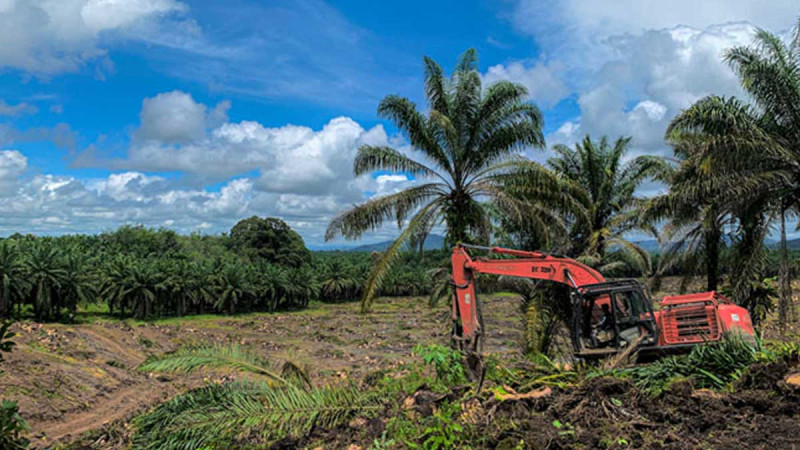
InfoSAWIT, SAMARINDA – The Indonesian Forum for the Environment (WALHI) of East Kalimantan has reported alleged land grabbing from the community of Tri Pariq Makmur Village, Long Hubung District, Mahakam Ulu Regency, by PT Setia Agro Abadi (SAA). The palm oil plantation company is accused of operating outside its designated Right to Cultivate (HGU) permit area.
WALHI praised the Mahakam Ulu Regency Government for beginning to respond to residents' complaints, but emphasized the need for firm action to ensure the rights of the community are not ignored. Based on WALHI's spatial analysis, an overlay of PT SAA's permit map with the Tri Pariq Makmur Village area shows that about 6,101 hectares of the concession are within the village's boundaries. This land includes areas with private ownership certificates held by local residents.
Beyond a single village, WALHI also found potential land overlaps in five other villages—Long Hubung Ulu, Matalibaq, Memahak Teboq, and Wana Pariq—totaling almost 19,950 hectares. This finding indicates a practice of land acquisition outside the HGU, which has the potential to illegally seize the living space of communities.
Despite tens of thousands of hectares in Mahakam Ulu being converted into palm oil plantations, the benefits for the community and regional revenue are considered minimal. Conversely, social, economic, and ecological losses have grown. "Citizens' land is gone, living spaces are damaged, and agrarian conflicts continue to recur without a just resolution," said Fathur Roziqin Fen, Executive Director of WALHI East Kalimantan, in an official statement to InfoSAWIT on Thursday (8/28/2025).
WALHI views the Mahakam Ulu Regency Government's step as a positive precedent but insists it must be followed up with concrete policies. WALHI urges the government to impose sanctions on companies that violate the law, conduct a comprehensive audit of all palm oil plantation permits, and halt the practice of selling off permits that often trigger agrarian conflicts.
According to WALHI, the conflict in Mahakam Ulu reflects the structural problems of palm oil plantations in Indonesia. The development model based on natural resource extraction is seen as perpetuating inequality, land grabbing, and environmental damage. As a long-term solution, WALHI encourages the government to shift to a regenerative "Nusantara Economy" model—based on community enterprises and a harmonious relationship with nature—to realize ecological justice for current and future generations. (T2)