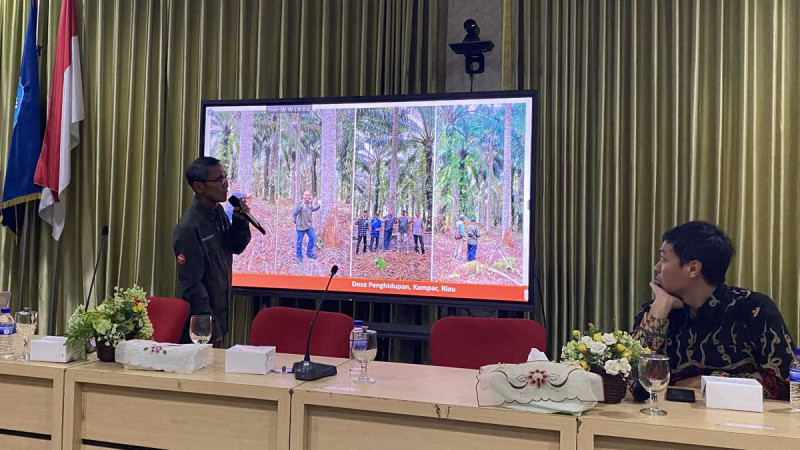
InfoSAWIT, JAMBI – WWF-Indonesia, in collaboration with the Pundi Sumatera Foundation, Jambi University, Gadjah Mada University (UGM), and Brawijaya University, recently held a "Sekolah Jangka Benah" (SJB) or "Interim Restoration School" event at the Faculty of Agriculture, Jambi University.
Nineteen participants from the Jambi Provincial Forestry Office, academics, and local farmer groups Bungo Pandan and Setia Jaya Mandiri took part in the event. The SJB program was initiated to address the problem of existing palm oil plantations in forest areas, which have serious ecological and economic consequences.
"The Jangka Benah School aims to build a technical, social, and policy-based understanding of the gradual implementation of palm oil agroforestry. This activity is also the starting point for developing a pilot plot to accelerate implementation and serve as an educational tool for multiple stakeholders," said the organizers.
During a workshop session, Bambang Yulisman, Head of Social Forestry at the Jambi Forestry Office, explained the mechanism for applying for social forestry permits, including rights, obligations, and post-permit management. He emphasized the importance of area arrangement, management plans, business development, and resolving land tenure conflicts. "Social forestry must improve community welfare while also preserving environmental balance," he stressed, as reported by InfoSAWIT from WWF Indonesia, Wednesday (20/8/2025).
Meanwhile, agroforestry expert from Jambi University, Dr. Bambang Irawan, explained the techniques and potential of the mixed palm planting system. According to him, agroforestry can increase the economic value of land by adding commodities such as durian, coffee, avocado, and essential oil plants. "In addition to supporting ecology, this diversification also provides added economic value," he explained.
Speakers from UGM's Faculty of Forestry, Dr. Hero Marhaento and his team, presented a technical design for the Interim Restoration Strategy, which consists of two phases: active planting with a mixed palm pattern and fading out to restore the forest's function. They reminded participants that the success of this strategy requires continuous technical support, favorable policies, and the development of pilot plots to demonstrate good practices.
The participants were also invited to practice drafting a technical design for forest rehabilitation intervention based on the "jangka benah" model. The discussion session was interactive, filled with questions and field experiences from the farmers. High enthusiasm marked the end of the first day of the event. It is hoped that this program will become a cornerstone for sustainable forest restoration in Jambi and can be replicated in other regions facing similar issues. (T2)