InfoSAWIT, JAKARTA - Colombia has recorded stable growth in palm oil production over the past decade. According to Alexandre Cooman from Cenipalma, a private sector organization coordinating with palm oil farmers in Colombia, national production has increased by approximately 80% in the last 10 years. This growth is not limited to one region but spans various palm oil plantation zones with significant differences in environment, land, and even culture.
Cenipalma, focused on research and development across all aspects of palm oil production, processing, and value addition, has experimental stations throughout Colombia. In addition to research, they run extension and technical assistance programs that have rapidly developed over the past decade. Cenipalma also has a technical division that commercializes products and services offered to private farmers.
Speaking at the ICOPE 2025 event, Cooman outlined Cenipalma's comprehensive sustainability strategy. This strategy includes climate change mitigation and adaptation, zero deforestation, and enhanced biodiversity management through seven main programs.
These programs encompass market requirements, sustainability practices, carbon footprint monitoring, integrated environmental management, pollution prevention, ecological restoration, and Colombia's newly introduced national sustainability standards.
Cooman explained that Cenipalma conducts life cycle assessments to measure the carbon footprint. This process involves evaluating all energy and mass inputs and outputs within the palm oil production system. The results are then linked to the main product, which is palm oil. This method follows ISO standards for life cycle assessment and IPCC guidelines.
In 2021, Cenipalma conducted a carbon footprint assessment involving 53 companies that account for 85% of national production and 3.6% of global palm oil production. The results indicated that fertilizer use, particularly nitrogen-containing fertilizers, is a major contributor to greenhouse gas emissions. However, with carbon capture by plantations, net emissions can be significantly reduced.
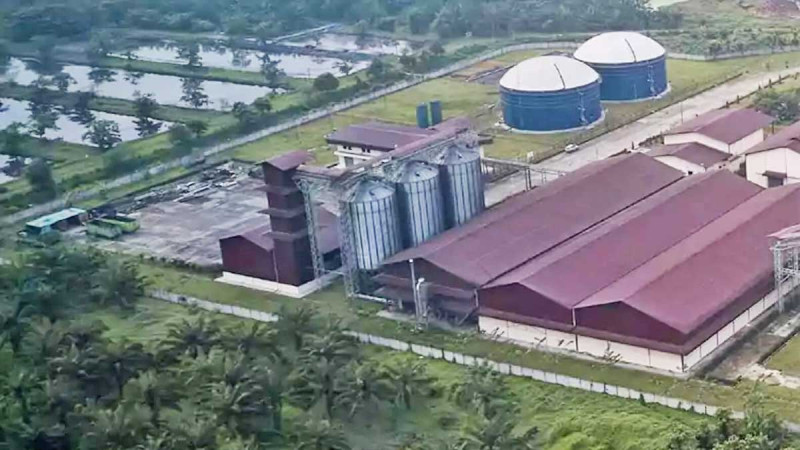
In 2021, only six palm oil mills captured methane emissions. By the end of 2024, this number increased to 20 mills, reducing emissions by up to minus 26 kilograms of CO2 per ton of palm oil. With this progress, Colombia is expected to achieve carbon neutrality in the near future. (T2)
For more details, read the June 2025 edition of InfoSAWIT Magazine.