InfoSAWIT, PASER — The Plantation Fund Management Agency (BPDP) of the Ministry of Finance, in collaboration with the Directorate General of Plantations (Ditjenbun) of the Ministry of Agriculture and PT Citra Widya Education (CWE), has officially launched Technical Training on Harvesting and Post-Harvesting for palm oil farmers in Paser Regency, East Kalimantan.
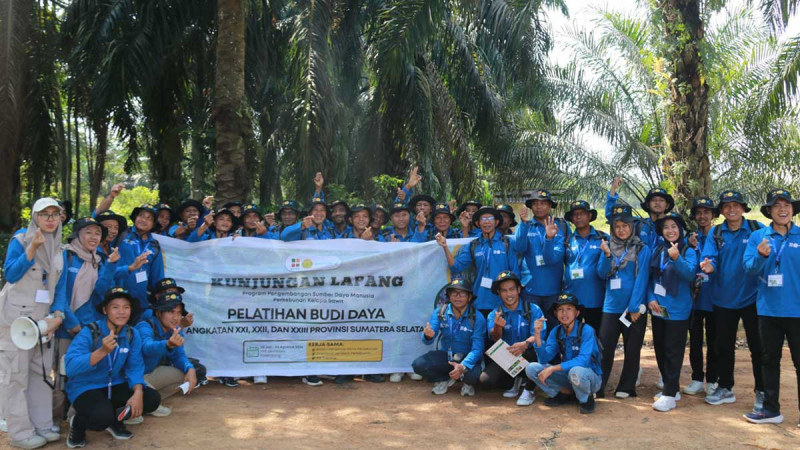
The event, held from August 11 to 15, 2025, was attended by 93 participants from the IV, V, and VI batches. This training is part of the Human Resource Development Program for Palm Oil Plantations (SDM PKS), designed to enhance technical skills, managerial capacity, and environmental awareness among farmers to meet the increasingly stringent demands of the global palm oil industry.
Over five days, participants engaged in classroom sessions, interactive discussions, technical simulations, and field visits to PT AJP's plantation, which has implemented harvesting and post-harvesting practices in accordance with industry quality standards. This field experience provided a real-world perspective on applying theory in plantations.
Nugroho Kristono, Director of PT CWE, stated that palm oil is one of Indonesia's pride as it supports the country's foreign exchange. Of the total 16.38 million hectares of national palm oil land, 42% is managed by smallholder farmers. “We hope participants can take this knowledge back and share it with fellow farmers in their areas, so the benefits can be widespread,” Nugroho said in an official statement received by InfoSAWIT on Thursday, August 14, 2025.
Djoko Bawono, Head of the Paser Agriculture and Livestock Office, revealed that this training is the last for 2025, with a total of 550 farmers having participated in similar programs this year. For 2026, they have proposed 1,134 farmers from 11 cooperatives in 139 villages and 5 urban areas as potential participants. “Almost all farmers in Paser cultivate palm oil. Building human resources in this sector is a top priority,” he said.
From Jakarta, Baginda Siagian, Director of Palm Oil and Other Palma Plants, emphasized that palm oil remains Indonesia's largest export contributor, valued at IDR 464 trillion. However, the average productivity of farmers is only 3 tons per hectare, far below the optimal potential of 5-6 tons per hectare. “This gap is a significant challenge for us all,” he stated.
Baginda added that technical training like this is crucial for improving harvesting skills, post-harvest handling, and plantation management. He also stressed that the B50 program—a 50% biodiesel blend based on palm oil—requires a supply of high-quality CPO, making the role of farmers critical.
In the future, training will be expanded not only to harvesting and post-harvesting but also to cultivation, ISPO implementation, and downstream processing. “This way, farmers can understand the added value of palm oil products and open up broader business opportunities,” he asserted.
This program is expected to be a driving force for the productivity and sustainability of smallholder palm oil. The knowledge participants take home is anticipated to spread to a wider community, creating a domino effect to strengthen the collective capacity of farmers. Ultimately, this training aims to foster independent, competitive, and sustainable smallholder palm oil plantations. (T2)