InfoSAWIT, JAKARTA – Indonesia's trade balance once again posted positive performance in the first half of this year. Minister of Trade Budi Santoso announced that the cumulative trade surplus for H1 2025 reached US19.48billion,a significant increase fromUS15.58 billion in the same period last year.
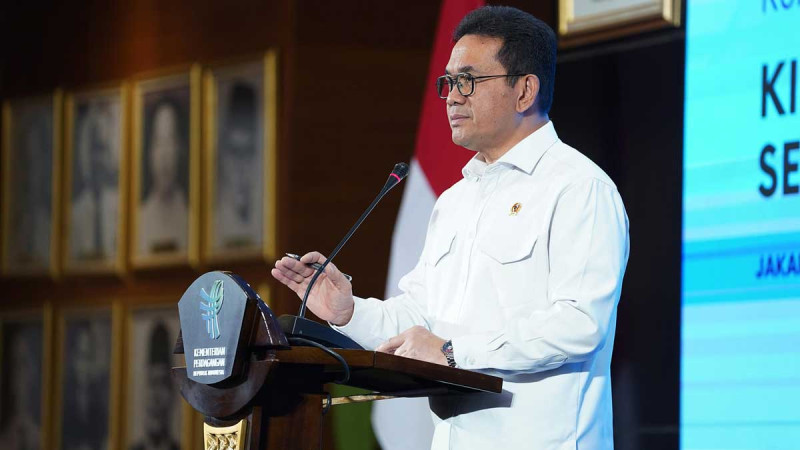
"This surplus shows that Indonesia's exports remain strong and competitive despite a challenging global economic climate," said the Minister, known as Mendag Busan, in a press statement quoted by InfoSAWIT on Wednesday (6/8/2025).
The main driver of the surplus was the non-oil and gas sector, which posted a surplus of US28.31billion, up fromUS25.69 billion in H1 2024. The largest surpluses were recorded in trade relations with the United States (US9.92billion), followed by India (US6.64 billion), and the Philippines (US$4.36 billion).
Overall, Indonesia's total exports for the first six months of 2025 reached US$135.41 billion, an increase of 7.70% year-on-year (CtC). This performance even exceeded the national export growth target for 2025, which was set at 7.10%.
Non-oil and gas exports grew by 8.96% to US$128.39 billion. Within this, the processing industry contributed the largest portion at 83.81%. The mining sector accounted for 13.55%, and the agricultural sector for 2.64%.
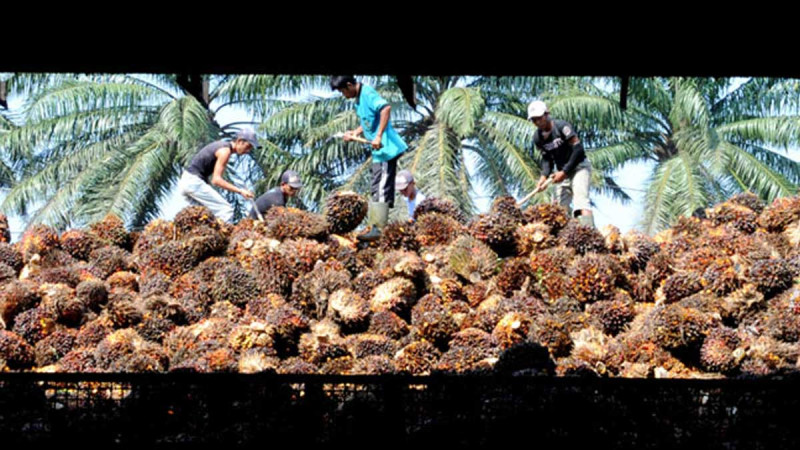
Despite its relatively small contribution, agricultural exports recorded a significant surge of 49.77%. Commodities such as coffee, coconut, mangosteen, and palm oil supported this growth, indicating that Indonesian agricultural products are gaining popularity in the global market.
The three non-oil and gas commodities with the highest export growth were cocoa and its derivatives (up 129.86%), coffee, tea, and spices (86.50%), and tin and its derivative products (80.88%).
June Export Performance Remains Positive
For June 2025, Indonesia's exports were valued at US$23.44 billion. Although this was a 4.78% decrease compared to May (MoM), exports still grew by 11.29% year-on-year (YoY).
This monthly export growth was primarily driven by rising global prices for several key commodities, including tin, gold, aluminum, and crude palm oil. While not dominant, palm oil remains a stable contributor to maintaining export value.
Improving global trade conditions following a trade agreement between the US and China, as well as positive economic growth in partner countries like the US (3.00%), China (1.10%), and Singapore (1.40%), also contributed to this performance.
Mendag Busan also emphasized the importance of long-term strategies through trade diplomacy. The government aims to finalize several key trade agreements, such as the Indonesia–European Union CEPA, Indonesia–Canada CEPA, and Indonesia–Peru CEPA. Furthermore, opening market access to Africa is a focus for the second half of this year.
"This year we are serious about opening doors to non-traditional markets like Africa. Initial approaches have been made to ensure Indonesian products, including agricultural and plantation goods, can enter more broadly," explained the Minister.
In response to international trade policy dynamics, particularly reciprocal tariffs from the United States, the Ministry of Trade has prepared anticipatory measures. These steps are designed not only to protect the domestic market but also to strengthen the competitiveness of national exports.
With a combination of market expansion strategies, optimal use of leading commodities, and macroeconomic stability, Indonesia's export performance is expected to remain strong through the end of the year.
"We are grateful that the surplus trend has been ongoing for 62 consecutive months. This provides a strong foundation for driving inclusive and sustainable economic growth," Mendag Busan concluded. (T2)