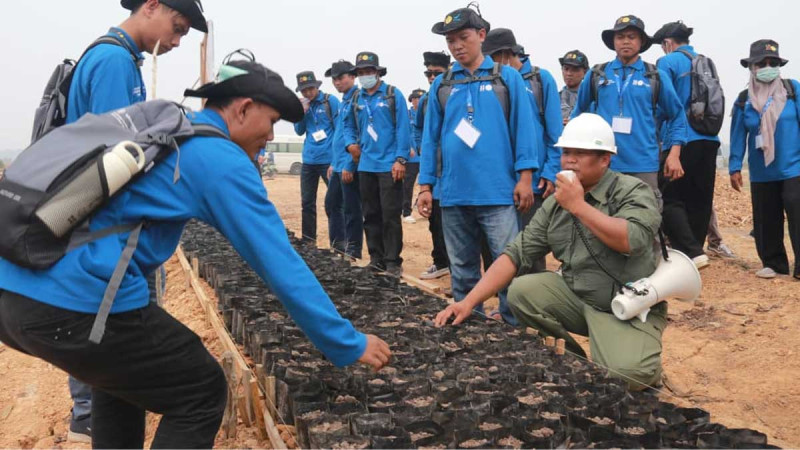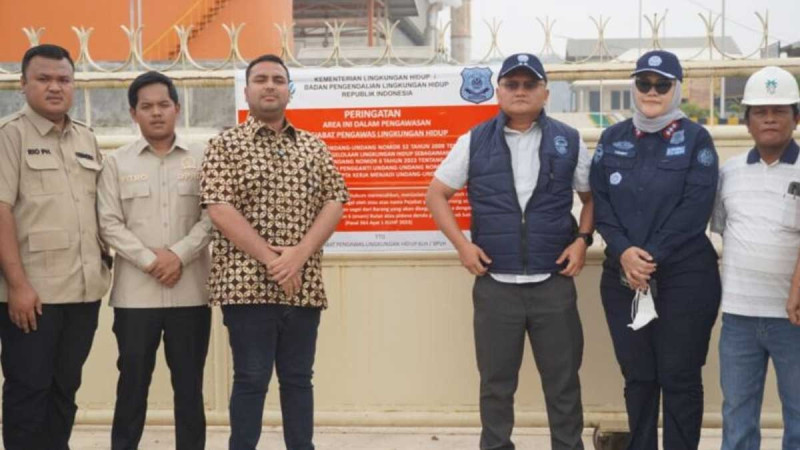
InfoSAWIT, KUANTAN SINGINGI – Environmental compliance at eight palm oil plantation companies and mills in Kuantan Singingi (Kuansing), Riau, has come under scrutiny following inspections by Indonesian House of Representatives Commission XII member Muhammad Rohid and environmental law enforcement officials.
The inspections identified a range of issues involving wastewater management, emissions control, environmental documentation, riverbank protection, and land-fire prevention facilities.
Rohid was accompanied by Kuansing Regional House of Representatives member Reky Fitro, Head of the Kuansing Environmental Agency Dodi Fitrawan, and other officials during the field inspections.
River Buffer Zones and Plantation Boundaries Under Scrutiny
At PT Karya Tama Bakti Mulia (KTBM), the inspection team found that oil palm replanting activities had reportedly not been included in the company's environmental documents.
The team also identified oil palm plantings within protected river buffer zones, covering approximately 7.41 hectares along the Batang Pantai and Rukam rivers and 2.9 hectares along the Tiu River. A further 1.76 hectares of planting was reportedly located outside the company's Land Use Rights (HGU) boundaries.
The inspection also recorded approximately 4,237 meters of elephant trenches and deficiencies in facilities intended to prevent land fires.
These findings raise questions about the alignment of plantation activities with environmental approvals, land-use boundaries, and fire prevention requirements.
Wastewater and Emissions Issues at Palm Oil Mills
At PT Tamora Agro Lestari (TAL), inspectors found a discrepancy between the mill's installed processing capacity of 75 tonnes of fresh fruit bunches (FFB) per hour and the 60-tonne-per-hour capacity stated in its environmental documents.
Other issues included wastewater drainage problems, a damaged flowmeter, and concerns that the combustion furnace and chimney might not meet applicable emissions-control requirements.
At PT Citra Riau Sarana (CRS), the team installed an environmental monitoring warning board relating to administrative sanctions over a damaged wastewater treatment plant (WWTP) pond. The company was also reported to lack the required technical approval for emissions compliance.
Meanwhile, at PT Sinergi Inti Makmur (SIM), inspectors raised concerns about exhaust gases from empty fruit bunch combustion and factory runoff flowing toward a tributary of the Lantak Payo River without the pollution-control facilities reportedly required. Land application activities were also said to be absent from the company's environmental approval.
At PT Mustika Agro Sari (MAS), the inspection identified discrepancies between mill capacity and environmental documentation, additional equipment not listed in the documents, and incomplete operational documentation for wastewater and emissions management.
Follow-Up Needed to Ensure Compliance
The findings point to several areas requiring further verification and follow-up by the relevant authorities under applicable regulations.
For the palm oil industry, compliance with environmental approvals, proper wastewater treatment, emissions management, and protection of river buffer zones remains important in reducing pollution risks and maintaining responsible plantation operations.
The inspections are expected to strengthen environmental oversight of palm oil businesses in Riau. Any subsequent administrative or enforcement measures will depend on the authorities' assessment of the findings and the companies' compliance with the applicable requirements. (T2)
Source: InfoSAWIT