InfoSAWIT, KUCHING – Soil carbon dioxide (CO₂) emissions increased significantly during the first three years after peatland was converted into an oil palm plantation, before declining during the fourth and fifth years, according to a recent study.
The findings were reported in a study titled “Evaluating soil CO₂ fluxes during the transition from peat swamp forest to an oil palm plantation,” conducted by Nur Azima Busman and researchers from Malaysia’s Sarawak Tropical Peat Research Institute and Japan’s Nagoya University.
The study was published in the journal Science of the Total Environment and was accepted on Aug. 10, 2026.
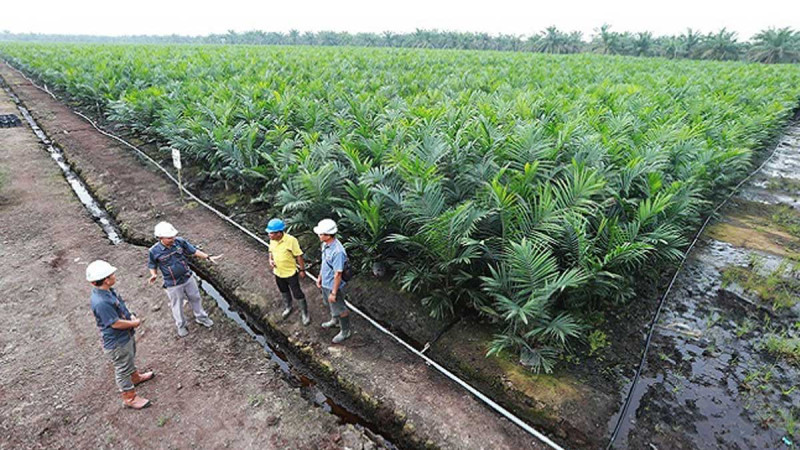
Researchers conducted monthly measurements for more than seven years, from January 2016 to April 2023, at a site in Betong Division, Sarawak.
The research covered three stages of land-use change: peat swamp forest, land preparation and oil palm plantation development.
CO₂ Emissions Peaked During Early Plantation Years
The study found that soil CO₂ emissions in the peat swamp forest ranged between 1,402 and 1,430 grams of carbon per square meter per year (g C/m²/year).
During land preparation, emissions increased to approximately 1,768–2,135 g C/m²/year, although the increase was not statistically significant compared with the peat swamp forest stage.
A more pronounced increase occurred after oil palms were planted.
During the first three years of plantation development, soil CO₂ emissions rose to between 2,606 and 3,119 g C/m²/year. Emissions subsequently declined during the fourth and fifth years to approximately 1,858–2,348 g C/m²/year.
The highest emissions were recorded during the first year. Site A reached 3,119 g C/m²/year, while Site B recorded 2,738 g C/m²/year.
Researchers suggested that elevated emissions during the early plantation stage were associated with increased heterotrophic respiration.
Fertilizer application may stimulate microbial activity and the decomposition of soil organic matter, while remaining root biomass from previously cleared forest vegetation may also contribute additional CO₂ emissions.
The researchers noted, however, that accumulated woody material along certain plantation pathways was not directly measured. Consequently, the measurements primarily represented emissions around the palm-circle area rather than the entire plantation.
Groundwater Levels Changed After Conversion
Land conversion also altered the hydrological conditions of the peatland.
Drainage caused the groundwater table to fall from near the surface under peat swamp forest conditions to approximately 78 centimeters below the surface during land preparation.
During the first year after oil palm planting, groundwater levels fell further to around 98 cm below the surface at Site A and 90 cm at Site B.
By the fifth year, however, groundwater levels had partially recovered to approximately 49 cm below the surface at Site A and 52 cm at Site B.
Changes in soil temperature were also observed, rising from approximately 26°C in the peat swamp forest to around 29.2°C during the second plantation year before falling to approximately 28.2°C in the fifth year.
Why Did CO₂ Emissions Decline?
Researchers linked the decline in emissions during the fourth and fifth years to several changes within the peat ecosystem.
The study found an increase in the pyrophosphate solubility index (PSI), which indicates increasing humification and a greater proportion of recalcitrant carbon.
As easily decomposable organic compounds are gradually broken down, a larger share of the remaining carbon becomes more resistant to decomposition. This reduces the availability of substrates for microorganisms to generate CO₂ through respiration.
Improved water-table management and the development of oil palm canopies, which provide greater shade, were also considered possible contributors to declining emissions.
The study further found that CO₂ flux had a negative relationship with water-filled pore space (WFPS) and soil bulk density. Higher WFPS can restrict oxygen diffusion, while increasing soil density can reduce porosity and limit oxygen penetration into the surface peat layer.
Study Highlights Importance of Protecting Peat Swamp Forests
Researchers described the work as the first study to monitor soil CO₂ flux throughout the full transition from tropical peatland forest to oil palm plantation at a single location.
Because the study site had previously been secondary peat swamp forest, the researchers cautioned that emissions associated with land-use conversion could potentially be greater if primary peat swamp forests were converted.
The findings therefore reinforce the importance of protecting remaining peat swamp forests to minimize further carbon losses.
Although emissions declined after the fourth year, researchers said it remains unclear whether the downward trend will continue as oil palms mature.
Longer-term monitoring beyond the fifth year, as well as measurements across different plantation management zones, will be needed to develop a more representative picture of emissions at the plantation scale. (T2)
Source: InfoSAWIT