
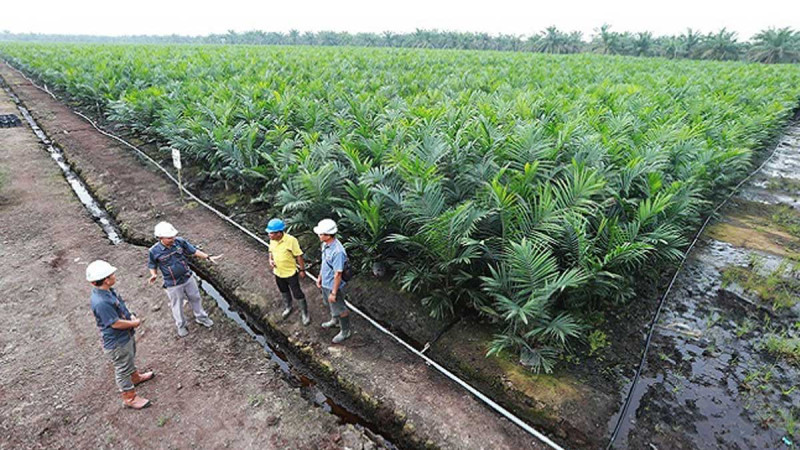
InfoSAWIT, JAKARTA — Indonesian plantation company PT Cisadane Sawit Raya Tbk (CSRA) is strengthening mechanization and precision agriculture as part of its strategy to improve oil palm productivity, reduce harvest losses and control operating costs.
The initiative comes as the company faces pressure on profitability despite strong revenue and crude palm oil (CPO) production growth during the first half of 2026.
In its first-half performance statement, CSRA said its operating strategy combines data monitoring, best agronomic practices, precision fertilization and mechanization in harvesting and logistics.
The measures are designed to improve resource utilization, increase productivity and reduce losses between harvesting and processing.
CSRA Finance and Strategic Development Director Seman Sendjaja said mechanization was expected to strengthen operational efficiency and make the company's cost structure more competitive.
“Mechanization is expected to increase productivity, reduce dependence on manual labor and lower operating costs, resulting in a more competitive cost structure,” Seman said in a company statement cited by InfoSAWIT on Friday, October 16.
Revenue Growth Fails to Prevent Margin Pressure
CSRA reported that first-half 2026 revenue rose 65.1% to Rp1.23 trillion. However, gross profit fell 18.4% to Rp238.88 billion, while the gross margin narrowed to 19.4% from 39.3%.
The company identified higher costs for purchasing fresh fruit bunches (FFB) from external suppliers as one factor behind the margin pressure.
The figures highlight the importance of improving plantation productivity and operating efficiency to ensure that increased sales translate into stronger profitability.
Precision Agriculture and Mill Utilization
Beyond mechanization, CSRA is relying on precision fertilization, improved agronomic practices, high-quality planting material and better crop maintenance to strengthen plantation performance.
The company is also seeking to optimize palm oil mill utilization by purchasing additional FFB from external suppliers. At the same time, it has identified higher productivity in its own plantations as a priority for the second half of 2026.
A stable supply of internally produced FFB is expected to support processing operations and improve raw material quality and continuity.
Seman said continued innovation was essential to maintaining competitiveness while moving toward more responsible and sustainable plantation management.
CSRA also highlighted the influence of geopolitical developments, international trade policies and the energy transition on the palm oil outlook. Demand for CPO as a biodiesel feedstock could receive support from energy market developments and Indonesia’s domestic policies, including the B50 mandate.
For CSRA, the effectiveness of mechanization and precision agriculture will ultimately depend on their ability to deliver measurable improvements in yields, harvesting efficiency, operating costs and long-term business performance. (T2)