

InfoSAWIT, JAKARTA — Accelerating smallholder oil palm replanting could help Indonesia strengthen production capacity as domestic consumption rises and competition for palm oil supplies intensifies, according to Indonesia Palm Oil Strategic Studies (IPOSS).
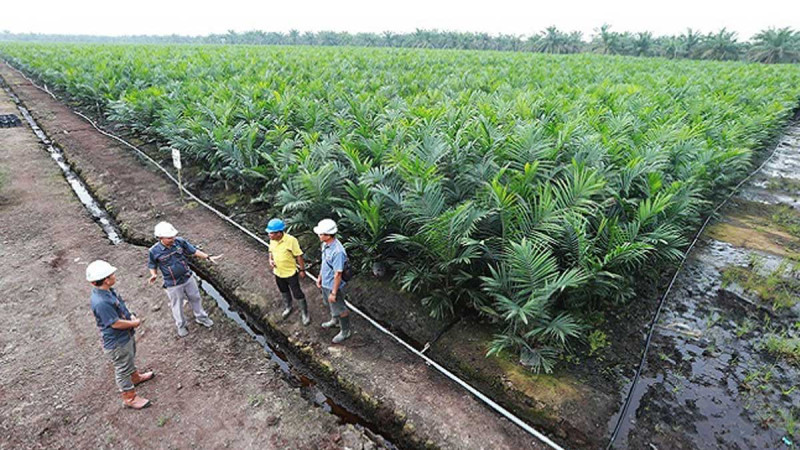
In its fourth-quarter 2026 outlook, titled Maintaining Room for Growth Amid a New Balance, IPOSS identified the Smallholder Palm Oil Replanting Program, known as Peremajaan Sawit Rakyat (PSR), as an important instrument for improving productivity without relying on additional plantation expansion.
In a statement received by InfoSAWIT on Friday, October 16, IPOSS estimated that replanting areas already entering their productive phase could contribute approximately 940,000 tonnes of crude palm oil (CPO) in 2026, equivalent to around 2% of national CPO production.
The contribution indicates that the program is beginning to deliver results, although IPOSS said implementation needs to accelerate to generate a greater impact on national output.
Key priorities include strengthening smallholder institutions, improving technical assistance and streamlining application and verification procedures.
Production Growth Faces Rising Domestic Demand
IPOSS forecasts that Indonesia’s palm oil production will reach 52.4 million tonnes in 2026, an increase of just 1.86% from 2025.
Domestic consumption, meanwhile, is projected to rise 7.4% to approximately 27.1 million tonnes, driven largely by additional biodiesel feedstock requirements following the implementation of the B50 mandate in July 2026.
The difference between production and consumption growth highlights the need to improve plantation productivity and ensure that supply can keep pace with rising demand.
IPOSS also projects that palm oil production in the fourth quarter of 2026 will increase 15.6% from the previous quarter to 13.3 million tonnes. However, the organization said this increase primarily reflects the seasonal distribution of production between quarters rather than a structural recovery in production capacity.
Productivity Key to Long-Term Competitiveness
Against this backdrop, IPOSS argues that the industry cannot rely solely on expanding domestic demand. Improvements in efficiency, business certainty and sustainable market access are also necessary to preserve Indonesia’s growth prospects.
Faster smallholder replanting could improve yields over time while strengthening the contribution of independent and partnered smallholders to national production.
Through its fourth-quarter outlook, IPOSS urged stakeholders to treat productivity improvements, energy security and export sustainability as complementary priorities.
For Indonesia’s palm oil industry, the challenge is to generate enough additional output to meet growing domestic requirements while maintaining its position in international markets. (T2)