
InfoSAWIT, JAKARTA — Indonesia needs to accelerate the development of its palm oil downstream industry to unlock greater economic value from its extensive plantation resources, Deputy Industry Minister Faisol Riza has said.
Speaking at the Indonesian Chamber of Commerce and Industry’s 2026 National Coordination Meeting on Investment, Downstream Development, Energy and the Environment in South Jakarta on Tuesday, October 13, Faisol expressed concern that downstream development had not progressed as quickly as expected.
He also pointed to Malaysia’s comparatively strong productivity, arguing that Indonesia must improve efficiency despite its position as the world’s largest palm oil producer.
Faisol raised the issue of Indonesian fatty alcohol exports to the United States, which have faced difficulties, as another reason to strengthen the competitiveness of domestic downstream industries.
“Compared with a neighboring country such as Malaysia, its productivity is far more efficient and higher than ours, even though we have the world’s largest palm oil industry,” he said.
Beyond CPO and Biodiesel
Faisol said Indonesia had significant opportunities to expand its range of palm oil-derived products beyond crude palm oil (CPO) and biodiesel.
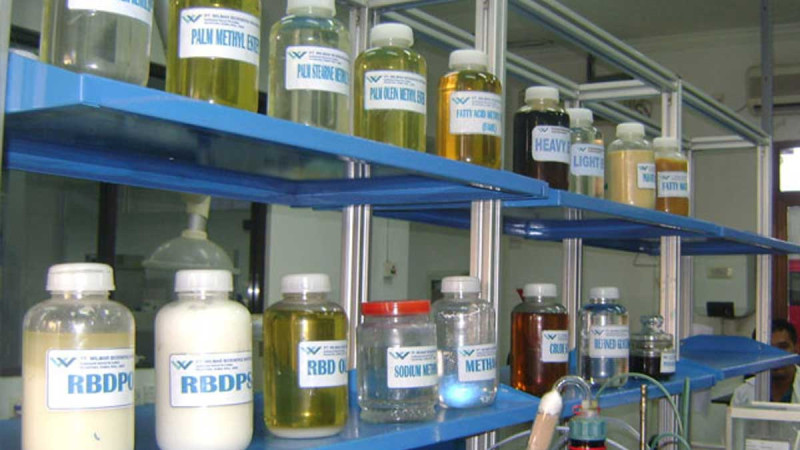
Potential products include glycerin, surfactants and carotene, which serve a range of industrial applications. Glycerin is used in pharmaceuticals, cosmetics and personal care products, while surfactants are important ingredients in detergents and cleaning products. Carotene also has applications in food and other industries.
The development of these products could strengthen links between Indonesia’s plantation sector and domestic manufacturing, allowing more value to be generated within the country.
Faisol acknowledged the role of the B50 biodiesel program in expanding domestic palm oil utilization but argued that the industry’s potential extends much further.
“We still have opportunities to expand into glycerin, surfactants, carotene and many other products. Palm oil has enormous potential. Yet after many years, we are only now seeing B50,” he said.
Kadin Urged to Prioritize Downstream Investment
Faisol called on the Indonesian Chamber of Commerce and Industry to make palm oil downstream development a priority.
He said Indonesia already possessed a major advantage in the form of abundant domestic raw materials. The challenge is to translate that advantage into competitive industrial products through investment, technological development, improved efficiency and wider market access.
Closer cooperation between businesses and other stakeholders could help accelerate projects and broaden the range of products manufactured domestically.
For Indonesia’s palm oil industry, the next stage of downstream development will depend not only on increasing the use of palm oil but also on building competitive processing capabilities that can serve diverse manufacturing sectors. (T2)