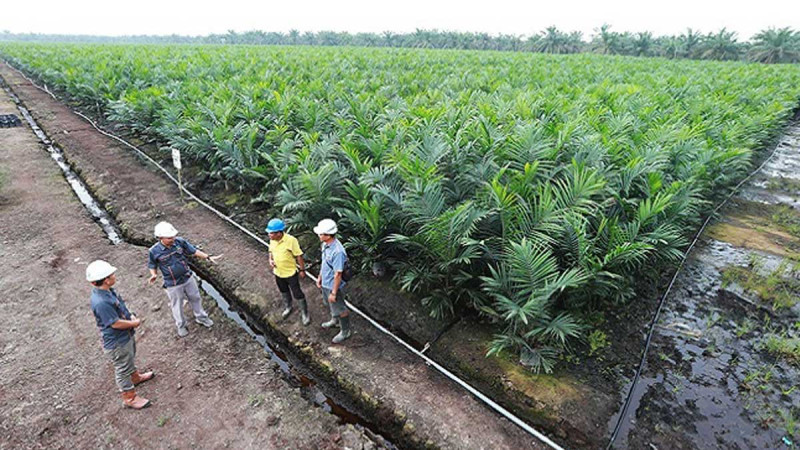
InfoSAWIT, NORTH MOROWALI – A total of 70 oil palm smallholders in North Morowali, Central Sulawesi, Indonesia, took part in organic fertilizer production and application training from October 15 to 18, 2026, as efforts continue to strengthen farmers’ technical skills and encourage more effective use of organic materials in plantations.
The training combined classroom sessions with hands-on practice, allowing participants to learn how to process organic materials into both solid and liquid fertilizers. The program was conducted under the 2026 Oil Palm Plantation Human Resources Development Program, Batch I and II.
The initiative was organized through collaboration between the Plantation Fund Management Agency (BPDP), the Directorate General of Plantations, and IPB Training.
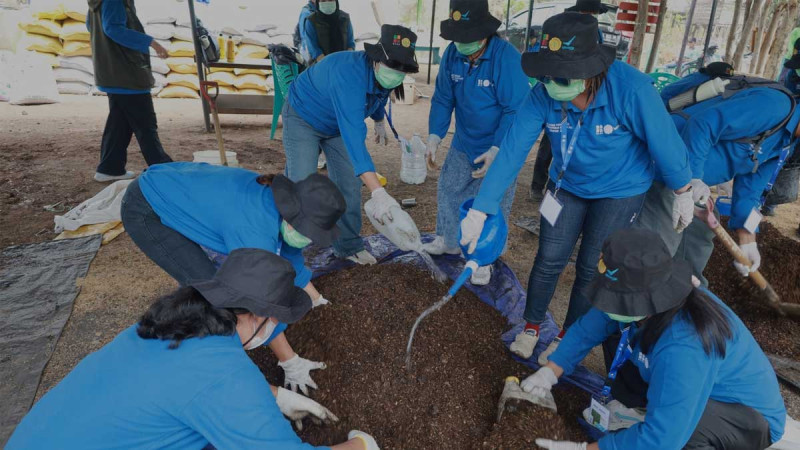
One of the main activities was a field visit to Pupuk Organik Cipta Lestari, where participants learned about raw material characteristics and followed the production stages for solid organic fertilizer. They also took part in practical sessions on liquid fertilizer preparation.
The training highlighted that converting organic waste into fertilizer requires an understanding of decomposition processes, appropriate processing methods, and quality standards. Fertilizer quality depends not only on the materials used but also on how carefully each production stage is carried out.
According to an official statement received by InfoSAWIT on Sunday, October 18, participants first received classroom instruction on basic fertilization principles, the functions of plant nutrients, the characteristics of organic and biological fertilizers, and regulations governing organic fertilizer standards.
Improving Fertilizer Quality and Application
Participants also studied fertilizer application methods, the five principles of proper fertilization, commonly referred to as the “5T” approach in Indonesia, and how to calculate application costs. The objective was to help smallholders understand not only how to produce fertilizer but also how to apply it according to crop requirements and field conditions.
Quality assessment was another key component. Participants were introduced to practical checks involving fertilizer color, smell, texture, moisture content, and pH. These indicators provide an initial understanding of fertilizer characteristics before it is applied to crops.
During the opening session, Dandy Alfita, S.Pt., M.P., representing the Central Sulawesi Provincial Plantation and Livestock Office, encouraged participants to apply the knowledge they gained and become local advocates for organic fertilizer technology.
The event was also attended by Krispen Herbret Masu, head of the North Morowali Agriculture and Food Office, and Dr. Budi Nugroho, representing IPB. Dr. M. Apuk Isman, chair of the Training Institutions and Personnel Team at the Agricultural Extension and Human Resources Development Agency (BPPSDMP), represented the agency’s leadership.
Supporting More Sustainable Plantation Practices
Through a combination of theory, practical work, and field discussions, the program is expected to strengthen the ability of North Morowali’s oil palm smallholders to process organic materials and use them more effectively in their plantations.
The skills gained are also expected to be shared with other farming communities in the region, helping broaden access to practical knowledge on organic fertilizer production.
Organic materials available around plantations may provide an alternative input for smallholders. However, their use still requires attention to fertilizer quality, crop nutrient requirements, field conditions, and application costs to ensure that the approach is technically appropriate and economically viable.
By improving farmers’ understanding of fertilizer production and application, the training aims to support better plantation management and encourage the responsible use of locally available resources. (T2)