INFOSAWIT, KUALA LUMPUR – Malaysia’s palm oil inventories climbed to their highest level in five months in July 2026, but rising stocks have yet to significantly weaken crude palm oil (CPO) prices as the market increasingly focuses on potential supply constraints in 2027.
The market is now paying closer attention to medium-term risks, including strengthening El Niño conditions, Indonesia’s mandatory B50 biodiesel program and potential disruptions to competing vegetable oil supplies from the Black Sea region.
Since the beginning of 2026, benchmark CPO prices have gained more than 15%. Malaysia’s average CPO price in July stood at RM4,493 per ton, up 9.3% from the same month a year earlier. The average price for the first seven months of 2026 was RM4,388 per ton.
Major industry players are also becoming more optimistic about prices. Malaysian palm oil producer SD Guthrie expects CPO prices to trade between RM4,600 and RM5,000 per ton during the remainder of 2026. If the impact of El Niño becomes more pronounced, prices could reach RM5,200 per ton in the first quarter of 2027.
Ivy Ng Lee Fang, Head of Malaysia Research and Regional Plantation Analyst at CIMB Securities, said the market was shifting from simply anticipating the effects of El Niño to watching for tangible signs of changing weather conditions.
The prospect of tighter production toward 2027 could provide further support for CPO prices.
El Niño Raises Supply Concerns
El Niño has emerged as one of the key factors supporting palm oil market sentiment. Prolonged dry conditions could have a greater impact on palm oil production in Indonesia than in Malaysia.
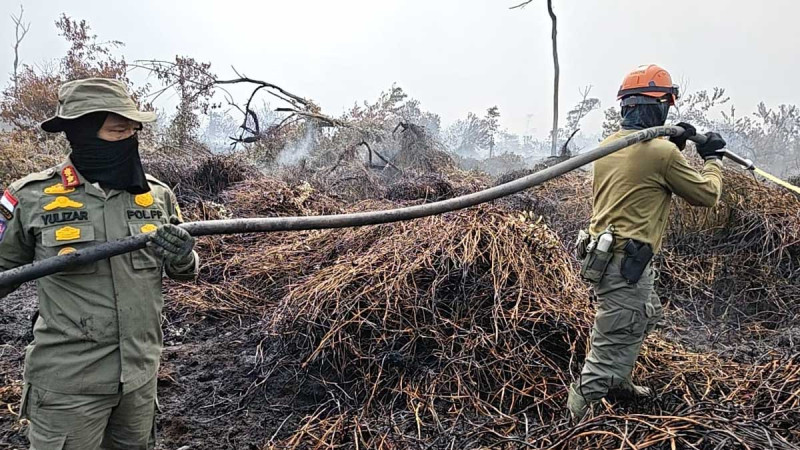
Hotspot activity in Indonesia also increased sharply in August 2026, particularly in Kalimantan. Data from the ASEAN Specialised Meteorological Centre showed that the number of hotspots rose 159% month-on-month to 3,462.
Although the figure remained well below the levels recorded during severe El Niño events in 2015 and 2019, the rapid increase was viewed as an indication of worsening dry conditions in parts of Indonesia.
CGS International also highlighted forest fires reported in East Java in early August that affected around 550 hectares, pointing to growing dryness in several areas.
A prolonged dry period could affect production while also raising the risk of haze that could disrupt harvesting activities in Malaysia.
The 2015/2016 El Niño episode remains an important reference point for the market. During that period, CPO prices increased by around 21.5%, while Malaysia’s CPO production fell from 19.96 million tons in 2015 to 17.32 million tons in 2016.
CIMB has raised its average CPO price forecasts for 2026 and 2027 by RM50 per ton to RM4,450 and RM4,550, respectively, citing geopolitical risks, stronger El Niño conditions and rising biodiesel demand in Indonesia.
Malaysia’s Palm Oil Stocks Rise 3.3%
According to the Malaysian Palm Oil Board (MPOB), Malaysia’s palm oil inventories increased 3.3% month-on-month to 2.63 million tons in July 2026.
The stockpile was the highest in five months and 24% above the level recorded in the same period last year.
The increase came as Malaysian palm oil production rose 9.4% from June to 1.79 million tons, while exports increased 14.5% to 1.39 million tons.
However, higher inventories have not been enough to trigger a significant decline in CPO prices. Global demand remains relatively firm, while palm oil has become increasingly competitive against other vegetable oils.
India, the world’s largest vegetable oil importer, sharply increased palm oil purchases in July. Its palm oil imports jumped 50% month-on-month to around 733,000 tons, the highest level in five months.
The increase came as refiners built inventories ahead of India’s festival season, which runs from August through November.
Indonesia’s B50 Program May Tighten Export Supply
Another factor being closely monitored by the market is Indonesia’s mandatory B50 biodiesel program, which took effect on July 1, 2026.
The policy raises the share of palm-based biodiesel blended into diesel to 50%, from the previous 40%, potentially increasing domestic palm oil consumption and reducing supplies available for export.
The implementation of B50 nationwide is projected to absorb approximately 16.7 million to 18 million kiloliters of palm-based biodiesel annually.
Still, high Malaysian palm oil inventories and the premium of CPO prices over competing vegetable oils could limit price gains in the short term.
The U.S. Department of Agriculture (USDA) has also lowered its forecast for Indonesia’s palm oil production in the 2026/2027 season to 47.2 million tons, citing growing concerns over dry weather.
Black Sea Disruptions Add Support
The market is also monitoring harvesting disruptions in parts of Indonesia caused by higher diesel prices and fuel shortages. The situation has reportedly prompted some smallholders in Kalimantan and Sumatra to reduce harvesting and fruit collection activities.
While the impact is still considered localized, the disruption remains a factor under market observation.
Meanwhile, geopolitical tensions in the Black Sea region are providing additional support for vegetable oil prices. Russia and Ukraine are major global suppliers of sunflower oil, meaning disruptions to ports, infrastructure and export routes could reduce sunflower oil supplies on the international market.
Lower sunflower oil exports could encourage importing countries to turn to palm and soybean oils as alternatives, particularly ahead of increased consumption during India’s festival season.
With these factors in play, the CPO outlook heading into 2027 remains relatively firm. Although Malaysian palm oil inventories are expected to remain elevated during the peak production period, the market is increasingly focused on the potential impact of El Niño on production and stronger domestic palm oil consumption in Indonesia under the B50 program.
Research institutions continue to maintain a positive outlook for the plantation sector, particularly upstream producers that are highly sensitive to movements in CPO prices. (T2)
Source: InfoSAWIT