InfoSAWIT, JAKARTA – The global competition for critical minerals is shifting from a race for raw material access toward a broader effort to build industrial ecosystems that create greater value in producing countries. For nations across the Global South, the shift is seen as crucial to ensuring natural resource wealth does not remain trapped in raw commodity exports.
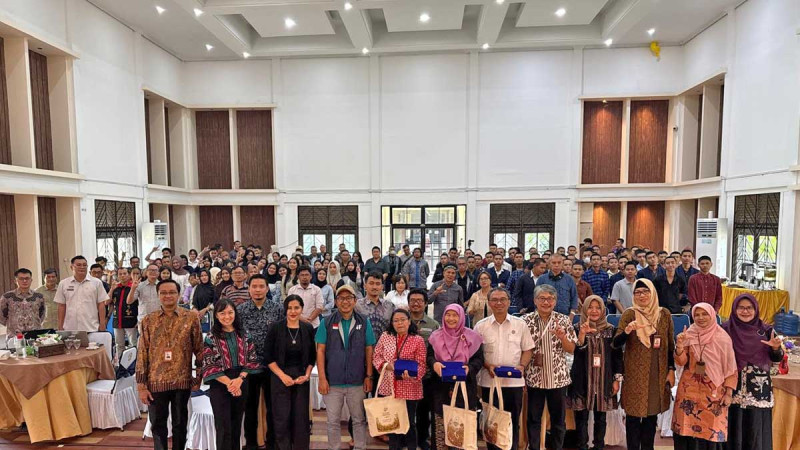
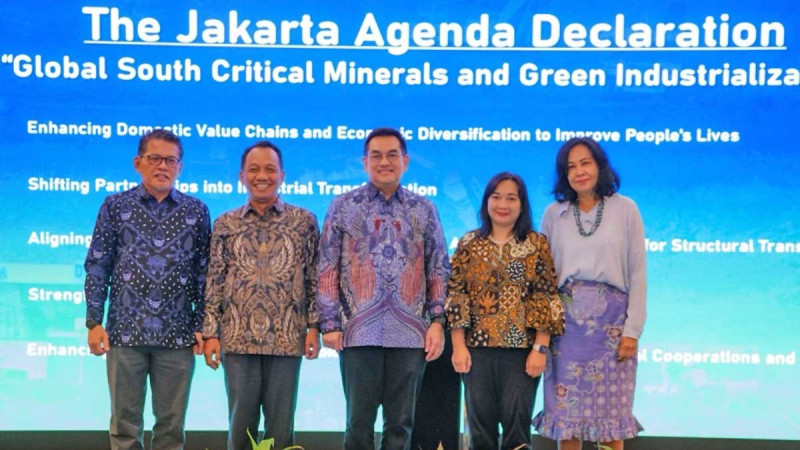
The idea emerged during a discussion titled Critical Minerals & Green Industrialization for Shared Prosperity in the Global South in Jakarta on Thursday (13/8/2026). The forum brought together representatives from Asia, Africa, Latin America and the Middle East and produced the Jakarta Agenda, a shared framework aimed at advancing green industrialization and strengthening producing countries’ positions in the global critical minerals value chain.
Director General of Mineral and Coal at the Ministry of Energy and Mineral Resources Tri Winarno said mineral-producing countries in the Global South share a common interest in increasing the economic value captured from their mineral resources.
That makes strategic cooperation among producing countries increasingly important.
Indonesia’s experience in developing downstream industries for nickel and copper, he said, could serve as an example of how natural resources can be processed further rather than exported primarily in raw form.
But Tri stressed that downstream development cannot be measured solely by expanding processing capacity. Sustainability must remain a central foundation, including environmental standards, occupational safety and traceability throughout the production chain.
The development of critical mineral industries must also generate direct benefits for domestic economies, including decent employment and stronger manufacturing competitiveness.
“Indonesia is ready to become an equal partner in building a critical minerals value chain that delivers greater value, is responsible and improves prosperity across the Global South,” Tri said in an official statement, as reported by InfoSAWIT on Sunday (16/8/2026).
Critical Mineral Downstreaming Requires Regional Cooperation
Deputy for Strategic Investment Downstreaming at the Investment Coordinating Board (BKPM) Heldy Satrya Putera said the future development of critical minerals needs to focus on building an integrated industrial ecosystem.
Countries across Asia, Africa, Latin America and the Middle East possess different resources, capabilities and competitive advantages. Rather than becoming obstacles, those differences can provide a foundation for building regional value chains through investment partnerships, technology transfer and collaboration, as well as the alignment of responsible production standards.
Cross-regional cooperation could also bring together capital, technology and manufacturing capacity that are currently spread across different Global South economies.
Under this framework, Indonesia is not only offering its experience in downstreaming but is also opening opportunities to learn from other resource-producing countries.
“Our main focus is not simply processing raw commodities, but building a competitive industrial ecosystem by combining industrial policy with green principles,” Heldy said.
Indonesia, he added, remains open to mutual learning and collaboration to strengthen production capacity, traceability and global supply chains with partners across the Global South.
The approach is increasingly important as critical minerals occupy a strategic position in technological development and the global energy transition. Countries with critical mineral reserves have an opportunity to capture significant economic benefits if they can develop domestic processing and manufacturing industries.
Global South Urged to Move Beyond Raw Material Exports
INDEF Executive Director Esther Sri Astuti said demand for critical minerals continues to expand, while a large share of strategic mineral reserves is located in countries across the Global South.
The situation presents a major opportunity for producing countries to build domestic industrial bases. But the opportunity will only deliver its full economic potential if those countries can move beyond their traditional role as suppliers of raw materials to global industries.
Esther emphasized the need to build strong domestic industries while creating decent employment opportunities for local communities.
“We do not want to merely supply the global market. Critical minerals must become capital for building our own industries and creating decent jobs for our people,” she said.
Against that backdrop, INDEF Green Transition Initiative and Penabulu-Oxfam brought together countries from Asia, Africa and Latin America to discuss the future direction of critical mineral industrial development.
The meeting resulted in the Jakarta Agenda, which places green industrialization at the center of the Global South’s strategy for responding to changes in the global economic structure.
Five Priorities of the Jakarta Agenda
Yayasan Penabulu Program Director Rini Devianti Nasution said the Jakarta Agenda outlines five key priorities for strengthening the position of Global South countries in critical mineral value chains.
The first is strengthening domestic value chains while diversifying economies so mineral resources can contribute more directly to improving people's livelihoods.
The second is shifting partnerships away from simple commodity trade toward industrial transformation that creates greater value in producing countries.
The third is aligning policies across sectors and countries to support structural transformation and prevent fragmented approaches.
The fourth is strengthening accountability to build inclusive and sustainable value chains.
The fifth focuses on collectively increasing industrial capacity through cooperation and coordination among Global South countries.
Together, the five priorities are expected to provide a common framework for resource-producing nations to maximize the value of critical minerals while maintaining environmental, social and governance considerations.
“Through the Jakarta Agenda, the voice of the Global South is strengthened in advancing critical mineral governance that places industrial transformation, sustainability, inclusiveness and shared prosperity at the heart of the global energy transition,” Rini said.
The critical minerals race, therefore, is no longer determined simply by which country holds the largest reserves. The next challenge is whether resource-rich countries can build competitive and responsible industries capable of distributing greater value more broadly across society.
For Indonesia, its experience with nickel and copper downstreaming is also part of a learning process that can be shared with other Global South countries. The Jakarta Agenda is expected to become an entry point for deeper South-South cooperation in developing more sustainable critical mineral supply chains. (T2)