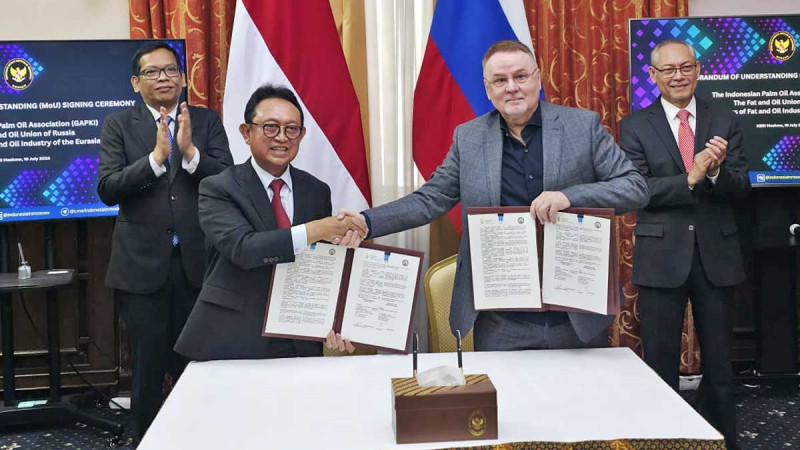
InfoSAWIT, MOSCOW – Indonesia's palm oil industry has taken another step toward diversifying its export markets after the Indonesian Palm Oil Association (GAPKI) signed a strategic Memorandum of Understanding (MoU) with The Fat and Oil Union of Russia and the Association of Enterprises of the Fat and Oil Industry of the Eurasian Economic Union (EAEU).
The agreement, signed in Moscow on July 10, is expected to enhance bilateral cooperation in trade, investment, technology, and market development for vegetable oils between Indonesia and the Eurasian region.
GAPKI Chairman Eddy Martono described the partnership as a significant milestone in building long-term collaboration between the vegetable oil industries of both countries.
"This Memorandum of Understanding represents a strategic step toward strengthening long-term cooperation between Indonesia's and Russia's vegetable oil industries. We believe closer collaboration will create greater opportunities for trade, investment, innovation, and broader market access while enhancing the competitiveness of both industries," Eddy said in a statement received by InfoSAWIT.
The signing ceremony was witnessed by Indonesian Ambassador to Russia and Belarus Jose Tavares, officials from the Indonesian Embassy in Moscow, and representatives from Indonesia's Palm Oil Plantation Fund Management Agency (BPDP).
Under the agreement, both organizations will cooperate in promoting trade, exchanging industry information, expanding business networks, facilitating investment, and encouraging technology development across Indonesia, Russia, and other EAEU member countries.
The partnership follows the signing of the Indonesia–EAEU Free Trade Agreement (FTA) in December 2025 involving Russia, Kazakhstan, Belarus, Armenia, and Kyrgyzstan. The agreement is expected to eliminate or reduce import tariffs on more than 90 percent of Indonesian export products entering the Eurasian market, creating fresh opportunities for palm oil exports to a region with approximately 180 million consumers.
Russia Emerging as a Key Alternative Export Destination
Russia continues to strengthen its position as one of Indonesia's most promising alternative palm oil markets amid increasing sustainability regulations and trade barriers in Europe.
According to GAPKI data, Indonesia exported 792,000 tonnes of palm oil products to Russia in 2025, valued at US$919 million, compared with 680,000 tonnes worth US$681 million in 2024. Refined palm oil accounted for the largest share of exports, followed by refined palm kernel oil, oleochemicals, and specialty downstream products including hydrogenated palm oil, shortening, vegetable ghee, and emulsifiers.
Between January and April 2026 alone, exports to Russia reached 189,000 tonnes valued at approximately US$237 million, highlighting continued growth potential in the market.
Promoting Sustainable Palm Oil
The Moscow agreement concluded GAPKI's trade mission to Russia from July 6–10, which also included participation in INNOPROM 2026 in Yekaterinburg, one of Russia's largest industrial exhibitions.
During the event, GAPKI's Head of Foreign Affairs Fadhil Hasan highlighted Indonesia's role in supplying sustainable palm oil while supporting the global energy transition. He noted that Indonesia produced 56.6 million tonnes of CPO and PKO in 2025, with exports reaching 32.3 million tonnes valued at US$35.9 billion.
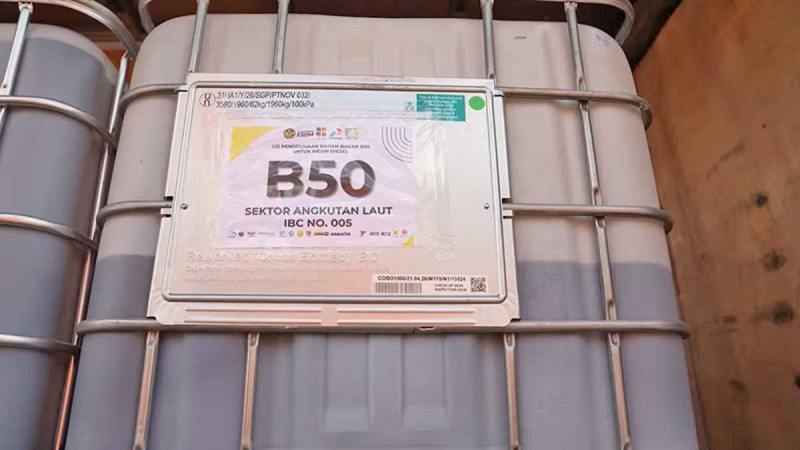
Hasan also emphasized Indonesia's implementation of the B50 biodiesel mandate and the expansion of the Indonesian Sustainable Palm Oil (ISPO) certification system, including stronger traceability and sustainability standards across downstream industries.
GAPKI believes the combination of stronger trade ties with Russia and broader engagement with Eurasian partners will create new opportunities for investment, technology collaboration, and sustainable growth across the global vegetable oil industry. (T2)