InfoSAWIT, PALEMBANG – In most accounts of Indonesia’s plantation history, the story of palm oil almost always begins in Tanah Deli, North Sumatra. It is there that commercial oil palm plantations are widely believed to have first flourished before eventually transforming Indonesia into the world’s largest palm oil producer, controlling 57.49 percent of global output today.
Yet history often decides which places are remembered and which slowly fade from public memory.
Long before vast oil palm estates shaped the economic landscape of North Sumatra, another region quietly held some of the earliest traces of oil palm cultivation in the archipelago — Palembang.
Along the banks of the Musi River, oil palm seeds were once tested, planted, and cultivated in what would become one of the earliest forgotten chapters of Indonesia’s palm oil journey.
This year marks the 115th anniversary of Indonesia’s commercial oil palm plantation industry, calculated from the establishment of the first commercial estates in Tanah Deli in 1911. However, the origins of oil palm cultivation in Indonesia date back decades earlier.
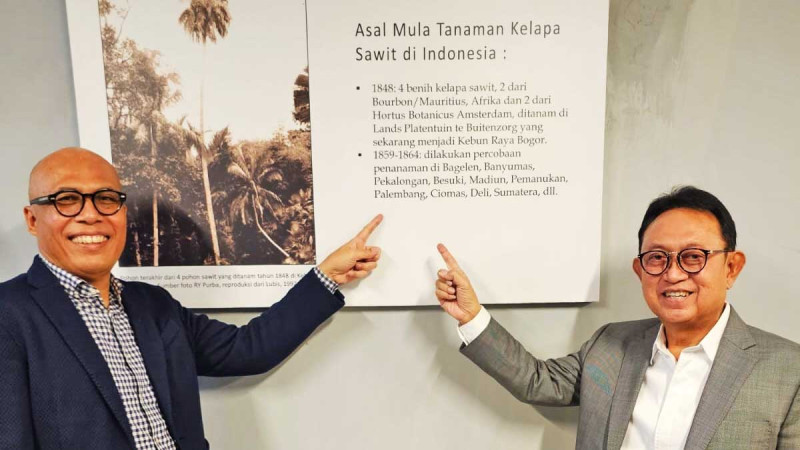
In 1848, a Dutchman named Dr. Pryce brought four oil palm seeds from West Africa to the Dutch East Indies. The seeds were initially planted at the Bogor Botanical Gardens merely as a botanical collection, with little expectation that the crop would one day become one of Indonesia’s most strategic economic commodities. President Prabowo Subianto has even referred to oil palm as a “miracle crop.”
From Bogor, the seeds were later distributed to several regions for cultivation experiments. Historical narratives eventually focused heavily on Deli, where the industry rapidly expanded with colonial capital, technology, and plantation infrastructure.
However, older records reveal another story that has rarely resurfaced.
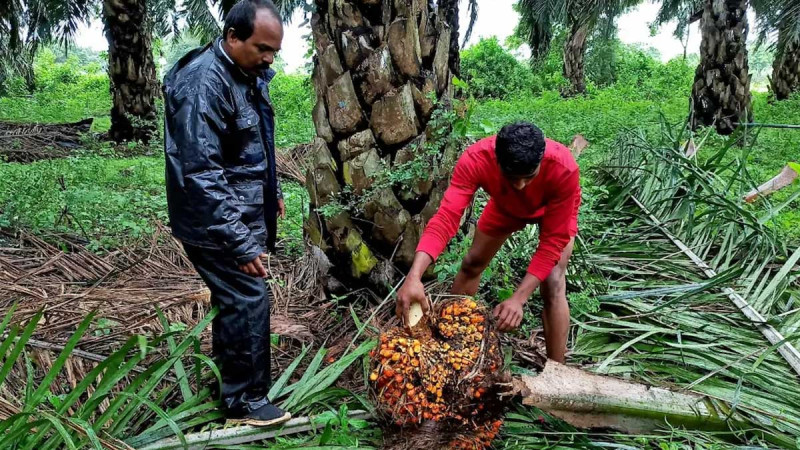
Around 1858, oil palm seeds from Bogor were planted in the Palembang Residency area on approximately 1.2 hectares of land. Historical notes from Van Heurn in 1948 indicated that the experiment showed promising results, with oil palm trees beginning to bear fruit in their fourth year at a height of around 1.5 meters — faster than in their original habitat in West Africa.
The trials did not stop in Palembang. Cultivation later expanded to Muara Enim and Ulu Musi between 1859 and 1864.
This suggests that Palembang and South Sumatra were not merely modern palm oil producing regions, but also among the earliest historical foundations of Indonesia’s oil palm industry.
Still, history ultimately placed Deli at center stage.
It was there that oil palm evolved into a modern commercial industry. The first large-scale plantations were established in Sei Liput and Tanah Raja, areas now located in North Sumatra and Aceh. From that point onward, palm oil developed into a major economic force supporting Indonesia’s economy today.
Meanwhile, Palembang gradually disappeared into the background of the national plantation narrative.
Yet today, South Sumatra possesses significant potential to revive that historical legacy — not merely as nostalgia, but as a foundation for future development.
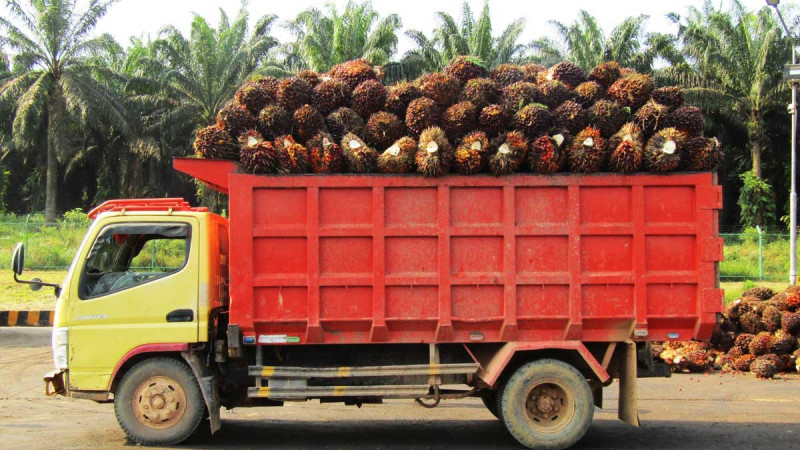
Data from 2024 shows that South Sumatra is home to around 1.5 million hectares of oil palm plantations out of Indonesia’s total 16.4 million hectares. The plantations are managed by smallholders, private companies, and state-owned enterprises alike. Palm oil is no longer solely the domain of large corporations; it has become deeply integrated into the livelihoods of local communities.
Millions of workers, farmers, laborers, transport operators, traders, and informal businesses depend on the palm oil economy across the province. The industry has helped create new growth centers throughout South Sumatra.
As locals often say, “the wallets of wong kito today still carry the scent of palm oil.”
South Sumatra’s long relationship with the industry has also contributed to innovation. Several nationally recognized superior oil palm seed varieties originated from the province.
Among them is D x P Sriwijaya, developed by PT Bina Sawit Makmur under POSCO International Group through the work of Indonesian researchers led by Dr. Dwi Asmono. The Sriwijaya name attached to the seed symbolizes not only geography, but also prestige and historical glory.
Another variety, D x P Tania Selatan, was developed by Wilmar Plantation Group. In one discussion, the author even proposed adding the name “Sriwijaya” to strengthen regional identity and pride.
Still, the future of palm oil cannot rely solely on productivity and seed innovation.
The industry is also under increasing pressure to answer global sustainability demands.
As part of GAPKI and APINDO South Sumatra, the author said he has encouraged several sustainability initiatives rooted in labor and social protection concerns. In 2020, together with then Musi Banyuasin Regent Dodi Reza Alex, they launched the Muba Sustainable Palm Oil Initiatives (MSPOI), focusing partly on strengthening social protection for oil palm smallholders and workers.
The movement later evolved through the establishment of GEBIE (Gender Equality in Business Initiatives Enthusiast) in 2025, which focuses on the protection of women workers in business sectors. The initiative is led by South Sumatra Regional Representative Council (DPD RI) member dr. Ratu Teny Leriva.
These initiatives reflect South Sumatra’s continuing effort to shape a more sustainable future for the palm oil industry.
Perhaps the time has come for Palembang to reopen its own forgotten chapter of history — not to compete with other regions, but to remind the nation that some of the earliest roots of Indonesia’s palm oil industry once grew here.
The oil palm trees may have risen tallest in Deli. But some of their roots first gripped the soil of Palembang. And perhaps from those long-forgotten roots, a new future for Indonesian palm oil can once again emerge. (*)
Author: Sumarjono Saragih / Chairman of APINDO South Sumatra / Chairman and Founder of WISPO (Worker Initiatives for Sustainable Palm Oil)
Disclaimer: This article reflects the personal views of the author, who bears full responsibility for its content, and it is not associated with InfoSAWIT.