InfoSAWIT, JAKARTA – Economic growth is not born from claims, but from systems built on consistency. The government’s 8 percent growth target inevitably raises an important question: why has a successful model like palm oil not been used as a benchmark for other sectors?
The 8 percent growth target set by Prabowo Subianto is not merely an economic ambition—it is a test of development direction. Will Indonesia rely on rhetoric, or will it build upon models that have already proven effective? Amid the increasingly noisy debate over food self-sufficiency, palm oil offers a quieter but more profound lesson: one about policy consistency, long-term investment, and the courage to trust market mechanisms.
That growth figure sounds both promising and demanding. President Prabowo has placed it before the nation as a national economic objective. To me, it is more than an ambitious number written into policy papers. It is a threshold—whether Indonesia can leap beyond the middle-income trap, or once again circle within the same economic pattern.
But growth does not emerge from rhetoric. It requires an engine—a locomotive that is not only powerful, but tested over a long track record. In the midst of heated debates over food self-sufficiency, which in April 2026 even escalated into legal reports against public criticism, we seem to have forgotten that Indonesia already possesses one successful model: palm oil.
The events in early April were troubling. A food analyst was reported to authorities merely for questioning discrepancies between bureaucratic rice reserve data and realities observed in wholesale markets. Data-based criticism, which should serve as material for policy evaluation, was instead treated as a threat. At that point, what was being eroded was not merely public discourse, but public trust itself.
Yet the question raised was simple: why do claims of self-sufficiency fail to translate into price stability at the dining tables of ordinary Indonesians? There lies the root of the controversy—in the gap between figures on official reports and the pulse of the real market.
This is where palm oil becomes relevant.
Palm oil did not grow through declarations. It was built through a long cultivation process, policy consistency, and sustained investment. Self-sufficiency, in its most tangible meaning, is not about definitions—it is the result of a mature and sustainable production system.
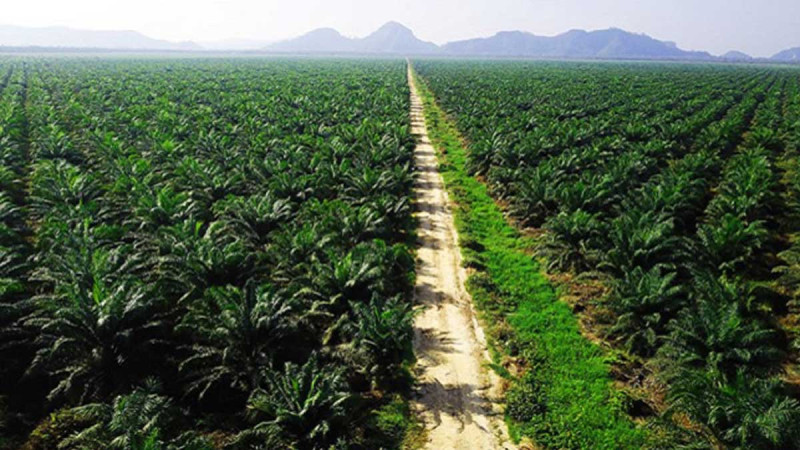
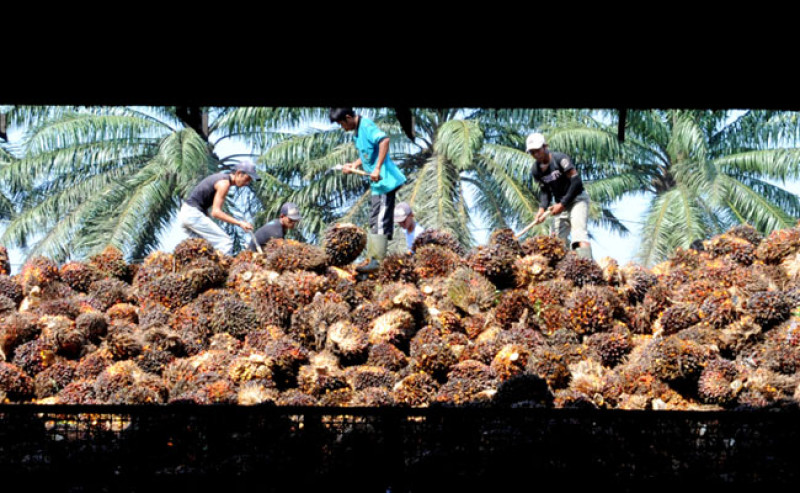
For years, palm oil has often been simplified as an extractive industry—a stigma that, upon closer examination, is not entirely fair. Palm oil is in fact a complex cultivation industry, weaving together economic, environmental, and social interests within a relatively integrated ecosystem. Its contribution to gross domestic product, along with the involvement of 16.5 million Smallholder families, makes it more than a commodity—it is a foundation.
Industry data clearly illustrates that strength. National palm oil production in 2026 is projected to reach around 57 million tons of crude palm oil (CPO). That figure is not merely about volume, but direction—how palm oil supports national energy resilience through the B40 biodiesel mandate, which is moving toward B50. Domestic consumption continues to rise, diesel imports are reduced, and at the same time foreign exchange earnings continue to flow, supported by global prices hovering around US$1,100 per ton.
Within that broader calculation, one thing becomes clear: 8 percent growth cannot be sustained by the state budget alone. It requires large-scale and sustainable private investment. Palm oil has proven that when policy creates space, the private sector is capable of organically building an integrated upstream-to-downstream ecosystem.
Comparison with other commodities provides an honest mirror. Rubber and coconut once stood at the height of their glory before fading under the weight of inconsistent policy disruptions. Palm oil endured because its market structure remained competitive, and because the private sector was positioned not as a complement, but as a strategic partner.
At this point, a larger question emerges: if this model is to be replicated in other food sectors, is the foundation ready?
Legal certainty is a non-negotiable prerequisite. Without it, long-term investment will always hesitate to enter. Ease of doing business, risk-based licensing, and consistent regulation are not merely administrative slogans—they determine direction. The food sector, like palm oil, requires time to grow, and time is never friendly to uncertainty.
Yet law alone is not enough.
Integration from upstream to downstream is equally critical. Without it, the classic cycle will continue: abundant harvests leading to oversupply, falling prices, and farmers bearing the heaviest burden. Industrial infrastructure must be built with long-term vision, not easily shaken by leadership transitions or political shifts.
And just as importantly, productivity must become central. Yield improvement, especially on Smallholder land, is not merely a technical agenda—it is a national strategy.
The sustainability of Indonesia’s commodity ecosystem will also depend heavily on proportional synergy among stakeholders. In this framework, government must position itself strategically as both regulator and facilitator—guaranteeing legal certainty and sound governance.
Meanwhile, the private sector must serve as the primary engine of growth, bringing professionalism, efficiency, and technological innovation to drive globally competitive productivity. Above all, farmers and Smallholders must be positioned as both key actors and principal beneficiaries—ensuring that every added value created across the supply chain delivers real welfare improvements for those at the upstream end of production.
Commodity sectors remain an irreplaceable backbone of the national economy. Recent data shows that agriculture and plantations consistently contribute around 12 to 13 percent of national GDP, while also serving as a critical source of non-oil-and-gas export earnings amid geopolitical uncertainty. By absorbing nearly 29 percent of Indonesia’s total workforce, this sector is not merely a statistical figure—it is a socio-economic safety net for millions of households.
Ultimately, we return to the starting point: criticism should be an entry point for evaluation, not a reason for criminalization.
In pursuing the 8 percent growth target, Indonesia can no longer rely on fragile narratives of self-sufficiency. We need a model that works—and palm oil has demonstrated one.
It has shown that production surplus, energy resilience, and economic growth can move together—provided that the investment climate is protected and trust in the business sector is genuine. Without that, the 8 percent target will remain standing—not as an achievement, but as a statistical illusion repeated over and over again. (*)
Disclaimer: This article reflects the personal views of the author, is entirely the author’s responsibility, and has no affiliation with InfoSAWIT.