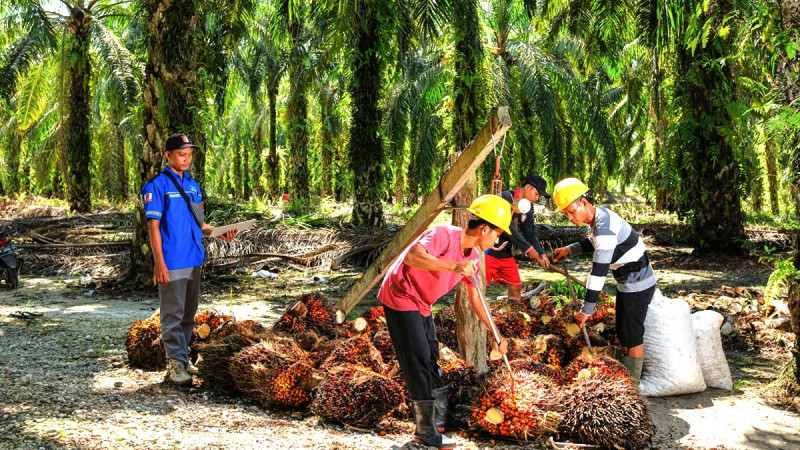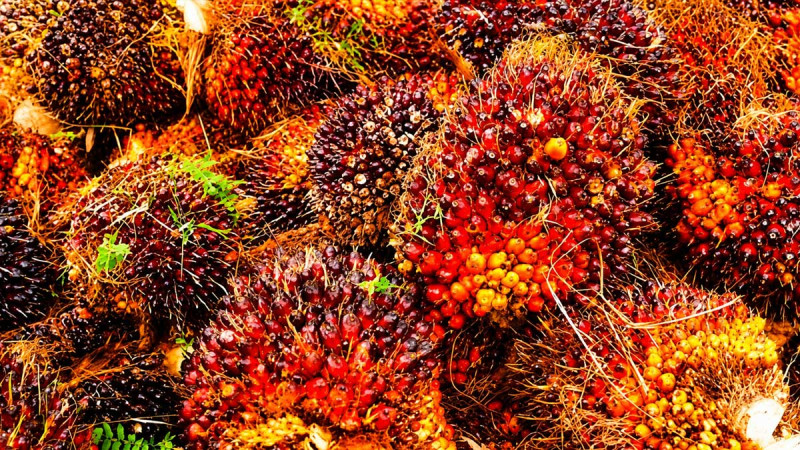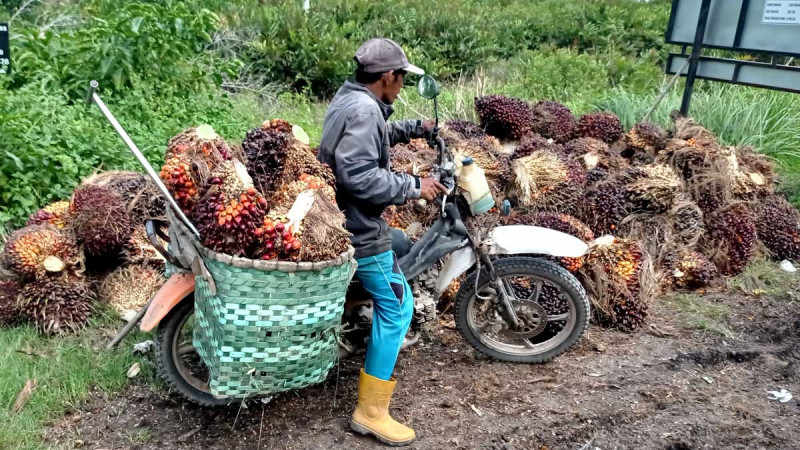

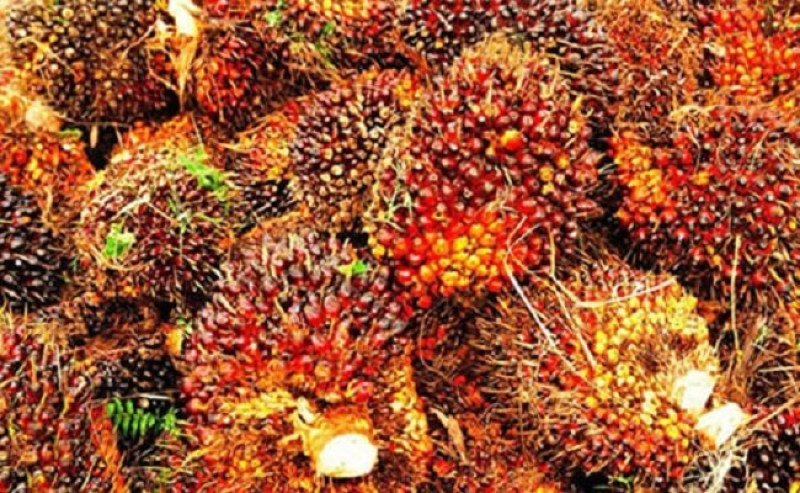
InfoSAWIT, PONTIANAK – Fresh Fruit Bunch (FFB) prices for oil palm growers in West Kalimantan moved higher in the first pricing period of May 2026, offering improved returns for Smallholders and plantation producers across the province amid steady upstream palm oil fundamentals.
Based on the latest decision by the West Kalimantan Provincial Fresh Fruit Bunch Pricing Team, the benchmark price for oil palm trees aged 10 to 20 years—the most productive plantation age bracket—was set at Rp3,683.89 per kilogram, marking an increase of Rp38.25/kg for the payment period covering May 1–7, 2026.
The increase reflects continued resilience in the province’s palm oil value chain, where FFB pricing remains closely linked to movements in crude palm oil (CPO), palm kernel values, and the provincial K-index formula used to determine grower returns.
According to data compiled by InfoSAWIT from the West Kalimantan Provincial Plantation and Livestock Office, FFB prices across planting age categories were set as follows: 3-year-old palms at Rp2,769.59/kg; 4 years at Rp2,970.18/kg; 5 years at Rp3,184.88/kg; 6 years at Rp3,321.03/kg; 7 years at Rp3,440.48/kg; 8 years at Rp3,539.34/kg; 9 years at Rp3,605.96/kg; and 10–20 years at Rp3,683.89/kg.
For older plantations, the pricing trend gradually tapered in line with lower productivity profiles. FFB from 21-year-old palms was set at Rp3,641.02/kg, followed by 22 years at Rp3,609.21/kg, 23 years at Rp3,564.93/kg, 24 years at Rp3,468.10/kg, and 25 years at Rp3,378.18/kg.
Supporting the higher FFB valuation, the provincial pricing formula set crude palm oil (CPO) at Rp15,078.00/kg, while palm kernel was valued at Rp15,371.34/kg, with the K-index recorded at 91.72%, indicating a strong revenue-sharing component in favor of growers.
The latest pricing adjustment underscores the importance of transparent provincial FFB pricing mechanisms in maintaining income stability for Smallholders, particularly as market volatility continues to shape commodity trends globally. (T2)
Disclaimer: This report reflects official pricing issued by the provincial plantation authority. Actual prices received by growers in the field may vary depending on mill purchasing policies, location, quality differentials, and local supply chain conditions.