InfoSAWIT, JAKARTA – Indonesia’s palm oil industry has spent far too long defending itself. As the world moves steadily toward a low-carbon economy, we remain trapped in old debates over deforestation. Yet amid the global wave of green development commitments, the palm oil landscape in fact holds significant untapped potential for decarbonization, the monetization of environmental services, and emerging carbon economy opportunities that have yet to be fully calculated.
In today’s increasingly complex global trade environment, the European palm oil market remains deeply preoccupied with sustainability commitments—now more specifically focused on carbon footprints, deforestation-free supply chains, and reputational risks.
Indonesia’s national palm oil industry continues to operate in a defensive posture, becoming a perpetual defendant in the court of global markets. Whenever environmental issues arise—from forest fires to flooding—palm oil is almost invariably cast as the scapegoat, an accused party struggling to defend itself.
Much of the industry’s energy has been exhausted in rebutting allegations, responding to negative accusations, and building green credentials through partnerships with environmental advocacy institutions, along with various other efforts to meet market demands and avoid being branded as an environmental offender. As a consequence, the industry has become hesitant and, in many ways, forgotten palm oil’s positive environmental potential—particularly its role in decarbonization.
Over the past several years, green issues have evolved into a new economic commodity, where palm oil decarbonization and environmental services can be monetized. Carbon is now a financial instrument with real value. Indonesia has even established its own Bursa Karbon Indonesia, while international markets remain wide open.
This is Indonesia’s golden moment.
For too long, we have been overly fixated on crude palm oil (CPO) production volumes. Export charts rise and fall, global prices fluctuate, and industry strategy remains centered on efficiency and market expansion. Palm oil has been reduced to merely a food and energy commodity.
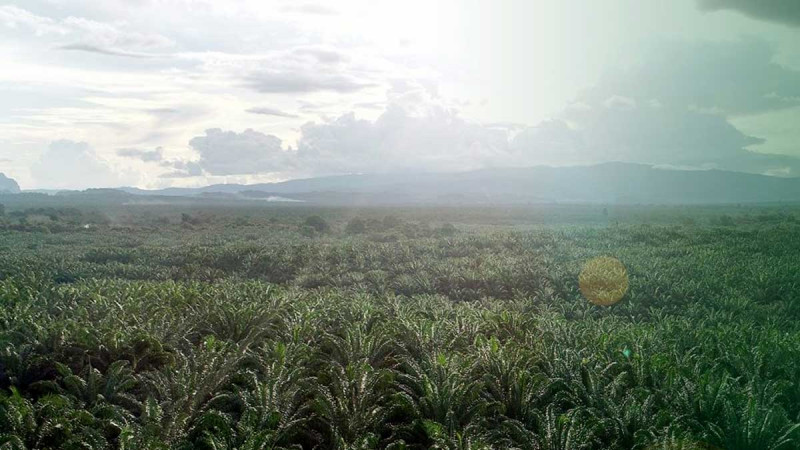
In reality, oil palm plantations are ecological infrastructure. They absorb carbon, store biomass, maintain land cover, and—when managed properly—can become part of the climate change mitigation system.
Technically and scientifically, palm oil plantations possess carbon management capacity. Their vegetation maintains carbon stocks through conservation functions, increases reserves through carbon sequestration, and acts as a relatively stable carbon storage system throughout its life cycle.
Research indicates that oil palm plantations are capable of absorbing up to 64.5 tons of carbon per hectare per year, while carbon stock in oil palm biomass ranges from approximately 40 to 64.5 tons per hectare. This absorption capacity is higher than shrubland, which absorbs on average around 24–39 tons of carbon dioxide per hectare annually, with average carbon stock of about 26 tons per hectare. Consequently, converting shrubland into oil palm plantations can increase carbon sink functions.
The choice for industry players is becoming increasingly clear: remain permanent defendants, or begin harvesting economic value from palm oil’s role as a global climate mitigation instrument.
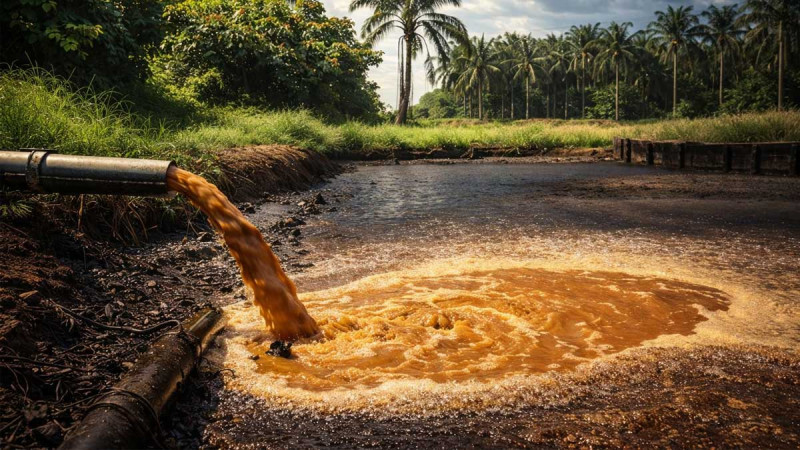
One of the greatest ironies within the palm oil industry lies in Palm Oil Mill Effluent (POME). For years, liquid waste has been regarded as an environmental burden because of methane emissions, whose warming potential is 28 times greater than CO₂. This POME differs from the issue recently highlighted by the Finance Minister, which actually originated from non-conventional palm oil mills and remains widely questioned.
In truth, POME is a source of value.
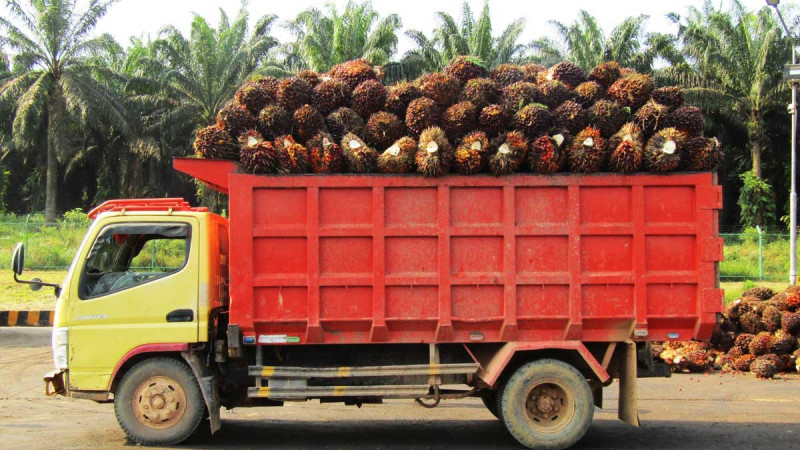
With methane capture installations, released methane can be captured, utilized as biogas, and simultaneously counted as emissions reduction. A palm oil mill with a capacity of 60 tons of fresh fruit bunches (FFB) per hour can reduce emissions by up to 100,000 tons of CO₂ equivalent annually.
At Bursa Karbon Indonesia, carbon prices still hover around US$2–3 per ton. But in international voluntary markets, prices range between US$10–15 per ton. This means a single mill has the potential to generate around US$2 million annually.
And that is only one mill.
Imagine if hundreds—or even thousands—of palm oil mills across Indonesia systematically implemented the same approach. Further value could be created if the captured biogas were processed into electricity or used as a substitute for diesel fuel. This represents a diversification strategy for revenue generation and could provide a cushion when CPO prices weaken.
In this new economic landscape, emissions efficiency is a business line.
Plantations themselves are often criticized as monoculture systems that diminish biodiversity. Some of that criticism stems from past practices that were indeed not yet sufficiently regulated by government policy or global standards.
The fact remains: oil palm has a net carbon sequestration capability of around 60–70 tons per hectare, depending on age and management practices.
In the carbon era, every ton absorbed carries financial value. Therefore, every hectare of plantation is no longer merely a unit of oil production—it is also a unit of environmental services production.
Of course, this is not a justification for opening primary forests. Global decarbonization requires adherence to the principles of No Deforestation, No Peat, No Exploitation (NDPE). However, for land that has already been converted and is managed responsibly, carbon accounting opens new economic space.
The paradigm must shift—from merely calculating tons of CPO to calculating tons of carbon sequestered, avoided, and stored.
Many palm oil plantations contain High Conservation Value (HCV) areas, river buffers, forest patches, and wildlife corridors. For years, these areas have often been regarded as production costs.
That way of thinking is outdated.
Through biodiversity credit mechanisms, every protected landscape and every endemic species preserved carries real economic value. ESG-based investment—Environmental, Social, and Governance—no longer simply checks administrative compliance with certifications such as Indonesian Sustainable Palm Oil. Investors demand scientifically measurable impact.
Do wildlife corridors function?
How many populations are being monitored?
How many hectares of habitat have been restored?
The market is beginning to calculate the economic potential of biodiversity credits. In the near future, I am convinced buyers will start coming.
For now, companies capable of answering those questions with credible data will gain premium valuations. Sustainability reputation has increasingly become part of risk calculations and stock pricing.
In other words, conservation is no longer a cost burden—it is part of corporate strategy.
Indonesia is the world’s largest palm oil producer. The scale that has long been the target of criticism can, in fact, become a competitive advantage in a low-carbon economy.
If governance, measurement systems (Measurement, Reporting, and Verification/MRV), and national regulations are built on a strong foundation, Indonesia can become a major player in tropical landscape-based carbon trading.
If the government and all stakeholders are able to integrate Smallholders into collective carbon schemes, connect them with mills equipped with methane capture, and comprehensively document all HCV areas that are globally verified and recognized, then Indonesian palm oil can become a credible plantation model in the world’s carbon and biodiversity markets. (*)
Disclaimer: This article reflects the personal views of the author, is entirely the author’s responsibility, and has no affiliation with InfoSAWIT.