InfoSAWIT, JAKARTA – Indonesia’s Badan Pengelola Dana Perkebunan is sharpening the direction of its 2026 Research Grant Program, urging researchers to move beyond academic theory and develop proposals that can be translated into practical industrial solutions, downstream innovation, and measurable economic impact across the palm oil, coconut, and cocoa sectors.
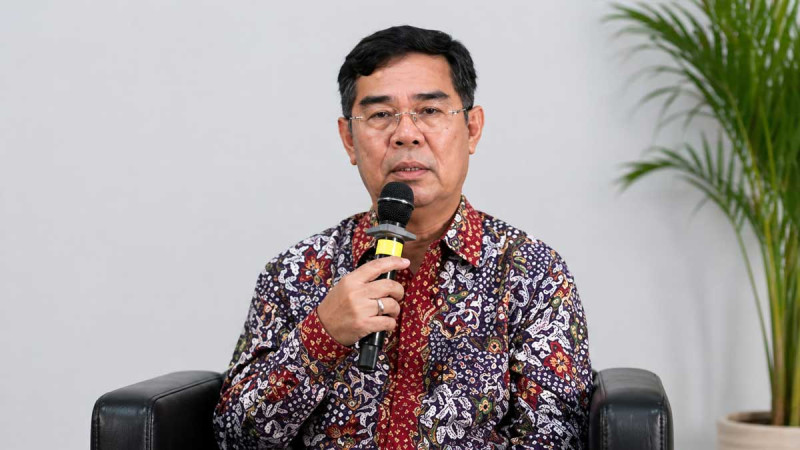
Speaking during the BPDP 2026 Research Grant Call for Proposal Webinar attended by InfoSAWIT on Thursday (April 30), Tony Liwang, a member of BPDP’s Research and Development Committee, said Indonesia’s biggest challenge is no longer a shortage of ideas, but rather the persistent gap between laboratory discoveries and commercial implementation.
“Our greatest challenge is not the lack of ideas, but how we bridge the divide between research laboratories and industry,” Tony said. “The proposals we want to see are those ready to move toward commercialization and capable of delivering tangible impact.”
He noted that the grant program is designed to accelerate innovation downstream—transforming scientific findings into scalable technologies, industrial applications, and commercially viable products that strengthen the competitiveness of Indonesia’s strategic plantation commodities.
Research Must Deliver Real Industrial Solutions
BPDP has identified six priority research areas for the 2026 grant cycle: renewable energy, oleochemicals and materials, food and feed, health, cultivation and agronomy, and environment and waste management.
However, regardless of discipline, Tony emphasized that successful proposals must address four strategic pillars: productivity improvement, operational efficiency, value creation, and measurable benefits for Smallholders and industry stakeholders.
That emphasis is reflected in the evaluation system, where 40 percent of the total scoring weight will be allocated to proposals that demonstrate clear practical application and quantifiable industrial impact.
“Our reviewers are practitioners and experts who understand the palm oil, coconut, and cocoa industries deeply,” Tony explained. “Researchers do not need lengthy explanations of general background. Focus on the problem, the innovation, the solution, and the industrial benefit.”
Concise, Data-Driven, and Original
BPDP also stressed that proposals should be clear, concise, systematic, and grounded in data rather than opinion. Research titles are expected to be specific, aligned with national priorities, innovation-oriented, and capable of demonstrating originality.
Particular attention will be given to the abstract or executive summary, which serves as the first screening point in the review process. Researchers are encouraged to craft concise summaries that clearly answer the core elements of what, why, who, where, when, and especially how the innovation will be implemented.
To improve focus and evaluation quality, BPDP recommends that the core proposal content remain within 20 pages, excluding appendices.
From Publication to Replication and Commercial Value
For BPDP, research output is no longer defined solely by scientific publications. Tony said the institution expects outcomes that can be replicated, scaled, and commercialized—ranging from prototypes, applied models, datasets, fabrication technologies, and policy recommendations, to broader socio-economic and environmental benefits.
Projects that involve multidisciplinary collaboration, industrial partnerships, and clear implementation roadmaps are expected to have stronger prospects during selection.
“The best research grant proposals are not those that merely fulfill academic requirements,” Tony concluded. “They must become roadmaps toward real, measurable solutions that strengthen the competitiveness of Indonesia’s palm oil, coconut, and cocoa ecosystem.” (T2)