
InfoSAWIT, JAKARTA – As volatility in global fossil fuel markets continues to pressure industrial operating costs, Indonesia’s state-owned palm oil producer PTPN IV PalmCo is accelerating its transition toward renewable energy by converting palm oil mill waste into biogas-powered electricity—an initiative that is delivering both operational savings and measurable environmental benefits.
The company is utilizing Palm Oil Mill Effluent (POME)—liquid waste generated during crude palm oil processing—as feedstock for Biogas Power Plants (PLTBg), transforming what was once considered an environmental challenge into a strategic energy asset for mill operations.
According to Jatmiko K. Santosa, President Director of PalmCo, the company’s renewable energy push is part of a broader long-term strategy aimed at strengthening internal energy resilience while reducing dependence on conventional diesel fuel.
“The current turbulence in global fossil fuel prices confirms that our renewable energy development strategy is the right move,” Jatmiko said in a statement received by InfoSAWIT on Friday (May 8). “Our biogas power plants help reduce reliance on diesel while maintaining operational efficiency.”
Two Biogas Facilities, Significant Fuel Savings
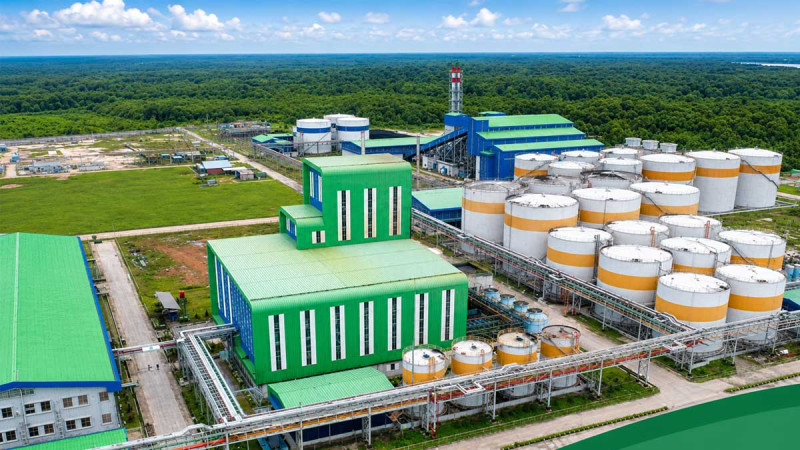
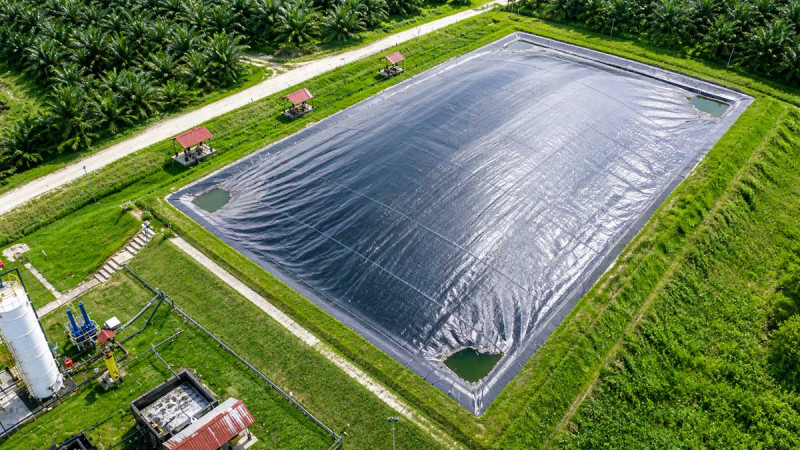
PalmCo currently operates two biogas facilities—PLTBg Terantam and PLTBg Tandun—both of which use covered lagoon technology to process POME into methane-rich biogas. That methane is then converted into electricity to support palm oil mill operations, replacing diesel-powered generators that traditionally supply energy in plantation processing facilities.
The economic impact has been substantial.
Between 2023 and 2025, the two facilities helped PalmCo reduce diesel consumption by more than 2.6 million liters, generating operational savings of approximately Rp39.5 billion over the three-year period.
Those numbers underscore the growing business case for circular energy systems in Indonesia’s plantation sector, where waste streams are increasingly being viewed as valuable renewable resources rather than disposal liabilities.
Circular Economy in Action
For PalmCo, the initiative is not simply about lowering fuel bills—it is also part of a broader sustainability framework.
“This is not just efficiency; it is circular economy implementation in practice,” said Ugun Untaryo, Director of Strategy & Sustainability at PalmCo. “Liquid waste that was once considered an environmental burden is now being processed into a valuable energy source.”
Ugun noted that throughout last year alone, PalmCo’s two PLTBg facilities processed more than 293,000 cubic meters of palm oil mill effluent, generating millions of cubic meters of methane gas that were then used as fuel for electricity production—while simultaneously preventing methane emissions from being released directly into the atmosphere.
That dual benefit—energy generation and greenhouse gas mitigation—positions PalmCo’s model squarely within global efforts to decarbonize industrial operations and accelerate clean energy adoption.
As sustainability expectations rise across international commodity markets, PalmCo’s waste-to-energy strategy offers a compelling example of how the palm oil industry can create added value through smarter resource use, lower emissions, and stronger operational resilience.
For Indonesia’s plantation sector, the message is increasingly clear: the future of palm oil may not only be harvested from the field—but also generated from what is left behind. (T2)