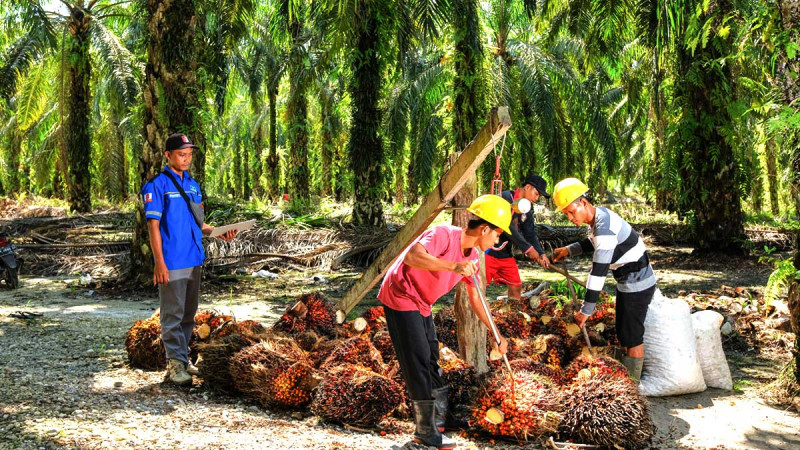
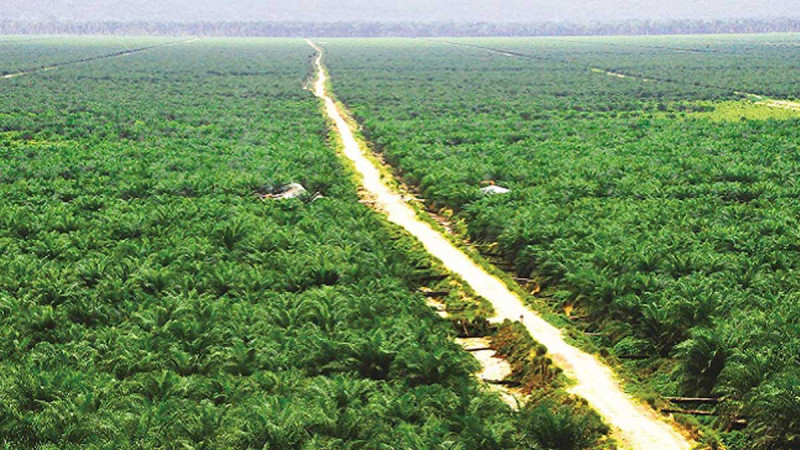
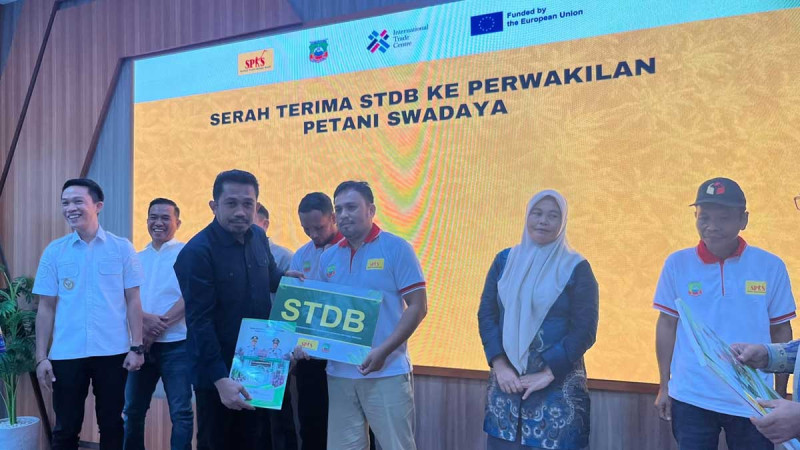
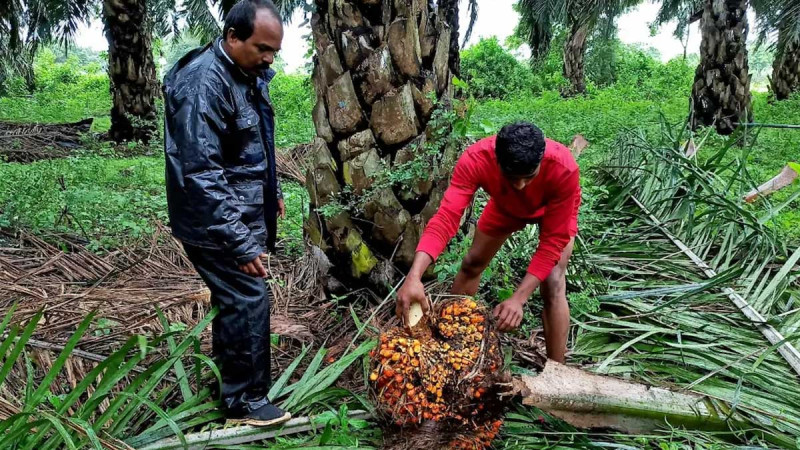
InfoSAWIT, BENGKAYANG — The Palm Oil Smallholders Union (SPKS) has officially established its district-level leadership in Bengkayang Regency, West Kalimantan. The move is part of SPKS’s broader strategy to strengthen smallholder farmer organizations while promoting fair and sustainable management of community-based palm oil plantations.
The establishment of the Bengkayang branch was attended by SPKS National Chairman Sabarudin, who emphasized that SPKS’s main focus is building strong partnerships with local governments and companies, improving capacity-building programs for smallholder farmers, and encouraging farmers to participate in the Indonesian Sustainable Palm Oil (ISPO) certification scheme.
In addition, SPKS is committed to expanding smallholders’ access to key government programs, particularly the Smallholder Palm Oil Replanting Program (PSR), aimed at sustainably improving the productivity of smallholder plantations.
In an official statement published by InfoSAWIT on Tuesday (February 3, 2026), Sabarudin said the presence of SPKS in Bengkayang is expected to ensure that palm oil smallholders receive concrete and continuous assistance. He encouraged farmers to keep improving plantation governance, adopt good agricultural practices, and actively organize through SPKS as a collective platform for advocacy.
On the same occasion, Sabarudin also called on palm oil smallholders in Bengkayang to diversify their commodities in line with local potential. The development of rice, coconut, and other local agricultural commodities is considered important to strengthen household economic resilience while reducing dependence on a single commodity.
From an environmental perspective, SPKS reaffirmed its commitment to responsible plantation practices. Sabarudin reminded farmers not to cultivate oil palm within forest areas and to safeguard environmental sustainability as an integral part of long-term smallholder palm oil development. He also highlighted the government’s ongoing forest area enforcement policy led by the Forest Area Control Task Force (Satgas PKH). According to him, smallholder farmers should not be treated merely as enforcement targets, but rather as subjects of guidance and resolution through fair and humane approaches.
Meanwhile, Bengkayang Vice Regent Syamsul Rizal expressed full support from the local government for the establishment of SPKS Bengkayang. He stressed that the regional government remains committed to standing with palm oil smallholders and supporting farmer empowerment through pro-people policies and programs.
The Vice Regent also reminded farmers of the importance of increasing palm oil plantation productivity without neglecting regional food security. Farmers were urged not to convert all of their land into oil palm plantations, but to retain food crops and local commodities such as rice and coconut, which have long been an integral part of Bengkayang’s local economy.
The formation of the SPKS Bengkayang leadership is expected to serve as a collective platform for smallholder palm oil farmers to strengthen their bargaining position, enhance production capacity, and build fair collaboration among farmers, government, and companies—toward achieving prosperous, independent, and sustainable palm oil smallholders. (T2)