InfoSAWIT, KUALA LUMPUR — Malaysia’s palm oil industry has entered a decisive phase. With no remaining room for land expansion, productivity growth now relies entirely on the adoption of technology, mechanisation, and artificial intelligence (AI). This was underscored by the Malaysian Palm Oil Board (MPOB) amid increasingly stringent global sustainability pressures.
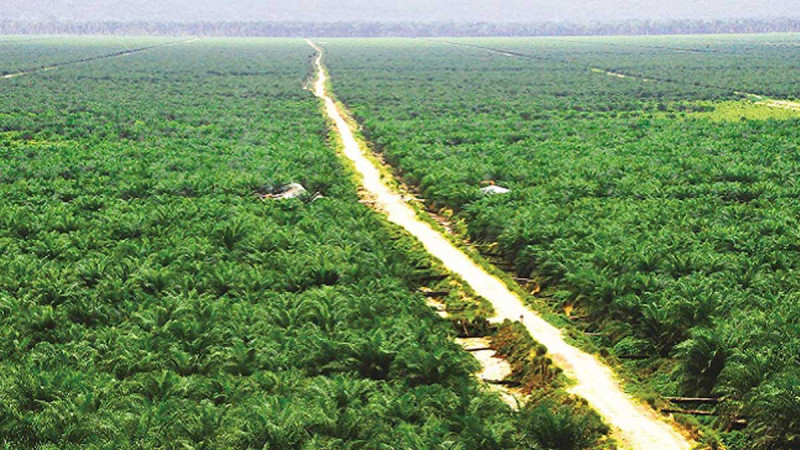
MPOB Director-General Ahmad Parveez Ghulam Kadir said conventional business practices are no longer relevant. Sustainability regulations such as the Malaysian Sustainable Palm Oil (MSPO) 2.0 and the European Union Deforestation Regulation (EUDR) have effectively closed the door to new oil palm plantation development.
“There is no more room to open new land. Productivity must come from technology, mechanisation, and better planting materials,” Parveez said during a group interview on the sidelines of the International Palm Oil Congress and Exhibition 2025 (PIPOC 2025), as reported by InfoSAWIT quote New Straits Times, Saturday (3/1/2026).
He explained that Malaysia’s palm oil industry has long faced structural challenges, including stagnant productivity, slow replanting, a high proportion of ageing trees, and chronic labour shortages. Over nearly two decades, national palm oil productivity has remained largely flat, even though crude palm oil (CPO) output this year is projected to reach 19.5 million tonnes.
“Our oil palm trees are now in their fourth generation after more than 100 years of cultivation. Yields have stagnated, while replanting has been slow,” Parveez said. “With limited land, the only option is to maximise productivity.”
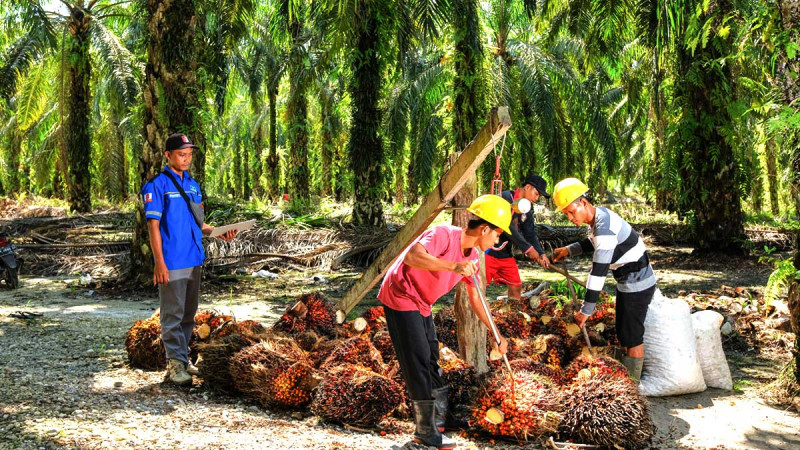
A surge in palm oil prices in recent years—particularly during the pandemic—has encouraged plantation companies to accelerate investment in automation. Labour shortages have also prompted firms to realise that innovation is no longer optional, but essential.
According to Parveez, several companies have adopted AI, drones, satellite imagery, and mechanised tools to manage plantations more precisely. One example is the use of satellite data by Kuala Lumpur Kepong Bhd for replanting planning, contour and soil analysis, as well as determining seed varieties and fertilisation patterns.
Drone technology and imaging are also used to detect pests such as bagworms, mealybugs, and rhinoceros beetles at an early stage before outbreaks spread widely. MPOB itself established the Mechanisation and Automation Research Consortium of Oil Palm in 2021 to accelerate industry-wide technology adoption.
Global pressures have also become a driving force. Worldwide demand for vegetable oils continues to rise, while major producers such as Indonesia are increasingly diverting palm oil to non-food uses, particularly biodiesel under its B50 blending policy.
“If Indonesia channels more palm oil into non-food sectors, Malaysia must be ready to fill the gap in the global market. But since we cannot expand land, we must optimise what we already have,” Parveez said. “The key lies in better genetics, proper replanting, and technology utilisation.”
Responding to Negative Global Narratives
The productivity push is also taking place amid persistent negative narratives about palm oil in Western markets, particularly regarding deforestation and biodiversity loss. MPOB Chairman Mohamad Helmy Othman Basha noted that Malaysia’s position differs from Indonesia’s in terms of domestic absorption.
“Indonesia has a large population and can absorb palm oil for biodiesel without disrupting exports. Malaysia is different—we are highly dependent on export markets,” he said.
Helmy also dismissed claims that Malaysia’s palm oil expansion is a major driver of global deforestation. He stressed that oil palm plantations account for only about 8.5% of total global oil crop land, or roughly 28 million hectares—far smaller than soybean, rapeseed, and sunflower cultivation, which together cover about 288 million hectares.
Despite occupying relatively little land, palm oil supplies around 37% of global vegetable oil demand. In fact, oil palm plantations cover only about 0.6% of the world’s total land area of 4.8 billion hectares.
“Palm oil remains the most efficient and productive vegetable oil, rich in tocotrienols and vitamin E, and is increasingly replacing petrochemical-based materials, including in the cosmetics industry,” Helmy concluded. (T2)