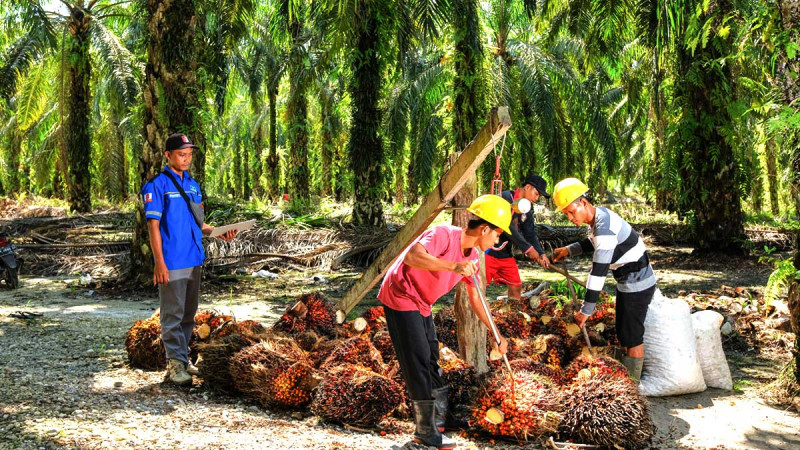
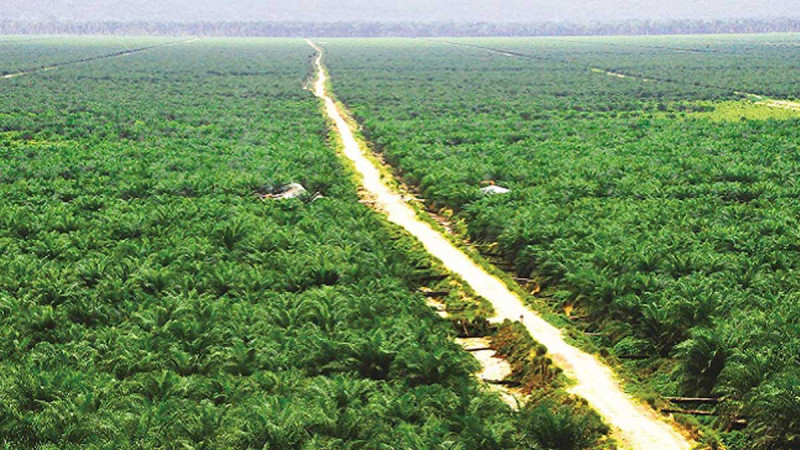
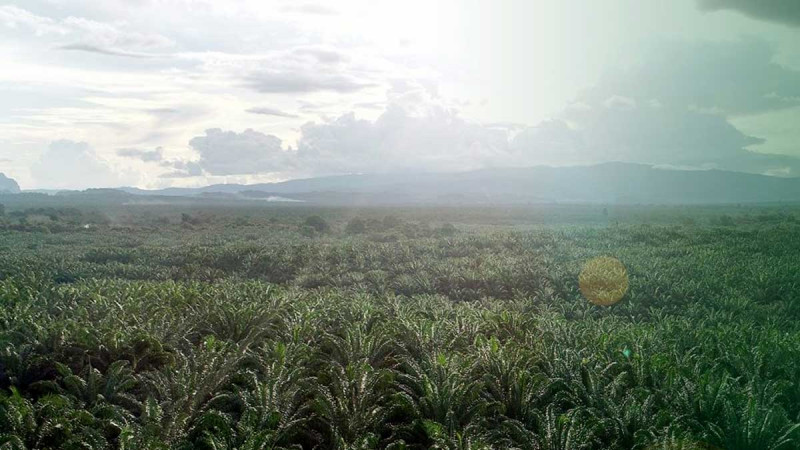
InfoSAWIT, PEKANBARU – Claims that palm oil smallholders are the primary drivers of deforestation in the Tesso Nilo Landscape have been criticized as misleading. Ahmad Zazali, Head of the Center for Agrarian Law and Conflict Resolution (PURAKA), stated that the largest share of forest loss has been caused by Industrial Plantation Forest (HTI) companies.
Speaking to InfoSAWIT on Tuesday (23/12/2025), Ahmad cited data from environmental NGOs and official government research. According to Jikalahari, only seven natural forest landscapes remain in Riau Province, with Tesso Nilo among the most heavily pressured by land conversion.
Research conducted by WWF and the Riau Natural Resources Conservation Agency (BKSDA) in the early 2000s found that the Tesso Nilo Landscape once covered approximately 377,500 hectares and served as a critical habitat for Sumatran elephants. However, only 83,068 hectares were later designated as Tesso Nilo National Park.
“The remaining 168,960 hectares of natural forest were converted by nine HTI companies, while other areas were transformed into oil palm plantations and other land uses,” Ahmad explained. Ironically, within HTI concession areas, around 21,940 hectares of oil palm plantations were also identified.
“These facts show that deforestation cannot be blamed solely on smallholders,” he stressed. Ahmad urged the central government to include HTI-controlled areas within conservation zones if it is serious about protecting Sumatran elephant habitats.
He warned against unbalanced conservation policies that evict smallholder farmers from national parks while allowing natural forests to be converted into acacia plantations for the pulp and paper industry. Such an approach, he said, risks impoverishing communities and triggering social conflict, undermining principles of social justice and people-centered economic development. (T2)