InfoSAWIT, KUALA LUMPUR — Malaysia’s palm oil sector has finally breathed a sigh of relief after the country’s flagship commodity was exempted from a 19 percent United States import tariff. The policy is seen as a crucial boost for the national palm oil industry, which has managed to maintain momentum throughout 2025 despite weakening global demand and elevated inventory levels.
“The exemption from US import tariffs provides significant relief for Malaysia’s palm oil sector, which has remained relatively stable this year amid external pressures,” wrote Danni Haizal Danial Donald in a Bernama report.
According to the article, crude palm oil (CPO) prices averaged RM4,089.50 per tonne in November 2025, down from RM5,011.50 per tonne in the same period a year earlier. As of December 10, 2025, CPO was trading at around RM4,000 per tonne. Nevertheless, the price outlook remains positive.
“CPO prices are expected to be higher early next year and could potentially reach around RM4,500 per tonne,” Danni Haizal wrote.
On the trade front, Malaysia’s palm oil export performance has remained largely stagnant this year. In the first 11 months of 2025, export volume reached 22.55 million tonnes with a value of RM103.01 billion, lower than the 26.66 million tonnes worth RM109.39 billion recorded in 2024.
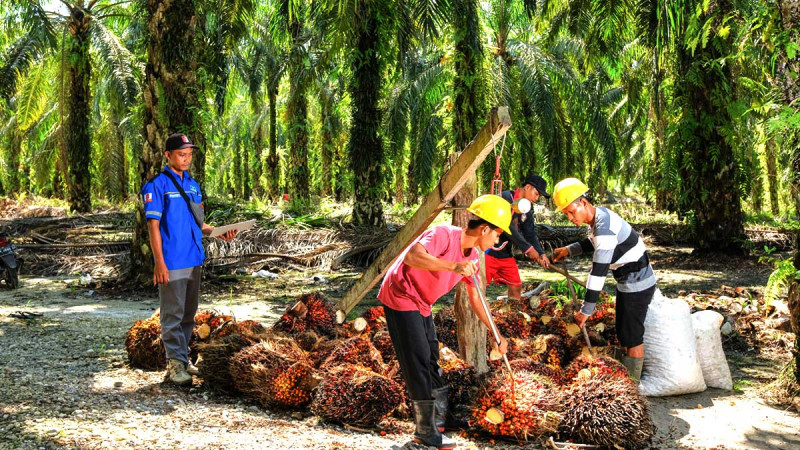
As the country’s largest export commodity, palm oil continues to serve as the backbone of Malaysia’s commodity sector. Fresh fruit bunch (FFB) productivity in the plantation sector increased to 14.45 tonnes per hectare during January–October 2025, up from 13.96 tonnes per hectare in the same period last year.
However, higher production has been offset by weaker external demand, rising domestic inventories, and increasingly stringent sustainability pressures in key markets, particularly China.
“Buyers in major markets, especially China, tend to switch to cheaper alternatives such as soybean oil,” Danni Haizal wrote, adding that this trend has constrained Malaysia’s export performance.
Weak global demand has led to a build-up of domestic stocks, with palm oil inventories surging to over 2.7 million tonnes—the highest level in more than six years.
“The surge in domestic inventories reflects an imbalance between strong production and slowing overseas purchases,” the Bernama report noted.
At the same time, relatively high palm oil prices caused shipments to key markets, particularly China, to shrink sharply by nearly 30 percent in the first 10 months of 2025, as buyers shifted towards competing vegetable oils.
This imbalance has continued to exert pressure on CPO prices, limiting upside potential despite supportive market fundamentals earlier in the year.
On the domestic policy front, there was positive news for smallholders under Budget 2026. The government allocated nearly RM2.4 billion to support more than 720,000 settlers, smallholders, and their families under FELDA, RISDA, and FELCRA.
“This allocation aims to modernise agribusiness and strengthen support for smallholders,” Danni Haizal wrote.
In addition, around RM20 million was allocated to support startups developing mechanisation and automation products, in collaboration with the Malaysian Palm Oil Board and major palm oil companies.
“This initiative is expected to reduce reliance on foreign labour while encouraging local innovation,” the report said.
Looking ahead, Malaysia’s palm oil sector is expected to maintain solid prospects despite intensifying global competition.
“CPO prices could trend towards RM4,500 per tonne in 2026,” Danni Haizal Danial Donald wrote, “supported by steady import demand ahead of the Lunar New Year and Ramadan, as well as policy uncertainty in Indonesia that continues to underpin palm oil prices.” (T2)