InfoSAWIT, NUSA DUA — Indonesia’s palm oil sector once again took center stage at the opening of The 21st Indonesian Palm Oil Conference (IPOC) and 2026 Price Outlook. In his keynote address, Minister of National Development Planning/Head of Bappenas, Rachmat Pambudy, underscored the strategic role of palm oil—not only as a leading commodity but as a key foundation for realizing Indonesia Emas 2045.
Rachmat described palm oil as an economic and geopolitical asset capable of bridging nations and fostering cooperation. “Palm oil is not just a commodity. It is a bridge of friendship, peace, and humanity,” he said in remarks witnessed by InfoSAWIT.
In the face of climate change, global uncertainties, and rising food-energy demand, the government sees palm oil as central to national resilience. Beyond export value, palm oil sustains renewable energy development, food security, and essential downstream industries serving billions of consumers.
But he noted that national success can no longer be measured solely by production growth. “Our achievement lies in managing palm oil responsibly, inclusively, and sustainably,” he said, aligning the sector with the SDGs.
Driving Indonesia’s Green Transformation
Palm oil has long supported rural development and created millions of jobs. It also underpins major downstream industries such as biofuel, oleochemicals, and emerging green materials. Rachmat emphasized its role in the country’s transition toward low-carbon development.
“Palm oil is a model of sustainable transformation. It creates green jobs and supports the shift away from fossil fuels,” he said.
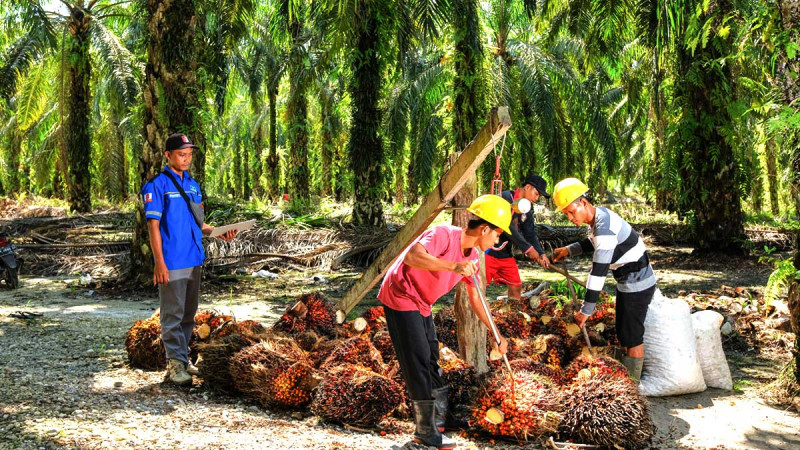
Smallholder farmers remain at the core of this strategy. Rachmat highlighted the need to ensure fair value distribution along the supply chain to benefit farmers—the majority actors in the industry.
In strengthening sustainability, Bappenas outlined key priorities: accelerating smallholder replanting, expanding access to financing, digitizing supply chain traceability, and strengthening global recognition of the ISPO certification.
Indonesia is also pushing deeper downstream efforts, including sustainable aviation fuel (SAF) and high-value biodegradable materials—sectors Rachmat described as pillars of future low-carbon growth.
Drawing from Local Wisdom
He also invoked Bali’s Tri Hita Karana philosophy—harmony between humans, nature, and the divine—as an ethical foundation for global palm oil governance. The concept, he said, offers moral direction for building an inclusive, just, and sustainable palm oil sector.
Rachmat acknowledged continued external challenges, including negative campaigns and discriminatory regulations. Indonesia’s recent victory in the WTO dispute, he said, proves the country’s commodity meets international standards.
“We can pursue justice when we speak based on evidence,” he affirmed.
Rachmat closed by calling for stronger collaboration across government, businesses, smallholders, local communities, and global partners: “Let palm oil be a symbol of cooperation and shared growth.” (T2)