

InfoSAWIT, NUSA DUA – The Secretary-General of the Council of Palm Oil Producing Countries (CPOPC), Izzana Salleh, underscored the importance of rebuilding strategic dialogue between palm oil–producing countries and the European Union, particularly regarding the implementation of the EU Deforestation Regulation (EUDR). Izzana delivered the message on the sidelines of the Indonesia Palm Oil Conference (IPOC) 2025 and Price Outlook 2026 in Nusa Dua, Bali, Thursday (13/11/2025).
According to her, discussions surrounding cooperation between producing nations and the EU have entered a critical phase. CPOPC, together with Indonesia and Malaysia, continues working to ensure that EUDR is not applied discriminatorily and can be interpreted fairly by all parties.
“We see this as a very important period to discuss and finalize the direction of EUDR policies. After that, we will continue the dialogue to ensure mutual understanding in its implementation,” she told InfoSAWIT during IPOC 2025.
She stressed that negotiations must go beyond policy discussions and reach the realm of on-the-ground implementation. Producing countries, she said, require clarity and realistic mechanisms to adjust to the regulation without disadvantaging smallholders.
“The key is not only the regulation, but how its implementation can run smoothly. We must bridge the understanding between Brussels and producing countries to ensure fair execution,” she added.
CPOPC remains committed to leveraging bilateral forums as platforms for effective communication with the EU. Through mechanisms such as the Joint Task Force (JTF) between Indonesia, Malaysia, and the EU, constructive dialogue is expected to accelerate the resolution of various technical issues.
“With a collective voice, it becomes easier for us to find solutions. It is better for us to move together as an industry rather than individually,” she emphasized.
Izzana also stated that CPOPC is awaiting the latest decisions from Brussels regarding EUDR implementation. “We will soon know the direction of the EU policy. We recently held a final meeting, and the results are being reported to each member government,” she said.
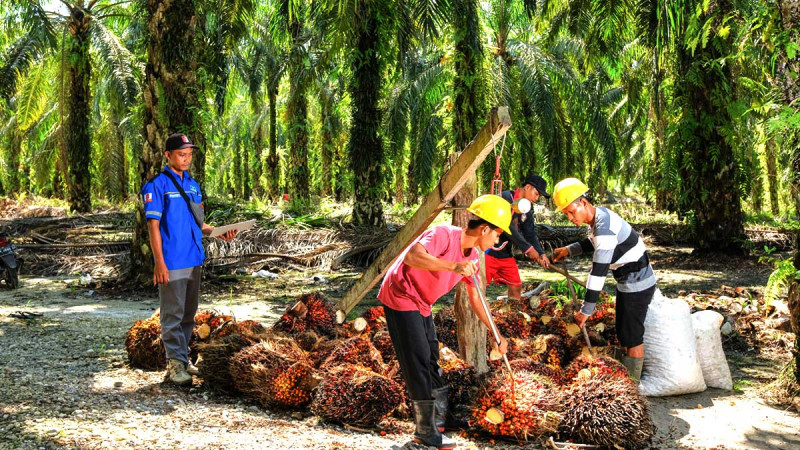
Furthermore, she highlighted the importance of social inclusion within sustainability policies. A good policy, she said, must not exclude the core actors in the palm oil sector — especially smallholders, women, and youth.
“Exclusive policies are not good policies. In Indonesia and Malaysia, the palm oil sector involves millions of smallholders, including many women and young people. Policies must therefore enable economic empowerment, not exclusion,” she stressed.
Izzana added that CPOPC's dialogue with stakeholders — including European trade associations and parliamentarians — is increasingly focused on inclusive sustainability values.
“We want to ensure that sustainability is not only about the environment but also about social justice and the welfare of producing communities,” she concluded.
With this collaborative spirit, CPOPC hopes that relations between producing countries and the EU can shift from tension toward a respectful partnership. For Izzana, the future of sustainable palm oil can only be achieved if all parties are willing to listen and work together toward the same goal — fair and inclusive sustainability for all. (T2)