InfoSAWIT, KEMBANG JANGGUT – Efforts to develop micro, small and medium enterprises (MSMEs) in Kembang Janggut District, Kutai Kartanegara, East Kalimantan, are moving beyond the promotion of village products.
Local authorities, cooperatives, businesses, financial institutions and development partners are working to build an ecosystem that connects local potential with broader markets and value chains.
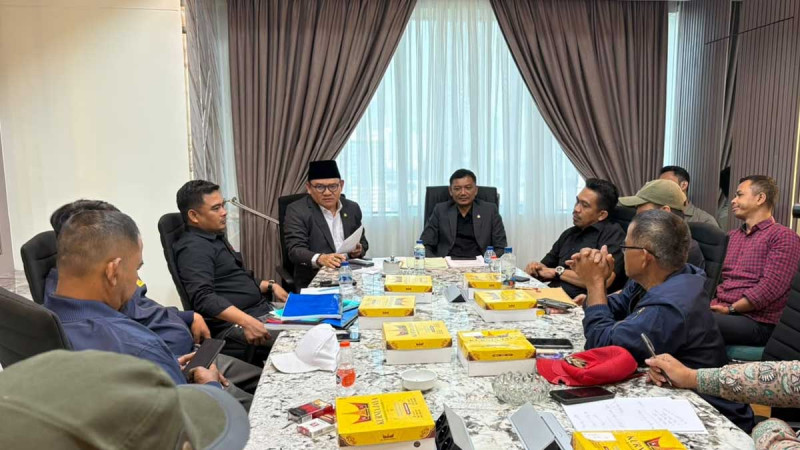
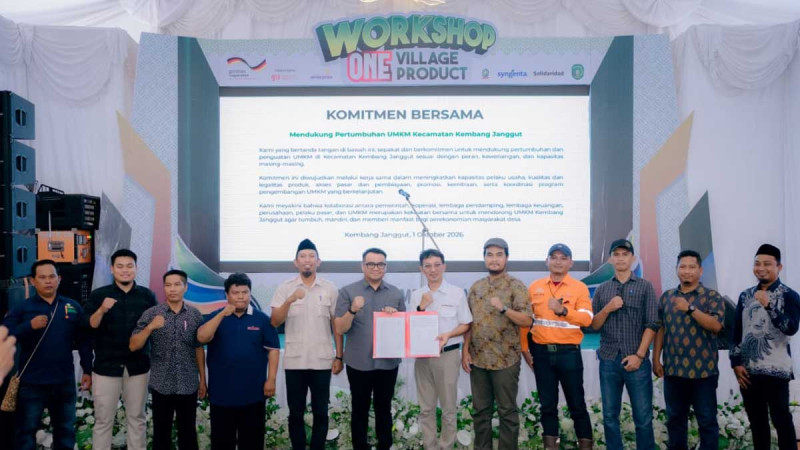
The commitment emerged during a One Village One Product (OVOP) workshop held at the Kembang Janggut District BPU Building on Thursday (October 1, 2026).
According to an official statement received by InfoSAWIT on Friday (October 2), the workshop marked the culmination of the PoweRRR Program mentoring initiative implemented by Solidaridad Indonesia in partnership with the Belayan Sejahtera Plantation Cooperative (KBS).
The program has supported women farmers, workers and MSME operators across 11 villages, covering activities ranging from local potential mapping and group strengthening to business planning, packaging development and marketing strategies.
From Village Products to District-Level Industry
Kutai Kartanegara Regent Aulia Rahman Basri said collaboration among MSME stakeholders needs to be supported by stronger coordination within local government.
He noted that several government programs are still implemented separately according to sector, creating a need for greater integration so that assistance can respond more effectively to community needs.
The OVOP concept, he said, should also be developed beyond household-scale production. The local government is therefore promoting the idea of One Sub-District One Industry, linking village products with broader value chains covering raw materials, production, standardization, financing and marketing.
Temporary data from the Kutai Kartanegara Cooperatives and MSME Office show that around 600 MSMEs operate in Kembang Janggut District.
Their activities include handicrafts and cultural products, food and culinary businesses, agricultural production and other productive enterprises.
Among the products identified are seraung, sulam tumpar, anjat, bamboo and rattan handicrafts, processed foods, cakes, kelulut honey and various household products.
The next challenge is to determine priority products while improving quality, packaging, legal compliance, production capacity, market access and financing.
KBS Encouraged to Support Palm Oil-Based Industry
The workshop also highlighted the role of the Belayan Sejahtera Plantation Cooperative (KBS) in strengthening the local economic institutions that support farmers and businesses.
Aulia encouraged KBS to help advance the One District One Industry concept, including opportunities to develop palm oil-based industries in the Sungai Belayan area.
According to him, KBS's membership base, institutional capacity and business experience could provide a foundation for developing industries capable of generating greater added value for local communities.
KBS Chairman Jamaluddin said strengthening MSMEs is closely linked to the development of cooperatives and village economies.
“A cooperative cannot become strong when the surrounding community's economy remains weak. When MSMEs grow, family incomes increase, employment opportunities emerge and the village economy becomes more resilient,” he said.
KBS said it was prepared to act as a facilitator, connect MSMEs with government and markets, strengthen networks among businesses and support the development of the Kembang Janggut MSME Center.
MSME Center to Become Product Development Hub
Solidaridad Indonesia also encouraged the collaborative model developed in Kembang Janggut to be expanded to other districts in Kutai Kartanegara.
Meanwhile, Kutai Kartanegara Cooperatives and MSME Office Head Muhammad Reza said the mentoring and collaboration model could serve as a reference for MSME development elsewhere.
The Kembang Janggut MSME Center is expected to function beyond a simple product display venue. It is being positioned as a hub for data collection, consultation, product curation, promotion and connections between businesses, markets and financing institutions.
Within 90 days following the workshop, stakeholders are expected to begin validating data and priority products, improving product quality and packaging, conducting market trials and establishing marketing channels.
Ultimately, the success of the OVOP initiative will depend not simply on the number of products displayed, but on whether village businesses can secure sustainable markets, increase incomes and retain greater added value within local communities. (T2)