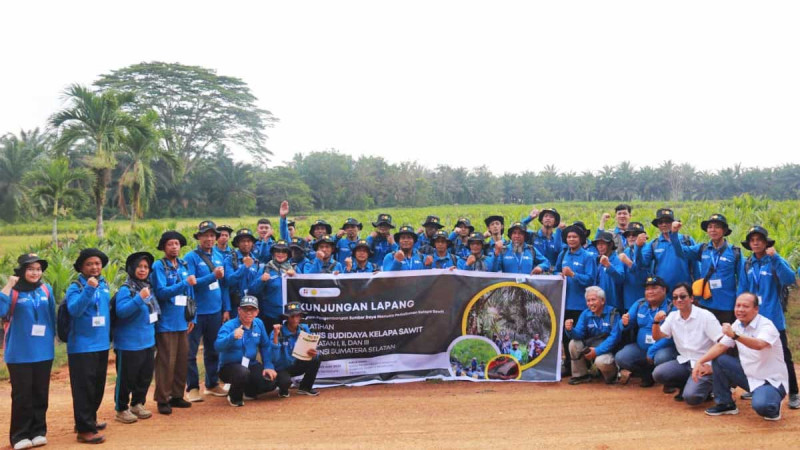
InfoSAWIT, PALEMBANG – Efforts to improve the productivity of Indonesia’s independent oil palm sector received a boost as 106 smallholders from Muara Enim Regency, South Sumatra, completed an intensive cultivation training program aimed at enhancing technical skills and plantation management practices.
The training, held in Palembang from June 18–23, 2026, was conducted under the Oil Palm Plantation Human Resources Development Program through a collaboration between the Palm Oil Plantation Fund Management Agency (BPDP), the Directorate General of Plantations under the Ministry of Agriculture, and IPB Training.
The initiative was designed to address persistent challenges facing smallholders, including the use of uncertified planting materials, suboptimal cultivation practices, and plantation management inefficiencies. Although independent growers manage more than 42% of Indonesia’s total oil palm plantation area, productivity levels often remain below industry potential.
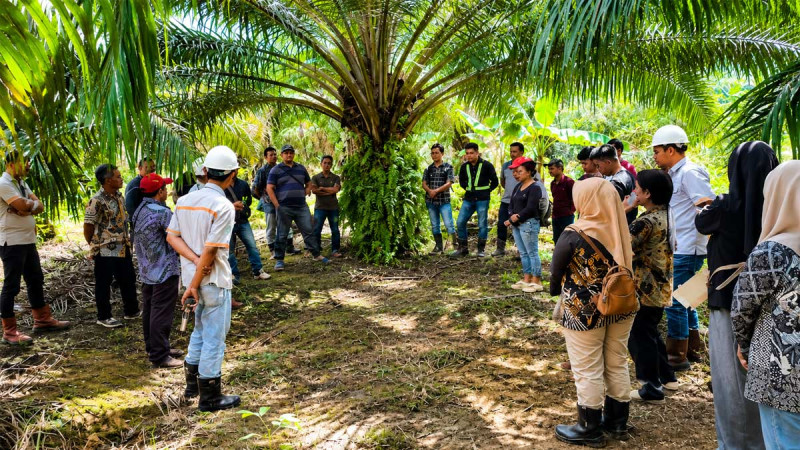
Participants received comprehensive instruction covering plantation regulations, nursery management, land preparation, planting techniques, crop maintenance, fertilization, and pest and disease management.
According to a statement received by InfoSAWIT on June 24, 2026, the program combined classroom learning with extensive practical sessions, allowing participants to apply technical knowledge directly in field conditions.
During hands-on training activities, farmers learned nursery transfer techniques, planting hole preparation, triangular planting layouts, soil testing methods, fertilizer quality assessment, and sprayer calibration procedures. Participants were also introduced to proper harvesting techniques and the use of harvesting tools commonly employed in commercial oil palm plantations.
Discussions throughout the program focused on issues frequently encountered by smallholders, including counterfeit seed distribution, Ganoderma disease management, fertilization strategies, and pest control practices.
The training concluded with a field visit to the Sembawa Research Center in South Sumatra, where participants observed best management practices across nursery operations, immature palms, and mature producing plantations.
At the nursery site, farmers studied seedling selection, irrigation management, fertilization, weed control, and pest and disease prevention. Additional sessions covered crop maintenance techniques for immature palms and productivity management in mature plantations, including harvesting standards and field monitoring practices.
By combining theoretical instruction with practical field experience, organizers hope the program will strengthen smallholder capabilities, improve plantation productivity, and support the development of a more professional and sustainable oil palm sector in Indonesia.
The initiative also reflects broader efforts to enhance human resource capacity within the country’s palm oil industry, ensuring that smallholders are better equipped to adopt modern cultivation practices and improve long-term farm performance. (T2)