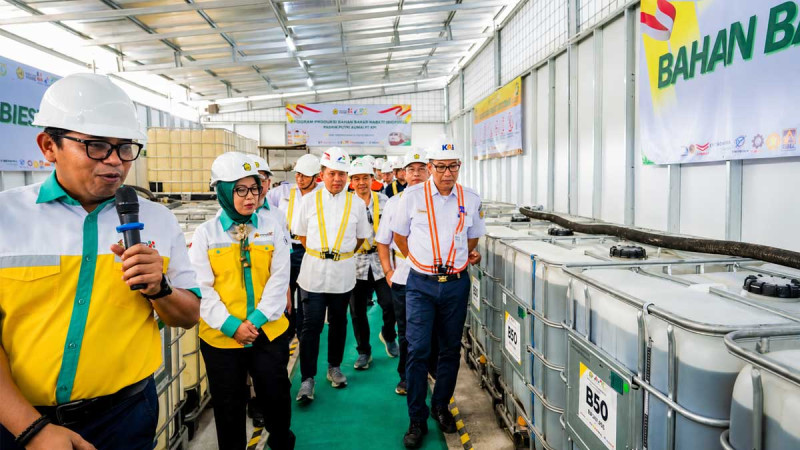
InfoSAWIT, JAKARTA – The Indonesian government is intensifying preparations for the nationwide implementation of the B50 biodiesel mandate, scheduled to take effect on July 1, 2026, as part of broader efforts to strengthen energy security and reduce reliance on imported diesel fuel.
Eniya Listiani Dewi, Director General of New, Renewable Energy and Energy Conservation (EBTKE) at the Ministry of Energy and Mineral Resources, said the biodiesel program has become a cornerstone of Indonesia’s energy transition strategy while supporting greater utilization of domestic resources.
“Biodiesel plays an important role in strengthening national energy security through increased use of domestic energy sources while supporting Indonesia’s gradual and sustainable energy transition,” Eniya said in a statement received by InfoSAWIT on Tuesday (23/6/2026).
The government reported that biodiesel distribution under the B40 program reached 14.94 million kiloliters in 2025, equivalent to 95.67 percent of the allocated volume.
The program generated an estimated Rp133.3 trillion in foreign exchange savings, Rp20.92 trillion in economic value-added, and supported approximately 1.88 million jobs.
In environmental terms, B40 implementation reduced greenhouse gas emissions by an estimated 39.66 million tons of CO₂ equivalent during 2025.
Ahead of the B50 rollout, authorities are conducting extensive technical testing across multiple sectors, including automotive transportation, agriculture, mining equipment, shipping, railways, and power generation.
The government emphasized that biodiesel incentives will continue to be financed through palm oil funds rather than the state budget, ensuring the program remains economically sustainable while supporting domestic palm oil demand.
Officials expect the B50 mandate to become a major milestone in Indonesia’s efforts to build a more independent, competitive, and sustainable energy system. (T2)