InfoSAWIT, JAKARTA – Indonesia’s plan to implement a mandatory 50% biodiesel blend (B50) beginning July 1, 2026, could significantly strengthen national energy security and reduce dependence on imported diesel fuel. However, energy policy experts are warning that the program’s long-term success will depend heavily on economic competitiveness and fiscal sustainability.
The B50 mandate forms a key pillar of the government’s strategy to curb diesel imports, enhance energy independence, and reduce pressure on the country’s foreign exchange reserves. Yet analysts caution that achieving those objectives will require careful management of fuel pricing dynamics and feedstock availability.
Speaking during a live broadcast on Nusantara TV, as reported by InfoSAWIT on June 24, 2026, Institute for Essential Services Reform (IESR) Chief Executive Officer Fabby Tumiwa said global oil prices would play a decisive role in determining the economic viability of the program.
According to Fabby, a decline in international crude oil prices could widen the price gap between palm oil-based biodiesel and conventional diesel fuel, potentially increasing the need for government intervention.
“If biofuel prices become higher than diesel prices, the government may be required to provide additional subsidies. This is a situation that should be avoided because it could create a new fiscal burden,” he said.
He added that the economic benefits of B50 would be most pronounced during periods of elevated oil prices, when biodiesel can compete more effectively with fossil fuels. Conversely, if crude oil prices fall while biodiesel feedstock costs remain high, the financial advantages of the mandate could become increasingly limited.
Fabby emphasized that the primary objective of Indonesia’s energy policy should not only be reducing diesel imports but also ensuring the efficient use of public funds.
Dynamic Blending Could Improve Flexibility
IESR believes the government should consider implementing a dynamic blending mechanism that allows biodiesel blending levels to adjust according to movements in crude oil and crude palm oil (CPO) prices.
Such a mechanism, according to the institute, would help balance energy security goals with fiscal considerations while providing greater flexibility in responding to commodity market volatility.
Fabby noted that CPO prices are heavily influenced by global demand, particularly from major importing countries such as India and South Korea. As a result, biodiesel feedstock costs are increasingly determined by international market conditions rather than domestic factors alone.
He estimated that if CPO prices remain around US$1,200 per tonne, the B50 program would only become fully competitive when global crude oil prices exceed US$125 per barrel.
“If CPO prices remain high while oil prices decline, the production cost of B50 could become more expensive than conventional diesel,” he said.
Bioethanol Should Play a Larger Role
Beyond biodiesel, IESR is also encouraging policymakers to accelerate the development of bioethanol as part of Indonesia’s broader renewable energy transition strategy.
According to Fabby, bioethanol offers greater pricing flexibility because its economics are less directly tied to global palm oil market fluctuations.
For that reason, he said fuel blending programs such as E10 and E20 should receive greater policy attention as Indonesia seeks to diversify its renewable energy portfolio.
Feedstock Availability Remains a Key Challenge
IESR also highlighted feedstock supply as a potential risk for the expansion of Indonesia’s biodiesel program.
Fabby pointed to the lingering effects of previous Super El Niño conditions, which affected oil palm productivity in several producing regions. Lower palm oil output could create competition among food, export, and energy markets for available supplies.
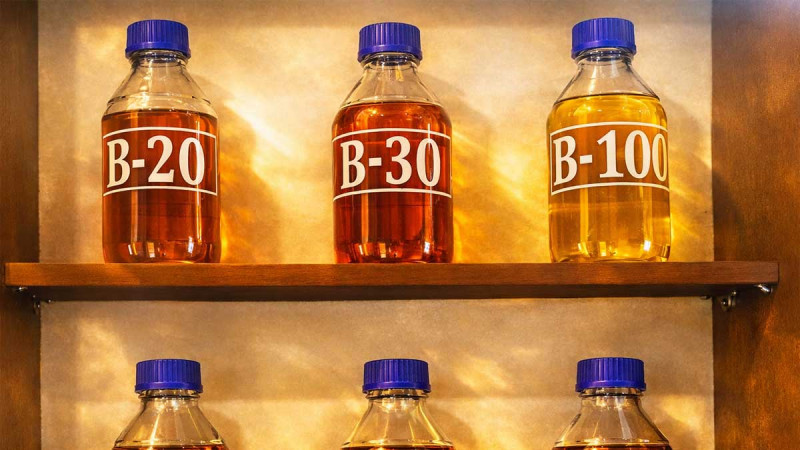
Indonesia currently operates a B40 biodiesel program that many observers consider broadly aligned with existing production capacity. The introduction of B50 would make Indonesia the world’s most aggressive adopter of palm oil-based biodiesel blending, surpassing all other major palm-producing countries.
While supporting the government’s efforts to strengthen national energy security, IESR believes the long-term success of the B50 mandate will ultimately depend on maintaining a balance between feedstock availability, fuel competitiveness, and fiscal sustainability.
As Indonesia moves toward higher biodiesel blending rates, policymakers will face the challenge of ensuring that energy security gains do not come at the expense of economic efficiency or increased pressure on public finances. (T2)