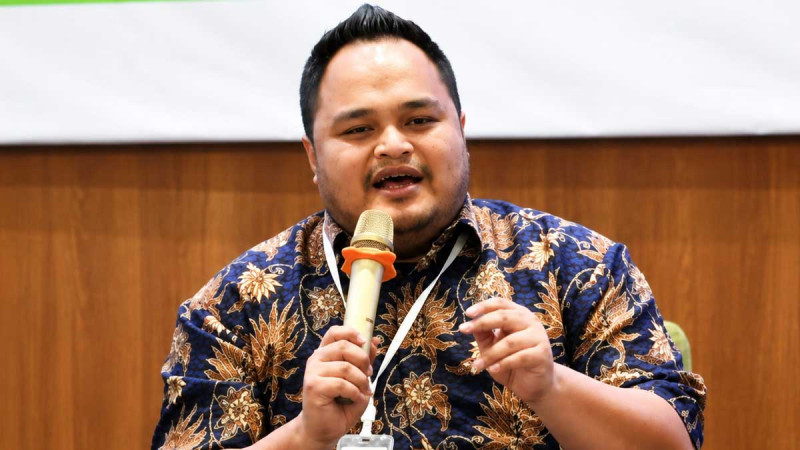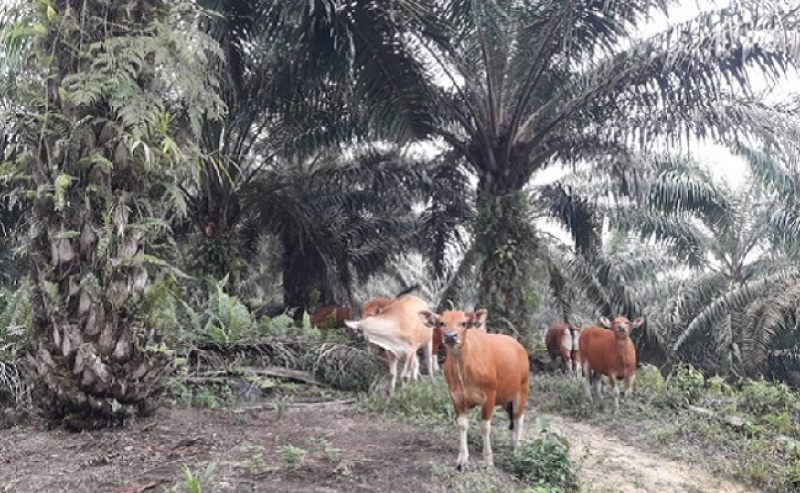
InfoSAWIT, JAKARTA – For Australian livestock practitioner Richard Armstrong Slansy, integrating cattle production into oil palm plantations—known in Indonesia as SISKA—is not merely a technical concept or a demonstration project worthy of conference discussions.
The real question, he argues, is much simpler: can the system generate profits on a large scale?
Speaking at the 3rd Integrated Cattle and Oil Palm (ICOP) Conference attended by InfoSAWIT in early April 2026, Slansy emphasized that Indonesia would need millions of additional cattle if it hopes to move closer to beef self-sufficiency.
Achieving that target, he said, would be nearly impossible through fragmented and small-scale initiatives.
"If this remains only a concept or a hobby, it will not change anything," Slansy stated.
His remarks reflect decades of experience in the private sector, where commercial viability remains the ultimate measure of success.
According to Slansy, the most important indicator in any palm oil-cattle integration project is production cost per kilogram of beef. While productivity metrics and sustainability indicators have value, profitability ultimately determines whether a system can survive and expand.
"The key performance indicators are important, but in the end, production cost is what matters most," he said.
Ironically, this is also where SISKA appears to have a significant advantage. Studies and field experiences suggest that beef produced within integrated palm-cattle systems can be more cost-competitive than imported cattle, particularly those sourced from Australia, which remains Indonesia's primary supplier of feeder cattle.
Despite this potential, Slansy noted that implementation remains far too limited to meaningfully impact Indonesia's national beef balance.
Large-scale projects exist, but their numbers remain insufficient to address a supply deficit that has persisted for decades.
For SISKA to become a transformative solution, he argued, the industry must move beyond pilot projects and focus on commercial-scale deployment capable of delivering measurable economic outcomes. (*)
(For the full story, read InfoSAWIT Magazine April 2026 Edition.)