InfoSAWIT, JAKARTA – As global demands for sustainability and operational efficiency continue to intensify, Indonesia's palm oil industry is increasingly embracing digital transformation as a pathway toward long-term competitiveness.
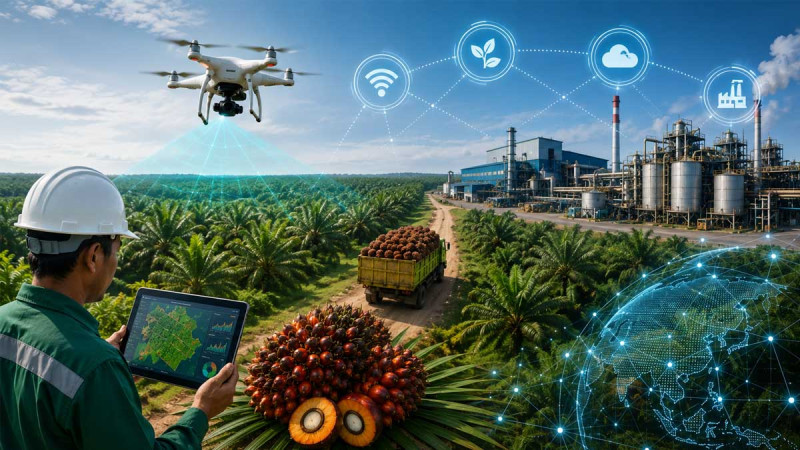
From artificial intelligence and cloud computing to drones, sensors, and blockchain technology, the sector is entering what many industry observers describe as the era of Palm Oil 4.0.
According to Jamalul, Chairman of the Indonesian Planters Society (IPS), digitalization is no longer optional.
"Digital technology can optimize plantation operations, improve productivity, and reduce environmental impacts. It is no longer a trend but a necessity," he said during a webinar on digital transformation in palm oil plantations and processing.
Digital innovation is already changing the way plantations are managed. Cloud-based systems allow growers to access real-time information on weather conditions, soil quality, and crop health, enabling more precise decisions regarding planting, fertilization, and harvesting schedules.
Drone technology and field sensors further enhance early detection of pests, diseases, and crop stress, reducing the risk of yield losses while minimizing excessive pesticide use.
"Simply put, the sooner we know, the faster we can act," Jamalul explained.
Beyond plantation management, digitalization is also reshaping supply chain transparency. Blockchain technology enables every stage of the palm oil journey—from fresh fruit bunches to refined products—to be recorded and verified.
For increasingly sustainability-conscious consumers in Europe and North America, this level of traceability represents significant added value.
"Trust is a valuable asset. Blockchain helps build that trust organically," said Prof. Suhardi of the Indonesian Digital Transformation Institute (ITDI).
However, experts caution that digital transformation is not merely about adopting new technologies. Success ultimately depends on a shift in mindset, where innovation, adaptability, and continuous learning become embedded within the industry's culture.
As Indonesia seeks to maintain its position as the world's leading palm oil producer, the integration of digital solutions may well determine how effectively the industry navigates future challenges and opportunities. (T2)
For the full story, refer to the April 2026 edition of InfoSAWIT Magazine.