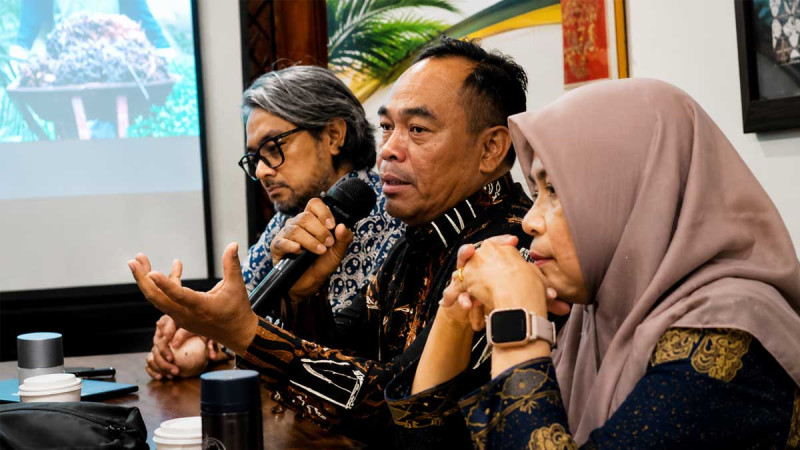
InfoSAWIT, JAKARTA – Efforts to bring Indonesian independent smallholders into the sustainable palm oil ecosystem require more than promoting certification standards. Access to financing and stronger farmer institutions remain critical factors in helping growers meet sustainability requirements and improve productivity.
Chairman of KUD Tani Subur, Sutiyana, who is also an independent oil palm smallholder, said the biggest challenge facing farmers today is not a lack of awareness about certification benefits, but limited access to funding.
"When discussing certification, farmers often ask a simple question: who will pay for it? Many growers genuinely want to improve their plantations, but they are constrained by financial limitations," Sutiyana said during the RSPO Media Brunch attended by InfoSAWIT on Friday (12/6/2026).
According to him, many smallholder plantations continue to struggle with low productivity due to poor-quality planting materials and suboptimal agronomic practices. At the same time, the cost of replanting ageing trees and improving plantation management remains beyond the reach of many independent farmers.
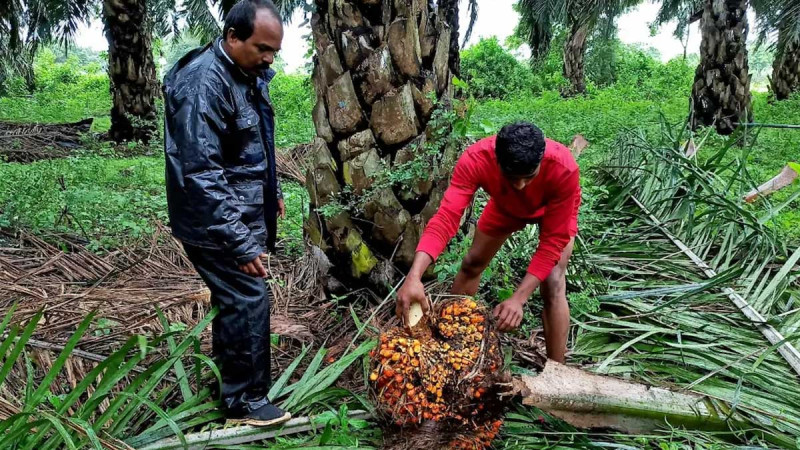
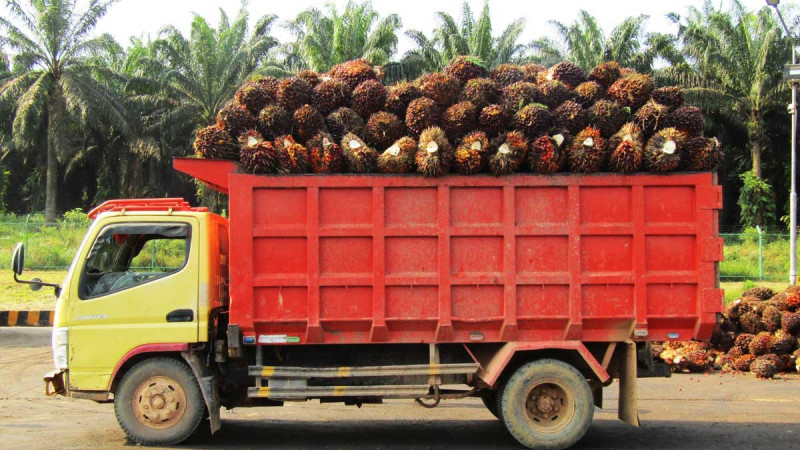
Sutiyana noted that a significant number of growers still harvest limited volumes of fresh fruit bunches (FFB) because their palms are old or were established using non-certified seeds. However, adopting proper cultivation techniques could substantially increase yields.
He emphasized that farmer groups and cooperatives offer a practical solution to many of these challenges. Strong institutions can provide technical assistance, facilitate knowledge-sharing, and improve farmers' bargaining power when accessing government programmes and financing schemes.
"Why shouldn't we work collectively? Through cooperatives, many things can be achieved together. Most importantly, we can build trust within the community," he said.
The experience of KUD Tani Subur demonstrates that continuous mentoring can transform farmers' mindsets. Instead of focusing solely on short-term harvest gains, growers increasingly recognise the importance of land legality, certified planting materials, and sustainable plantation practices.
Nevertheless, Sutiyana acknowledged that administrative requirements for obtaining financing remain a major hurdle. He stressed that a collaborative approach involving government agencies, support organisations, private companies, and other stakeholders is essential to ensure that farmers are not left to navigate the sustainability transition alone.
"There is still a great deal of work to be done. Farmers cannot accomplish this transformation by themselves. Government institutions, support organisations, the private sector, and everyone with an interest in sustainable palm oil must work together," he explained.
Beyond financing issues, he also highlighted the need for farmer regeneration, noting that younger generations are often reluctant to enter the palm oil sector if plantation businesses fail to provide stable and attractive incomes.
For Sutiyana, certification remains an important gateway toward better plantation governance. However, successful implementation ultimately depends on whether farmers receive adequate support to fulfil the necessary requirements.
"Indonesian farmers are fully capable of progressing. What they need is mentoring, trust, and access to financing so they can move to the next level," he concluded. (T2)