

InfoSAWIT, JAKARTA - Growing global demands for traceability and sustainability have elevated RSPO certification beyond a compliance tool, making it a strategic pathway for independent Smallholders to improve market access, strengthen farmer organizations, and adopt sustainable agricultural practices.
Sustainability certification is no longer viewed merely as an instrument for meeting industry standards. Instead, it has evolved into an important gateway for independent oil palm Smallholders to gain broader market opportunities, economic incentives, and enhanced capacity to manage their plantations sustainably.
During a recent Media Brunch hosted by the Roundtable on Sustainable Palm Oil (RSPO), stakeholders highlighted the importance of strengthening the position of independent Smallholders amid global market requirements that increasingly emphasize traceability and sustainability.
Guntur Cahyo Prabowo, Head of Global Smallholders at RSPO, explained that certification extends far beyond audits and administrative compliance. According to him, it is fundamentally about building strong farmer institutions capable of consistently meeting sustainability standards.
"Certification requires an entity or organization that can ensure compliance with the standards. At the same time, trust among farmers must also be fostered so they are willing to work collectively," Guntur said during the RSPO Media Brunch on Friday (June 12, 2026).
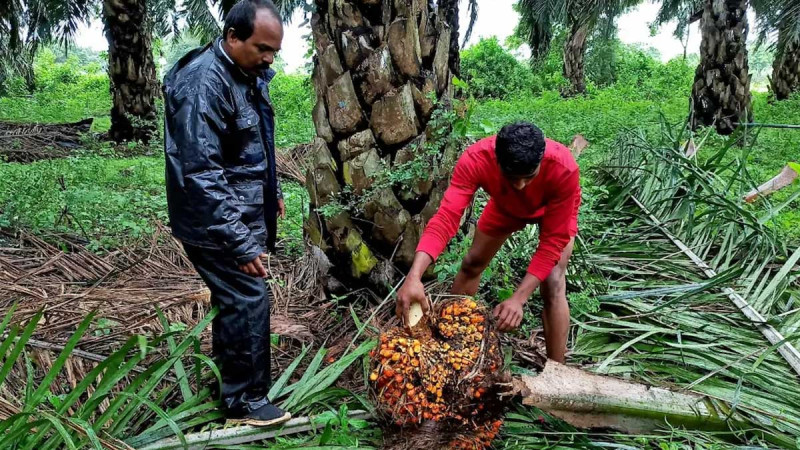
He noted that of the approximately 2.6 million oil palm farmers in Indonesia, the majority still operate independently and remain outside structured farmer organizations. This situation limits their access to certification, financing, and markets.
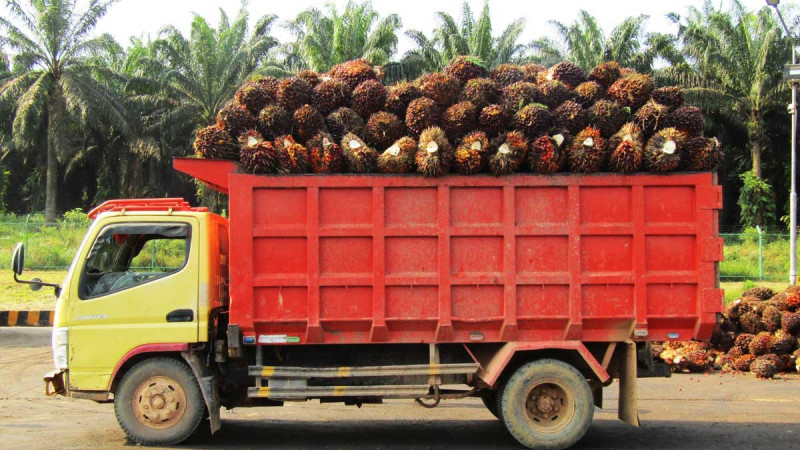
Another challenge lies in the lengthy supply chain through which Fresh Fruit Bunches (FFB) travel from Smallholders' plantations to palm oil mills. According to Guntur, strengthening farmer groups can improve their bargaining position while creating opportunities to access markets more efficiently.
"Our hope is that when farmers organize themselves into groups, they can achieve stronger bargaining power and potentially gain more direct access to markets," he said.
Global Regulations Drive the Need for Traceability
The emergence of international regulations has further reinforced the urgency of implementing sustainability certification. Global markets, particularly in Europe, increasingly require traceability systems capable of verifying that palm oil products originate from legal and responsibly managed sources.
"Markets want to know who produced the palm fruit and exactly where it came from. Such practices have become common in international trade, while Indonesia still faces a number of challenges in their implementation," Guntur explained.
To help independent Smallholders meet these requirements, RSPO has developed dedicated standards tailored to field conditions. Through collaboration with local governments, universities, private sector actors, and other stakeholders, RSPO implements assistance programmes covering sustainable cultivation practices, organizational strengthening, and certification preparedness.
According to RSPO data, since 2013 the organization has distributed approximately US$5.5 million in support funding globally, with around US$1.94 million allocated to Indonesia.
Between 2018 and 2026, approximately 89,650 hectares of oil palm plantations have been certified under RSPO standards, involving 41,134 independent Smallholders. In addition, around Rp416 billion has been channelled to farmer groups through various incentive schemes.
"The most important aspect is not merely the assistance provided, but its long-term impact on improving farmers' livelihoods and their ability to implement sustainable practices," Guntur emphasized.
He added that land legality remains a fundamental prerequisite in the certification process. Once this requirement is fulfilled, continuous support becomes critical to ensure farmers maintain the standards they have achieved.
FORTASBI Strengthens Its Role as a Learning Hub for Smallholders
On the same occasion, Rukaiyah Rafik, Member of the RSPO Board of Governors and Head of the Secretariat of the Indonesian Sustainable Palm Oil Farmers Forum (FORTASBI), emphasized that FORTASBI continues to expand its role as a learning platform for certified independent Smallholders.
To date, approximately 22,000 farmers have joined the FORTASBI network, representing part of the nearly 40,000 RSPO-certified independent oil palm Smallholders in Indonesia.
"FORTASBI was established to accommodate certified farmers. It serves as a home where farmers can learn, exchange experiences, and support others in implementing sustainable practices," Rukaiyah said.
According to her, the benefits of certification should extend well beyond improved market access. Incentives generated through sustainability schemes can also support community empowerment initiatives and environmental restoration programmes in plantation areas.
Rukaiyah encouraged certified cooperatives and farmer groups to continue expanding their membership and become centres of learning for other farmers working toward certification.
"Many farmers have now become trainers who mentor others. We also have facilitators working directly with farmers to ensure that sustainability practices are genuinely implemented in the field," she explained.
KUD Tani Subur's Certification Journey
The path toward certification has also been experienced by KUD Tani Subur, a cooperative based in Central Kalimantan.
Sutiyana, Chairman of KUD Tani Subur, recalled that one of the biggest challenges at the beginning of the certification process was helping farmers understand the potential benefits involved.
"At that time, talking about RSPO certification felt like discussing a dream. It was extremely difficult to convince farmers of its benefits, especially without adequate assistance," he said.
Starting with around 300 members, the cooperative has now expanded to approximately 1,400 independent oil palm farmers after members began experiencing the advantages of certification firsthand.
According to Sutiyana, the most significant benefit of certification goes beyond market access, extending to increased awareness of legal compliance and improved plantation governance.
"Personally, the greatest benefit we have experienced is legal certainty. Having proper documentation gives farmers a stronger position," he noted.
However, he acknowledged that challenges remain, particularly in meeting administrative requirements for accessing financing and expanding cooperative businesses. One long-term aspiration still being pursued is the establishment of a farmer-owned palm oil mill.
"We dream of having our own mill so that more added value can return to farmers. However, there are still many requirements to fulfil, and these often change during the process," he explained.
Despite these obstacles, Sutiyana remains optimistic about the future of Indonesian Smallholders.
"We want to demonstrate that Indonesian farmers are capable of progressing. Through RSPO certification, the benefits we have experienced have been extraordinary. That is why we hope more farmers will understand the importance of certification," he said.
Through stronger farmer institutions, enhanced capacity building, and broader access to sustainability certification, RSPO hopes that more independent oil palm Smallholders in Indonesia will be able to improve their competitiveness while becoming an integral part of a more inclusive, transparent, and sustainable transformation of the palm oil industry. (T2)