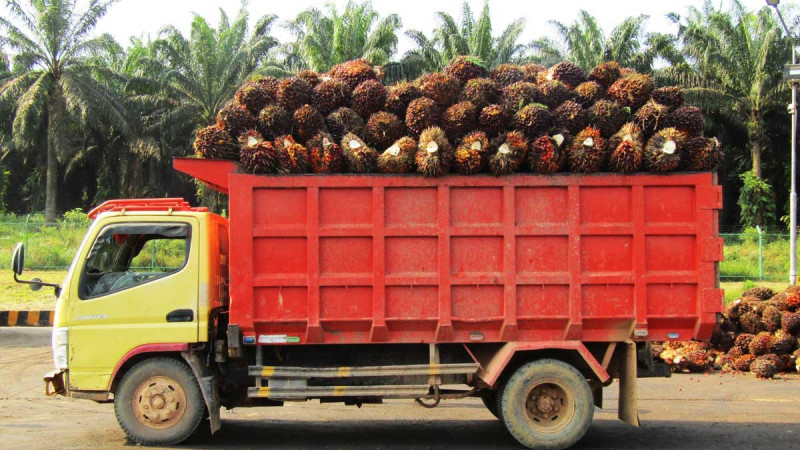
InfoSAWIT, JAKARTA – Indonesia's National Food Task Force has launched an investigation into alleged cartel practices and price collusion involving palm oil Fresh Fruit Bunches (FFB), following unusual declines in farmgate prices that appear disconnected from global market trends.
Authorities became concerned after observing falling FFB prices in several palm-producing regions despite strengthening international crude palm oil (CPO) prices and a firmer U.S. dollar against the rupiah—factors that would typically support domestic palm prices.
Head of the National Food Task Force, Brig. Gen. Ade Simanjuntak, said the police would coordinate with Indonesia's Competition Supervisory Commission (KPPU) to investigate potential anti-competitive practices affecting smallholders.
"We suspect indications of cartel behavior or collusion causing FFB prices to decline while global CPO prices are stable or increasing. Therefore, we will conduct investigations jointly with the KPPU at both national and regional levels," Ade said during a coordination meeting chaired by Agriculture Minister Andi Amran Sulaiman in Jakarta on Monday.
The meeting involved stakeholders from across the palm oil supply chain, including industry representatives, smallholder associations, the National Food Task Force, and special criminal investigation units from police departments in 25 palm-producing provinces.
According to Ade, the discrepancy between rising global CPO prices and weakening FFB prices warrants further scrutiny. He stressed that law enforcement agencies would not hesitate to take action against any parties found violating competition laws.
Agriculture Minister Andi Amran Sulaiman described the recent decline in FFB prices as "abnormal," arguing that there was no fundamental justification for the downturn.
"The President's directive is clear: protect farmers. FFB prices should return to previous levels and, in fact, have the potential to rise due to stronger global CPO prices and a stronger dollar," Amran stated.
The Ministry of Agriculture has identified approximately 270 to 300 palm oil companies—out of around 1,900 companies operating nationwide—that allegedly failed to adjust FFB purchase prices in line with prevailing market conditions.
Authorities said data related to these companies would be handed over to law enforcement agencies for further examination.
The government also reported early progress from its intervention efforts, noting that roughly 70% of FFB prices that had previously weakened have started returning toward normal levels.
Officials hope that closer collaboration among government agencies, competition regulators, regional administrations, and industry players will help establish a more transparent and equitable palm oil trading system that benefits millions of Indonesian smallholders. (T2)