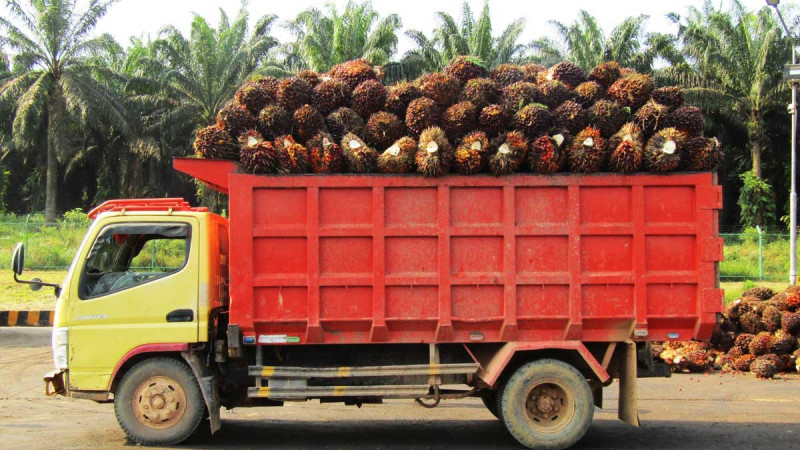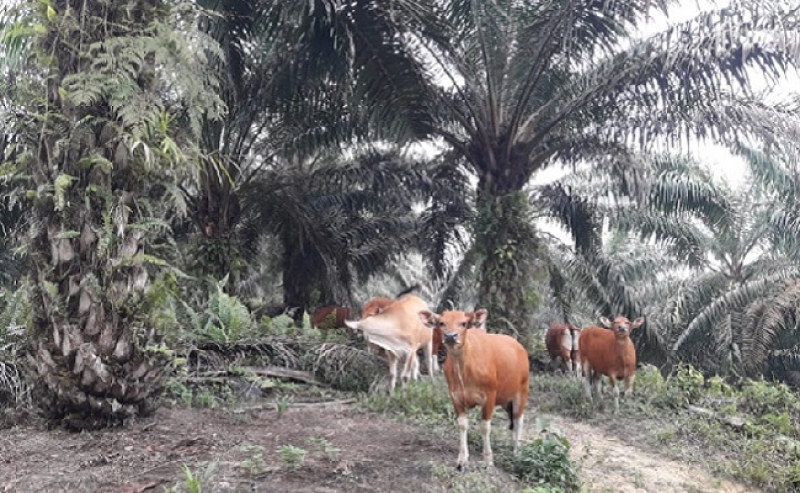
InfoSAWIT, JAKARTA – The integration of cattle and oil palm plantations, known as SISKA (Integrated Cattle and Oil Palm System), has long been promoted as a pathway toward greater national beef self-sufficiency. Yet despite its promise, the concept remains caught between the complexities of plantation ecosystems and market dynamics that have yet to fully support its widespread adoption.
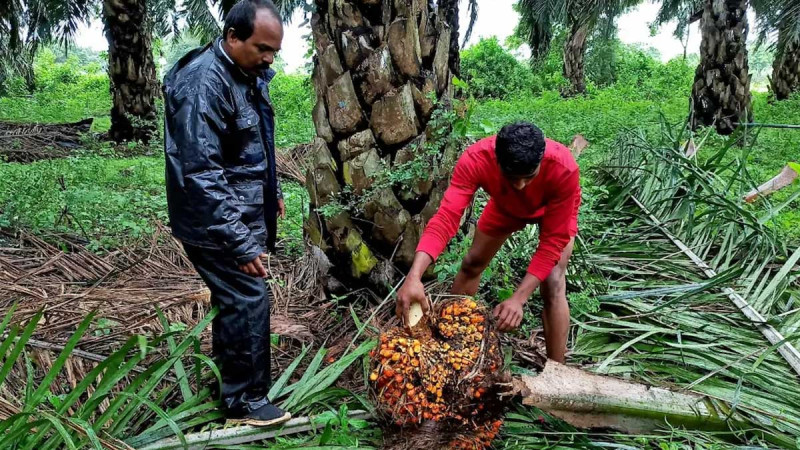
Oil palm plantations are often viewed simply as monoculture landscapes. In reality, they contain a far more complex ecosystem, one that quietly stores substantial nutrient reserves—estimated at as much as 80 to 90 percent—that frequently go unnoticed.
Speaking at the 3rd Integrated Cattle and Oil Palm (ICOP) Conference attended by InfoSAWIT in early April 2026, Prof. Luki Abdullah of the Center for Tropical Animal Studies (CENTRAS), IPB University, emphasized that integrating cattle into oil palm plantations is far more than a simple mixed-farming practice.
Rather, he described it as a new way of understanding oil palm plantations—not merely as sources of vegetable oil, but as interconnected biological production systems.
“Most of the nutrients are already available within the system itself. The challenge is how we manage them,” Prof. Luki explained, noting that nutrient-use efficiency in oil palm ecosystems can exceed that of conventional grazing systems.
However, such efficiency does not occur automatically. Plantation management practices remain a critical factor. Tree age, fertilization regimes, and canopy density all influence the nutritional resources available beneath the palms.
Under the oil palm canopy grows a diverse range of forage vegetation, including natural grasses, legumes, and organic residues such as palm kernel cake and palm fronds. Together, these resources form a valuable “nutrient bank,” supplying energy, fiber, and essential minerals for livestock.
Nevertheless, Prof. Luki noted that certain key nutrients, particularly calcium and phosphorus, may still be deficient, potentially affecting animal performance.
One of the most interesting findings is that nutrient dynamics within the system are far from static. A long-term study conducted by CENTRAS IPB in collaboration with a palm oil company in Pangkalan Bun between 2015 and 2020 demonstrated that changes in vegetation composition beneath the oil palm canopy significantly influence nutrient availability.
As oil palm trees mature and their canopies become denser, plant diversity tends to decline. A once-diverse understory gradually gives way to only a few dominant species. These shifts affect not only forage quality but also livestock physiology and productivity.
“This is not a one-size-fits-all system. Each stage of the oil palm life cycle creates a different nutritional ecosystem,” Prof. Luki said.
The findings underscore both the significant opportunities and the management challenges associated with SISKA, highlighting the need for site-specific approaches to maximize the benefits of integrated cattle and oil palm production. (T2)
Read the full feature in the April 2026 edition of InfoSAWIT Magazine.