InfoSAWIT, JAKARTA – One simple question remains unanswered by the government: if the primary objective of Government Regulation (PP) No. 24 of 2026 is to prevent under-invoicing and safeguard Indonesia’s foreign exchange earnings, why does the export pricing mechanism still leave critical areas shrouded in uncertainty?
The question has become increasingly relevant following the issuance of PP No. 24 of 2026 on the Governance of Strategic Natural Resource Commodity Exports. Introduced by President Prabowo Subianto on May 20, 2026, the regulation was presented as an instrument to close foreign exchange leakages allegedly caused by exporters reporting values below actual transaction prices.
In principle, the objective is difficult to oppose. Few would argue against efforts to strengthen state revenues and improve export governance. Yet, as with any public policy, success is measured not only by good intentions but also by the design of the mechanisms used to achieve those goals.
It is precisely at this point that concerns begin to emerge.
The Indonesian Palm Oil Smallholders Organizations Association (POPSI) believes the regulation could unintentionally create new challenges that run counter to its original purpose. Three areas deserve particular scrutiny: the authority granted to state-owned enterprises (SOEs) in determining export prices, the exemption mechanism available through government contracts, and the possibility that export SOEs may capture trading margins without adequate transparency requirements.
Rather than creating a more open system, these provisions risk introducing broader room for interpretation and raising new questions about how export prices for strategic commodities, including palm oil, will actually be formed.
The logic is straightforward. If the government seeks to eliminate under-invoicing, the benchmark price used in export transactions should be transparent and traceable for all market participants. The resulting price should be auditable, verifiable, and clearly understood by stakeholders.
Yet many fundamental questions remain unanswered.
How will export prices be determined? How will trading margins be calculated? What additional foreign exchange earnings does the government expect to generate from this policy? How exactly will under-invoicing be detected and prevented? What audit mechanisms will be used to verify export pricing? Most importantly, how can international buyers be assured that the prices generated under the system are fair, transparent, and market-based?
These are not merely administrative questions. In global commodity markets, pricing transparency forms the foundation of market confidence. When buyers and sellers lack clarity regarding how prices are established, uncertainty becomes an additional cost embedded within every transaction.
Further concerns arise from Article 4 of the regulation. The provision allows exporters to be exempted from the requirement to export through designated SOEs if they possess agreements with the government involving investment, divestment, or domestic processing and refining commitments.
On paper, the exemption may be intended to provide flexibility. However, from a governance perspective, it raises legitimate questions about consistency and objectivity.
If routing exports through SOEs is considered essential to preventing under-invoicing, why should exemptions exist? What criteria will be used to grant them? Who will make those decisions? Will the names of exempted companies and the reasons behind those exemptions be disclosed to the public?
POPSI believes that exemptions determined through inter-ministerial coordination meetings may create opportunities for lobbying while introducing uncertainty for businesses. Over time, such conditions could undermine market perceptions of policy consistency.
Another important issue concerns the regulation’s central promise: safeguarding Indonesia’s foreign exchange earnings.
The policy has been promoted as a tool to strengthen national foreign exchange reserves. Yet no measurable estimate has been provided regarding how much additional foreign exchange income the single-gateway export mechanism is expected to generate. It is equally important to recognize that trading margins earned by export SOEs are not automatically equivalent to additional foreign exchange earnings for the state.
The two are fundamentally different concepts.
Therefore, if strengthening foreign exchange reserves is indeed the primary objective, the government should clearly communicate the targets it seeks to achieve, the mechanisms through which those targets will be reached, and the broader benefits expected for the public. Such transparency is essential for allowing stakeholders to objectively assess the effectiveness of the policy.
For the palm oil sector, however, the most important question lies at the end of the policy chain: who will ultimately bear the cost of these governance changes?
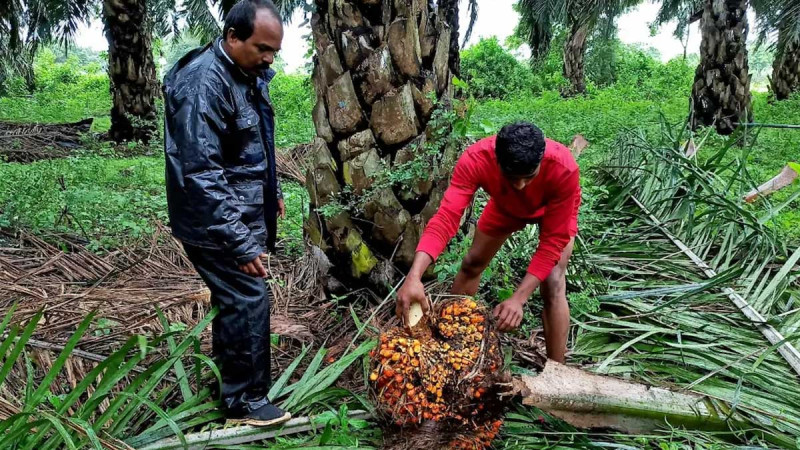
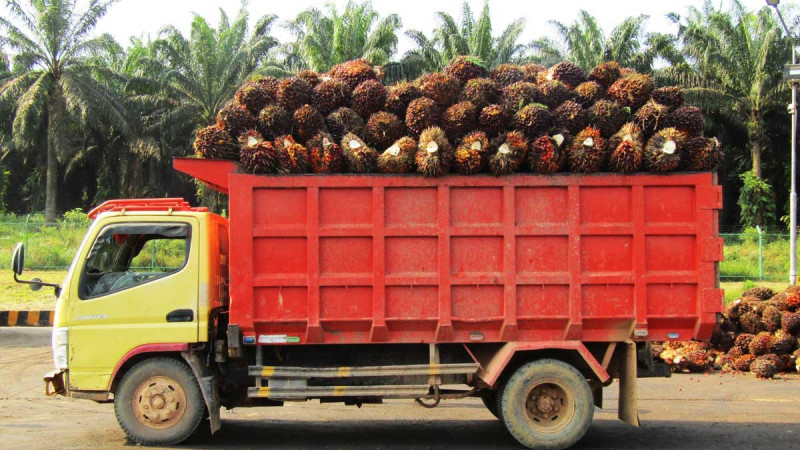
Experience suggests that additional costs introduced into commodity trading systems almost inevitably flow downward through the supply chain. In the palm oil industry, those costs often end up affecting the prices paid for Fresh Fruit Bunches (FFB) at the smallholder level.
If the margins captured by export SOEs become a new cost component within the trading chain, the greatest risk is a reduction in FFB prices received by farmers. At that point, the objective of strengthening foreign exchange earnings could come into direct conflict with the welfare of millions of palm-growing families who form the backbone of Indonesia’s palm oil industry.
Before the regulation is fully implemented, the government must ensure that smallholders do not become the parties bearing the greatest burden of the new export system.
Ultimately, what Indonesia needs is not merely another regulation, but clarity regarding how that regulation will function in practice. Transparent pricing mechanisms, auditable oversight systems, objective exemption criteria, and meaningful protections for farmers should be considered non-negotiable prerequisites.
In global commodity trade, market confidence is built not through authority, but through transparency. And in the palm oil industry, the long-term success of any policy will ultimately be measured by one simple question: do farmers benefit from it, or do they end up carrying a new burden? (*)
Disclaimer: The views and opinions expressed in this article are solely those of the author and are his personal responsibility. They do not necessarily reflect the views, editorial position, or policies of InfoSAWIT.